

 Saba Khalil
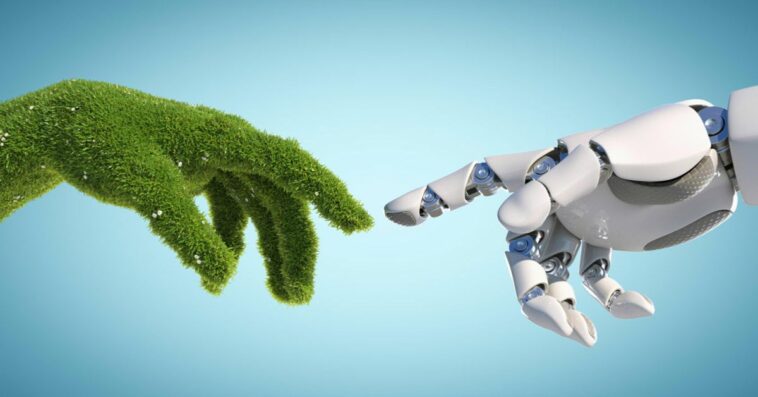
Imagine an ant colony finding the most efficient path to food, your brain recognizing a friend’s face in an instant, or a gecko climbing a smooth glass wall. For millions of years, nature has been the ultimate innovator, solving complex problems with elegant efficiency. Now, scientists are turning to these biological blueprints to build the next generation of artificial intelligence. This isn’t just a niche field; it’s a revolutionary approach known as Bio-Inspired AI.
At its core, Bio-Inspired AI is the practice of studying the principles, structures, and mechanisms of living systems to design and improve artificial intelligence algorithms and robots. Instead of relying solely on brute-force computation, it seeks to emulate the graceful, adaptive, and energy-efficient intelligence found in the natural world. This article explores how Bio-Inspired AI is transforming technology in ways you likely didn’t know, creating machines that learn, adapt, and operate with an almost organic fluency.
H2: The Core Principles of Bio-Inspired AI
Why look to nature for computational advice? Because evolution has already done the hard work. Through billions of years of trial and error, life has optimized solutions for navigation, perception, collaboration, and resilience. Bio-Inspired AI doesn’t just copy nature; it extracts the underlying principles to solve human challenges.
- Adaptation and Learning: Natural systems don’t have a fixed program; they learn from their environment. This principle is central to creating AI that can evolve its behavior over time.
- Robustness and Resilience: A swarm of bees doesn’t fail if one bee is lost. This decentralized, fault-tolerant approach is crucial for building reliable systems.
- Energy Efficiency: The human brain operates on about 20 watts of power—far less than a standard light bulb. Bio-Inspired AI aims for similar efficiency, a critical goal for sustainable technology.
H2: How Neural Networks Mimic the Brain
The most famous example of Bio-Inspired AI is sitting in your pocket right now, powering your smartphone’s voice assistant and photo recognition. Artificial Neural Networks (ANNs) are directly inspired by the intricate network of neurons in the human brain.
H3: The Architecture of a Bio-Inspired Neural Network
Think of your brain’s neurons as tiny processors connected by wires (axons and dendrites). When you learn something, the connections between these neurons strengthen. An ANN mimics this with digital “neurons” arranged in layers:
- Input Layer: Receives data, like the pixels of a photo.
- Hidden Layers: Process the data, with each layer detecting more complex features—from edges to shapes to entire objects.
- Output Layer: Delivers the result, such as “this is a cat.”
By strengthening or weakening the connections between these digital neurons, the network “learns,” much like a brain does. This bio-inspired computing model is the engine behind deep learning, enabling machines to perform tasks that were once exclusively human.
H2: Learning from the Swarm: The Power of Collective Intelligence
Have you ever wondered how a flock of birds moves as one cohesive unit without a leader? Or how an ant colony can find the shortest path to a food source? This phenomenon, known as swarm intelligence, is another powerful muse for Bio-Inspired AI.
H3: Ant Colony Optimization in Action
Computer scientists have developed algorithms based on how ants forage. Real ants lay down pheromone trails; the shorter the path to food, the stronger the pheromone scent becomes, attracting more ants. An Ant Colony Optimization Algorithm works similarly for complex logistics problems.
- Real-World Application: Companies like UPS and FedEx use bio-inspired algorithms to optimize delivery routes. By simulating “digital ants” exploring possible paths, they can dynamically calculate the most efficient routes for thousands of trucks, saving millions of miles and gallons of fuel.
H3: Particle Swarm Optimization
Inspired by the flocking behavior of birds, this algorithm uses a “swarm” of candidate solutions that fly through the problem’s solution space. Each “bird” adjusts its position based on its own experience and the experience of its neighbors, leading the entire swarm to the best solution.
- Real-World Application: This is used in engineering design, antenna design, and even to schedule tasks in large computational data centers, making complex systems more efficient.
H2: The Evolutionary Path: When AI Learns to Evolve
What if you could make AI that designs itself? This is the promise of Evolutionary Algorithms, a branch of Bio-Inspired AI that mimics the process of natural selection.
- How it Works: It starts with a “population” of random algorithms or designs.
- Selection: The best-performing individuals are “selected” (like the fittest in nature).
- Crossover & Mutation: These “parent” solutions are combined and randomly tweaked to create a new “child” generation.
- Repetition: This process repeats over thousands of generations, progressively evolving better and better solutions.
This approach has been used to design everything from high-performing satellite antennas that look like bizarre metal sculptures to efficient walking robots, with minimal human intervention. It’s a powerful form of bio-inspired computing that automates innovation.
H2: Beyond Software: Bio-Inspired Robotics
The influence of Bio-Inspired AI extends beyond code into the physical world, leading to robots that can navigate environments where traditional robots fail.
- Boston Dynamics’ Spot: This agile robot’s locomotion is heavily inspired by the gait and balance of dogs, allowing it to traverse rough terrain, climb stairs, and recover from pushes.
- Gecko-Inspired Adhesion: Researchers have developed materials and robots that can climb smooth, vertical surfaces by mimicking the microscopic hairs on a gecko’s feet, which use van der Waals forces to stick.
- Slime Mold Pathfinding: Surprisingly, the humble, brainless slime mold can efficiently map out optimal networks. Scientists have used its growth patterns to help design efficient railway and communication networks in urban planning.
H2: The Future Powered by Bio-Inspired AI
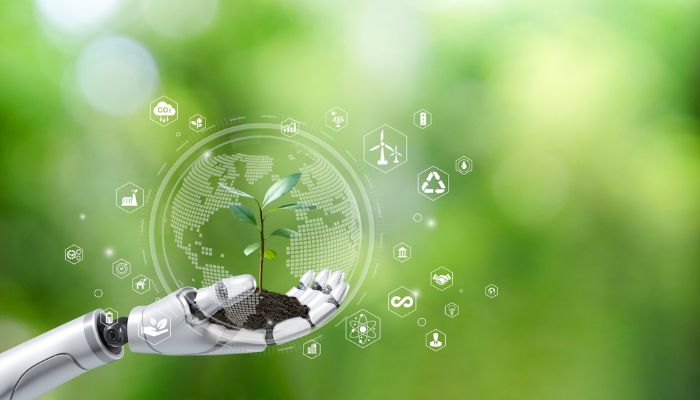
The potential of Bio-Inspired AI is just beginning to be unlocked. As we look forward, its impact is set to grow even more profound.
- More Efficient and Explainable AI: Future neural networks modeled more closely on the brain could be vastly more energy-efficient and less of a “black box,” helping us understand how they make decisions.
- Advanced Medical Diagnostics: AI that can adapt and learn like an immune system could lead to personalized medicine and early disease detection systems that evolve with a patient’s condition.
- Environmental Resilience: Swarm robotics could be deployed for precision agriculture, pollinating crops, or cleaning up ocean pollutants by working together like a hive mind.
Learning from the Ultimate Engineer
The rise of Bio-Inspired AI marks a significant shift in our approach to technology. We are moving from forcing machines to think like us, to learning how nature thinks and building machines on those timeless principles. By humbly looking to the natural world—from the human brain to an ant colony—we are not just building smarter AI; we are building more adaptable, resilient, and sustainable technology. The future of intelligence isn’t just artificial; it’s biological, and it’s already here, teaching our machines to be truly smart.
Read more about Future Jobs in a Machine Learning World: Your 2025 Career Guide



GIPHY App Key not set. Please check settings