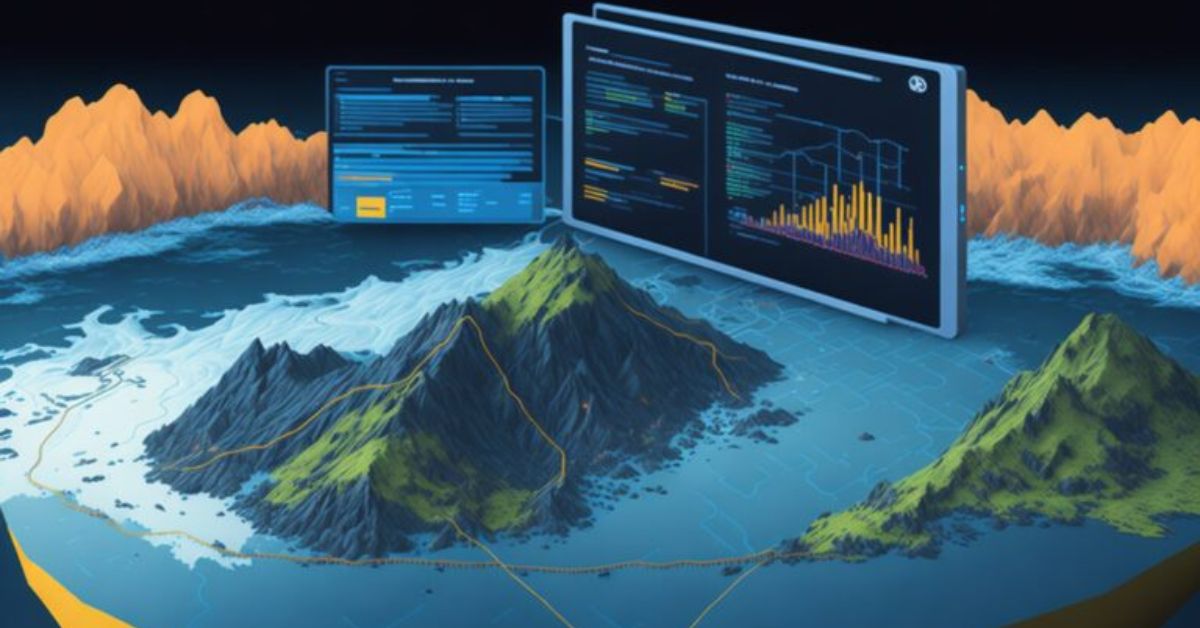
For centuries, humanity has stood largely powerless against the raw, unpredictable fury of nature. Earthquakes, tsunamis, hurricanes, and wildfires have wrought devastation with little warning, leaving communities to pick up the pieces. But a profound shift is underway. We are entering an era where our most advanced technology is being harnessed not for profit or power, but for planetary protection. This is the heart of the “AI for Good” movement: leveraging artificial intelligence to tackle some of the world’s most pressing challenges, starting with predicting and preventing the impacts of natural disasters.
This isn’t science fiction. Around the globe, scientists, engineers, and humanitarian organizations are deploying sophisticated machine learning models and neural networks to listen to the Earth’s subtle whispers—the tremors before the quake, the atmospheric shifts before the storm, the dry tinder before the fire. In this article, we will delve into the innovative ways AI for Good is building a safer, more resilient future for everyone.
Beyond the Seismograph: The New Science of Prediction
Traditional disaster prediction relies on physical sensors and historical data, which are often limited in scope and slow to analyze. AI for Good initiatives are supercharging this field by processing vast, unconventional datasets to find patterns invisible to the human eye.
H2: Forecasting Earthquakes and Tsunamis with Unprecedented Precision
Earthquakes have long been considered unpredictable. AI is challenging that notion. Researchers are now training algorithms on decades of seismic data to identify minute, precursor signals that often precede a major tremor. These signals are so faint they were previously dismissed as noise.
- H3: AI-Powered Seismic Analysis: Machine learning models can analyze real-time data from global seismic networks, detecting patterns of smaller tremors and crustal movements that statistically increase the probability of a larger event. For instance, a project from Stanford University uses AI to detect the faint, low-frequency rumbles that occur hours before a quake, offering a potential window for early alerts.
- H3: Satellite Data and Ground Deformation: By combining satellite radar imagery with AI, scientists can now measure minute deformations in the Earth’s surface with millimeter accuracy. The algorithm tracks how stress builds up along fault lines over time, providing a long-term forecast of seismic risk for specific regions.
When it comes to tsunamis, speed is everything. AI for Good systems are being integrated into early-warning networks. The moment an undersea earthquake is detected, an AI model can instantly analyze its location, depth, and magnitude to predict the tsunami’s trajectory and potential wave height with far greater speed and accuracy than traditional methods, giving coastal communities precious extra minutes to evacuate.
H2: Taming the Tempest: AI in Hurricane and Flood Modeling
Hurricanes and floods are becoming more frequent and intense due to climate change. Predicting their path and intensity is crucial for saving lives and mitigating economic damage.
- H3: Dynamic Weather Forecasting: Traditional models run on supercomputers and can take hours. New AI-powered weather models can produce equally accurate—and sometimes superior—forecasts in minutes. They learn from decades of historical weather data to understand the complex physics of the atmosphere, allowing them to predict a hurricane’s potential path shifts and rapid intensification with stunning clarity. Google’s GraphCast is a prime example, outperforming traditional models.
- H3: Hyper-Localized Flood Mapping: By analyzing satellite imagery, topography, land use data, and real-time rainfall reports, AI can generate hyper-local flood inundation maps. These models can predict exactly which neighborhoods and streets are most at risk, enabling targeted evacuations and efficient deployment of resources like sandbags and emergency crews. Organizations like the World Bank are using this technology to protect vulnerable cities in developing nations.
From Prediction to Prevention: The Proactive Power of AI
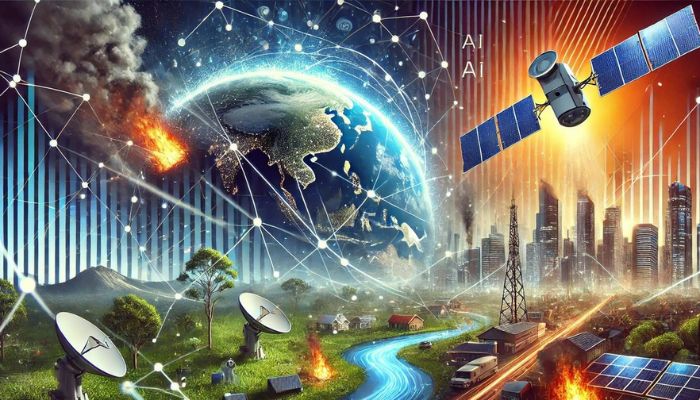
Prediction is only half the battle. The true potential of AI for Good lies in its ability to move us from a reactive to a proactive stance—actively preventing disasters or drastically reducing their impact.
H2: The Frontline Against Wildfires
Catastrophic wildfires are a global menace. AI is becoming a key firefighter.
- H3: Intelligent Risk Assessment: Before a fire even starts, AI algorithms analyze satellite imagery, weather data, vegetation density, and historical fire records to create daily “fire risk maps.” This allows authorities to pre-position firefighting resources in high-risk areas and issue public warnings on hazardous days.
- H3: Early Detection and Response: Companies like Dryad Networks are deploying solar-powered AI sensors in forests that “sniff” the air for trace gases associated with combustion. Unlike cameras, these sensors can detect a smoldering fire within minutes, even before an open flame is visible, and through thick smoke. This allows firefighters to respond when the fire is still manageable, often extinguishing it before it can spread.
H2: Building Resilient Infrastructure
How can we build cities that can withstand disasters? AI for Good provides the blueprint.
- H3: Simulating Disaster Scenarios: Urban planners and engineers are using AI to run thousands of complex simulations. They can model how a city’s infrastructure—bridges, buildings, power grids—would behave during a 9.0 earthquake or a Category 5 hurricane. This data informs building codes and helps prioritize retrofitting for the most vulnerable structures, making entire cities more resilient.
- H3: Smart Evacuation and Logistics: When a disaster is imminent, AI optimizes evacuation routes in real-time, accounting for traffic, road closures, and the evolving nature of the threat. Furthermore, after a disaster, machine learning algorithms help manage the complex logistics of aid distribution, ensuring that food, water, and medical supplies reach the people who need them most, efficiently and fairly.
The Human Element: Ethical Considerations in AI for Good
As with any powerful technology, the application of AI for Good in disaster management comes with responsibilities. We must be vigilant about data privacy, ensure these tools do not perpetuate existing biases (e.g., by only protecting wealthy neighborhoods), and maintain human oversight in all critical decision-making processes. The goal is to create transparent, equitable, and trustworthy systems that serve all of humanity.
Read more about Smart Villages: How Technology Is Transforming Rural Life You Didn’t Know About
Conclusion: A Future Forged by Foresight
The vision of AI for Good in predicting and preventing natural disasters is no longer a distant dream. It is a rapidly evolving reality that is already saving lives and safeguarding communities. From listening to the subtle groans of the Earth to modeling the fury of the atmosphere and stopping wildfires before they rage, artificial intelligence is providing us with something we’ve never had before: meaningful foresight.
By continuing to invest in and ethically develop these technologies, we are not just building better algorithms; we are building a more compassionate and resilient world. The conversation around AI often revolves around its risks, but its potential for profound, global good—its potential to be a shield for the most vulnerable—is a story that deserves to be told, and a future we must actively build.
Leave a Reply