Category: Technology

  • Top 10 Future Technologies That Will Change the World

    Top 10 Future Technologies That Will Change the World

    We are living at the edge of a technological renaissance. The pace of innovation is not just accelerating; it’s transforming the very fabric of our society, economy, and daily lives. Understanding the most impactful future technologies is no longer a task for science fiction enthusiasts—it’s essential for anyone who wants to thrive in the coming decade.

    This article explores the top 10 world changing technologies that are poised to redefine our future. These aren’t distant dreams; they are active areas of development that will mature between 2024 and 2035, creating new industries, solving global challenges, and presenting unprecedented opportunities.

    1. Artificial General Intelligence (AGI)
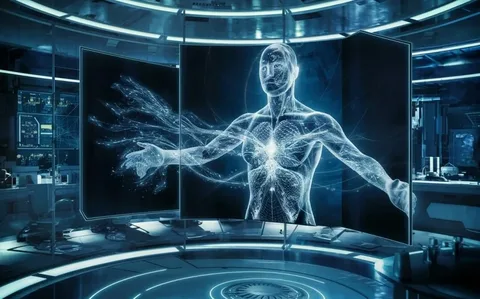
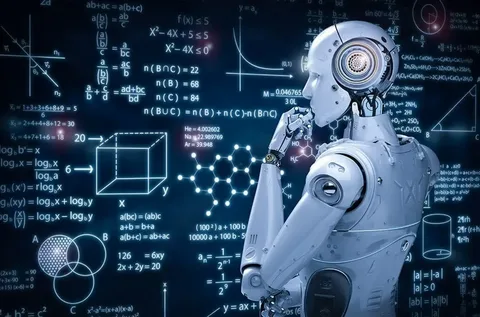
    What it is: While most of us are familiar with Narrow AI (like the algorithms that recommend movies or drive cars), Artificial General Intelligence (AGI) is the holy grail. It refers to a machine with the ability to understand, learn, and apply its intelligence to solve any problem, much like a human being.

    Why it’s a Game-Changer: AGI could be the last invention humanity ever needs to make, as it could itself solve complex global issues like climate change and disease. It would revolutionize every field, from scientific discovery and engineering to art and philosophy.

    The Future Impact: The dawn of AGI will trigger a seismic shift in the job market, ethics, and what it means to be human. While true AGI is likely still a decade or more away, its potential makes it the most significant of all upcoming tech innovations.
    2. Quantum Computing

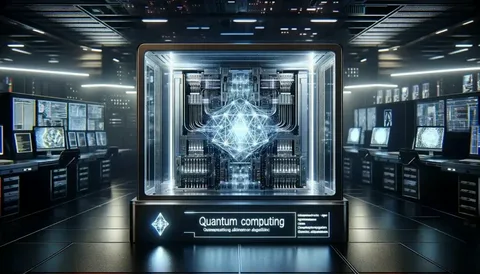
    What it is: Instead of using traditional bits (0s and 1s), quantum computers use quantum bits or “qubits.” This allows them to perform mind-bogglingly complex calculations millions of times faster than today’s most powerful supercomputers.

    Why it’s a Game-Changer: Quantum computing will allow us to model complex molecular interactions, revolutionizing drug discovery and materials science. It will break current encryption methods but also create unbreakable quantum encryption, reshaping cybersecurity.

    The Future Impact: We are in the “noisy intermediate-scale quantum” (NISQ) era. In the next decade, fault-tolerant quantum computers will begin solving problems that are currently impossible, making them a cornerstone of sustainable technology and scientific advancement.

    3. Brain-Computer Interfaces (BCIs)

    What it is: BCIs create a direct communication pathway between the brain and an external device. Companies like Neuralink are pioneering this field, aiming to merge human cognition with computing power.

    Why it’s a Game-Changer: The medical applications are profound: restoring sight to the blind, enabling paralyzed individuals to control robotic limbs, and treating neurological disorders. In the long term, BCIs could allow for direct brain-to-brain communication or downloading skills.

    The Future Impact: This technology will challenge our concepts of privacy, identity, and human potential. It represents one of the most direct ways technologies of tomorrow will augment human capabilities.

    4. Next-Generation Renewable Energy & Grid Storage

    What it is: This goes beyond current solar and wind. Think of nuclear fusion, advanced geothermal, and perovskite solar cells that are far more efficient. Crucially, it also includes revolutionary grid storage solutions like solid-state batteries and gravity storage.

    Why it’s a Game-Changer: Achieving commercial nuclear fusion would provide virtually limitless, clean energy. Coupled with advanced storage, it would solve the climate crisis, end our reliance on fossil fuels, and provide abundant power for global development.

    The Future Impact: This is arguably the most critical set of future technologies for the survival and prosperity of our planet. It will decouple economic growth from environmental degradation.

    5. Biotechnology & Gene Editing 2.0

    What it is: While CRISPR-Cas9 was the first wave, next-generation gene editing tools like base and prime editing offer even greater precision. This also includes personalized medicine based on your DNA, lab-grown organs, and anti-aging therapies.

    Why it’s a Game-Changer: We will move from treating diseases to curing them at the genetic level. Cancer could become a manageable condition, and inherited diseases could be eliminated. Gene editing could also make crops more nutritious and resilient.

    The Future Impact: These advances will dramatically extend the human healthspan and reshape agriculture, but they also come with profound ethical questions about genetic inequality and “designer babies.”

    read more about How to Master Generative AI in 2025: A Complete Guidehttps://codetinkerai.blog/2025/10/03/master-generative-ai-guide-2025/

    6. Autonomous Systems and Robotics

    What it is: This is the full realization of a self-driving world. It encompasses not just autonomous cars, but also delivery drones, robotic assistants in homes and factories, and autonomous ships and aircraft.

    Why it’s a Game-Changer: It will redefine transportation, logistics, and manufacturing. Imagine a world with no traffic accidents, where goods are delivered by drone in minutes, and dangerous jobs are handled entirely by robots.

    The Future Impact: The economic disruption will be massive, eliminating entire job categories while creating new ones. Cities will be redesigned with less need for parking, and supply chains will become hyper-efficient.

    7. The Spatial Web & Web 3.0
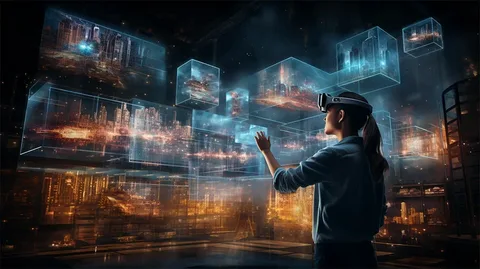
    What it is: The Spatial Web is an evolution of the internet from 2D screens to an immersive, 3D world experienced through AR/VR glasses. Combined with the decentralized principles of Web3 (blockchain, digital ownership), it will create a new digital layer over our physical reality.

    Why it’s a Game-Changer: You’ll be able to interact with digital information and people as if they were physically present. Digital assets, from art to real estate, will have verifiable ownership, creating new digital economies.

    The Future Impact: The lines between the digital and physical worlds will blur forever, changing how we work, socialize, shop, and learn.

    8. Nanotechnology and Advanced Materials

    What it is: Nanotechnology involves manipulating matter at the atomic and molecular scale. This allows for the creation of materials with “impossible” properties: self-healing concrete, ultra-efficient filters for water purification, and smart fabrics that can change their properties.

    Why it’s a Game-Changer: In medicine, nanobots could precisely deliver drugs to cancer cells. In electronics, it could lead to transistors the size of atoms, continuing Moore’s Law. It will make products stronger, lighter, and more efficient.

    The Future Impact: This foundational technology will have ripple effects across all other industries, from construction and manufacturing to medicine and computing.

    9. Neuromorphic Computing
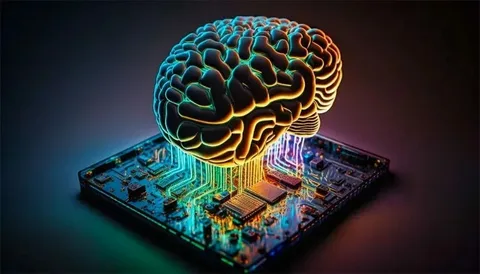
    What it is: Instead of using traditional computer architecture, neuromorphic chips are designed to mimic the human brain’s neural structure. They are incredibly energy-efficient and excellent at processing sensory data and learning on the fly.

    Why it’s a Game-Changer: This will enable a new generation of intelligent, low-power devices. Think of smartphones that need charging once a month, or sensors that can see, hear, and make complex decisions without being connected to the cloud.

    The Future Impact: It will be the key to pervasive ambient computing, where smart devices are seamlessly integrated into our environment without being intrusive or energy-hungry.

    10. Extended Reality (XR): AR, VR, and the Metaverse

    What it is: Extended Reality is the umbrella term for all immersive technologies. Augmented Reality (AR) overlays digital information onto the real world, while Virtual Reality (VR) creates a completely simulated environment. The Metaverse is the persistent, shared universe these technologies access.

    Why it’s a Game-Changer: XR will transform entertainment, education, and remote work. Surgeons will practice on virtual patients, engineers will collaborate on 3D models from different continents, and history classes will take place in ancient Rome.

    The Future Impact: This will become a primary platform for human interaction and creativity, offering new depths of experience that are impossible on a flat screen.

    Conclusion: A Future of Converging Technologies

    concept of digital transformation access to big data through the global internet network , user’s hand Show globe icon For online transactions, searching for information , online marketing.

    The most important trend to understand is that these future technologies do not exist in a vacuum. They will converge and amplify each other. AI will design new materials via nanotechnology. Quantum computers will accelerate the development of AGI. BCIs will allow us to interact with the Spatial Web.

    The next decade will be defined by our ability to steer these powerful world changing technologies toward the benefit of all humanity. The future isn’t just something that happens to us; it’s something we build. By understanding these trends today, you can be an active participant in shaping the world of tomorrow.

  • How to Master Generative AI in 2025: A Complete Guide

    How to Master Generative AI in 2025: A Complete Guide

    You’ve seen the headlines, marveled at the art, and maybe even chatted with a chatbot. Generative AI is no longer a niche technology; it’s a cultural and technological tsunami reshaping everything from creative arts to software development. But amidst the hype, a crucial question emerges: What is Generative AI, really, and how can you not just use it, but truly master it in 2025?

    This isn’t just about learning a new tool. It’s about positioning yourself at the forefront of the next digital revolution. This complete guide will demystify the technology and provide a concrete, actionable roadmap to help you master Generative AI.

    What is Generative AI? Beyond the Hype

    Let’s strip away the complexity. At its core, Generative AI is a branch of artificial intelligence that focuses on creating new, original content.

    Unlike traditional AI, which is often used for analysis or classification (like identifying spam in your email), Generative AI creates. It learns the underlying patterns and structures from a massive amount of existing data and then uses that knowledge to generate new data that is similar, but not identical.

    Think of it like this:

    • Traditional AI: Analyzes a photo and tells you it’s a cat.
    • Generative AI: Creates a brand-new, photorealistic image of a cat that has never existed.

    This “creation” can take many forms: text, images, music, code, video, and even complex scientific molecules. The most common technologies powering this revolution are Large Language Models (LLMs) like GPT-4 for text and Diffusion Models (like those behind Stable Diffusion and DALL-E) for images.

    The Building Blocks: Core Concepts You Must Understand

    Before you can master Generative AI, you need to speak its language. You don’t need a PhD, but a solid grasp of these core concepts is non-negotiable.

    1. Large Language Models (LLMs): These are the brains behind chatbots and text generators. They are trained on vast amounts of text data from the internet, learning grammar, facts, reasoning abilities, and even style. Understanding their strengths and limitations is the first step in your Generative AI tutorial.
    2. Transformers Architecture: This is the fundamental technical breakthrough that made modern LLMs possible. It allows the model to understand the context of a word by looking at all the other words in a sentence simultaneously, making it incredibly efficient and powerful.
    3. Prompt Engineering: This is the art and science of communicating with AI to get the desired output. It’s the single most important practical skill to learn AI skills in 2024 and beyond. A well-crafted prompt is the difference between a generic, useless answer and a brilliant, actionable one.
    4. Diffusion Models: For image generation, this is the key technology. It works by starting with random noise and gradually refining it, step-by-step, into a coherent image, based on the text prompt it was given.

    Your Roadmap to Master Generative AI in 2025

    Mastery is a journey, not a destination. This phased approach will take you from curious beginner to proficient practitioner.

    Phase 1: The Foundation (Months 1-3)

    This phase is about building literacy and getting hands-on.

    • Goal: Understand the landscape and become a proficient user.
    • Action Steps:
      • Get Hands-On: Spend time every day with key tools. Use ChatGPT for writing and brainstorming, Midjourney or DALL-E for image creation, and GitHub Copilot for code assistance.
      • Learn Prompt Engineering: Don’t just type commands. Study techniques like chain-of-thought prompting, specifying roles, and using negative prompts. Follow experts on social media and analyze their prompt structures.
      • Consume Foundational Knowledge: Take free online courses from platforms like Coursera (“Generative AI for Everyone” by Andrew Ng) or read introductory blogs from leading AI labs like OpenAI and Hugging Face.

    Phase 2: Deepening Your Knowledge (Months 4-6)

    Now, you move from being a user to being a builder and strategist.

    • Goal: Understand how these models work “under the hood” and identify their business applications.
    • Action Steps:
      • Explore Technical Fundamentals: For technical learners, this means getting comfortable with Python and basic machine learning concepts. For non-technical learners, focus on high-level architecture diagrams and conceptual explanations of training and fine-tuning.
      • Specialize: The field is vast. Choose a path:
        • Technical Path: Dive into building applications using APIs from OpenAI or Anthropic. Learn how to fine-tune a model on custom data.
        • Non-Technical/Business Path: Focus on AI strategy. Learn how to integrate Generative AI into workflows for marketing, product design, and operations to drive efficiency and innovation.
      • Understand the Ecosystem: Follow the developments of key players—OpenAI, Google (Gemini), Anthropic, and open-source communities like Hugging Face.

    Phase 3: Achieving Mastery (Months 7-12)

    Mastery is about creating value and thinking critically.

    • Goal: Develop a specialized skill set and contribute meaningfully to the field.
    • Action Steps:
      • Build a Portfolio: Create a collection of projects that showcase your skills. This could be a blog post series written with AI, a custom fine-tuned model for a specific task, or a business case study on AI implementation.
      • Engage with the Community: Contribute to forums, write about your learnings, and participate in hackathons. Teaching others is one of the best ways to solidify your own knowledge.
      • Grapple with Ethics: To truly master Generative AI, you must understand its societal impact. Study the challenges of bias, misinformation, copyright, and job displacement. Formulate your own informed opinions on responsible AI development.

    Essential Skills for the Future of AI Jobs in 2025

    The job market for AI talent is exploding. To secure your place in the future of AI jobs, cultivate these skills:

    Skill CategorySpecific SkillsWhy It’s Important
    Technical SkillsPython Programming, API Integration, Model Fine-tuning, RAG (Retrieval-Augmented Generation)Allows you to build, customize, and deploy real-world AI applications.
    Core AI SkillsPrompt Engineering, Data Analysis, Critical Thinking, Domain ExpertiseEnables you to direct AI effectively and apply it to solve specific, valuable problems.
    Human SkillsCreativity, Ethical Reasoning, Communication, AdaptabilityEnsures you can innovate responsibly, collaborate with teams, and navigate a rapidly changing field.

    The Future is Generative: Your Next Steps

    The journey to master Generative AI is one of continuous learning. The technology will evolve, but the core principles of understanding, application, and ethical consideration will remain.

    The most important step is to start today. The gap between early adopters and everyone else is widening. By following this roadmap, you won’t just be watching the AI revolution from the sidelines—you’ll be an active participant, shaping its direction.

    Don’t aim to just be a user. Aim to be a master. The future belongs to those who can harness the creative power of AI to solve the world’s most interesting problems. Your journey to master Generative AI in 2025 starts now.

    read more about
    5 Essential Python Libraries to Start Your Machine Learning Journeyhttps://codetinkerai.blog/2025/10/03/python-libraries-machine-learning/

  • The Rise of Quantum Computing: What It Means for Cybersecurity and Data Privacy

    The Rise of Quantum Computing: What It Means for Cybersecurity and Data Privacy

    Imagine a master key that could open every single lock in the world, from your diary to the most secure bank vault. That’s the kind of paradigm-shifting power the rise of quantum computing brings to the digital world. It’s not just an incremental upgrade; it’s a fundamental leap that promises to redefine the very foundations of our online security.

    While this emerging technology holds incredible potential for breakthroughs in medicine, materials science, and AI, it simultaneously casts a long, unsettling shadow over the field of cybersecurity and data privacy. The very tools that could solve humanity’s greatest challenges also have the power to dismantle our global digital security infrastructure. Let’s unravel what this technological revolution means for the safety of your information today and in the near future.

    Beyond Ones and Zeros: A New Type of Machine

    To understand the threat, you first need to grasp the opportunity. Our current digital world runs on classical computers that use bits—tiny switches that are either in an “on” state (1) or an “off” state (0). Every app, website, and file is built on this binary language.

    Quantum computers are different. They use quantum bits, or qubits. Thanks to the mind-bending laws of quantum mechanics, a qubit can exist as a 1, a 0, or, crucially, both at the same time—a state known as “superposition.” Furthermore, qubits can be “entangled,” meaning the state of one is instantly connected to the state of another, no matter the distance.

    This allows quantum computers to perform astronomical numbers of calculations simultaneously. Problems that would take today’s most powerful supercomputers thousands of years to solve could be cracked by a sufficiently advanced quantum machine in mere hours. This incredible power, however, becomes a double-edged sword when aimed at the algorithms that currently keep our data safe.

    The Looming Quantum Threat to Encryption

    Most of our modern digital security rests on a simple, elegant concept: certain mathematical problems are so complex that they are practically impossible for classical computers to solve in a reasonable amount of time.

    The most common form of encryption protecting your online banking, WhatsApp messages, and email (known as RSA encryption) relies on the difficulty of factoring incredibly large numbers. For a classical computer, breaking this encryption through brute-force calculation would take millions of years. It’s a digital padlock we all trust.

    This is where the quantum threat becomes real. Decades ago, a mathematician named Peter Shor developed an algorithm perfectly designed for a quantum computer. Shor’s algorithm can efficiently factor those enormous numbers, effectively shattering the most common forms of public-key encryption we use today. A powerful enough quantum computer running Shor’s algorithm could render our primary digital defenses obsolete.

    The “Harvest Now, Decrypt Later” Attack: A Clear and Present Danger

    You might think, “That’s a problem for the distant future when these machines are fully built.” This is a dangerous misconception. The risk is not just future-based; it is happening right now through a sophisticated strategy known as the “Harvest Now, Decrypt Later” attack.

    In this scenario, adversaries—including nation-states and cybercriminal organizations—are actively collecting and hoarding encrypted data today. They are stealing sensitive government secrets, intellectual property, personal health records, and confidential communications, storing it all away securely. Their plan is simple: wait for a powerful quantum computer to become available, then unlock this treasure trove of historical data. The information you are encrypting and protecting right now could be exposed in the next 5 to 10 years, with devastating consequences.

    read more about AI in 2025: How Generative Models Are Redefining Creativity and Workhttps://codetinkerai.blog/2025/10/03/ai-in-2025-redefining-creativity-and-work/

    Building the Digital Fortresses of Tomorrow: The Quantum Defense

    The good news is that the global cybersecurity community is not waiting idly. A massive, collaborative race is underway to build our digital defenses before the quantum attack arrives. This effort is focused on two primary lines of defense:

    1. Post-Quantum Cryptography (PQC): This is the most direct and critical solution. Post-quantum cryptography involves creating new, complex mathematical problems that are believed to be difficult for both classical and quantum computers to solve. Led by the U.S. National Institute of Standards and Technology (NIST), a global project is already in its final stages of selecting and standardizing these new encryption algorithms. The goal is to facilitate a seamless transition to this quantum-safe encryption across the entire internet before current standards are broken.
    2. Quantum Encryption (QKD): This approach uses the principles of quantum mechanics itself to create secure communication channels. In Quantum Key Distribution (QKD), encryption keys are transmitted using individual particles of light (photons). The core strength? Any attempt to eavesdrop on this transmission inevitably disturbs the photons, alerting the sender and receiver to the presence of an intruder. This creates a theoretically unhackable method of exchanging keys, ensuring the foundation of communication is secure.

    What This Means for You and Your Business

    For the average individual, the transition to post-quantum cryptography will largely happen behind the scenes. Tech giants, software developers, and financial institutions will integrate the new NIST standards into your operating systems, web browsers, and apps. Your main task will be to keep your software updated.

    However, for businesses, governments, and organizations, the time for action is now. The concept of “crypto-agility”—the ability to swiftly switch between encryption algorithms—is becoming a core component of IT strategy. Proactive steps include conducting a thorough inventory of all sensitive data with a long lifespan and beginning to plan for the migration of security systems to PQC standards once they are finalized.

    Conclusion: An Era of Proactive Resilience

    The rise of quantum computing is not the end of cybersecurity; it is a powerful catalyst forcing us into a new era of proactive digital resilience. While the quantum threat to our current data privacy models is real and urgent, the global response is robust and well underway.

    By transitioning to quantum-safe encryption, we are doing more than just patching a vulnerability. We are building a stronger, more forward-looking foundation for digital trust—one capable of withstanding the computational revolutions of tomorrow. The quantum race is on, and for the security of our digital future, it’s a race we must win.

  • AI in 2025: How Generative Models Are Redefining Creativity and Work

    AI in 2025: How Generative Models Are Redefining Creativity and Work

    Just a few years ago, AI felt like a far-off concept from science fiction. Today, it’s woven into the fabric of our daily lives. And by AI in 2025, it has evolved from a simple automation tool into a creative and strategic partner. Generative AI—the technology behind those stunning images and articulate chatbots—is no longer a novelty. It’s a powerful engine driving a fundamental shift in how we create, work, and think.

    The fear of “robots taking our jobs” is being replaced by a more exciting question: “How can AI help me do my best work?” Let’s dive into how this partnership is unfolding.

    The Creative Co-Pilot: Your Idea Amplifier

    For anyone who has ever faced a blank page, a silent timeline, or an empty canvas, generative AI has become the ultimate spark. It’s not about replacing human creativity but about augmenting it, acting as a co-pilot to bring ideas to life faster and in ways we never imagined.

    • Writers and Marketers: Writer’s block is meeting its match. AI in 2025 helps brainstorm outlines, generate draft copy for a blog post, or whip up a dozen compelling social media captions in seconds. The human role shifts from starting from zero to being a master editor—curating, refining, and injecting unique voice and strategic insight.
    • Designers and Artists: The ability to translate a vague idea into a visual concept is now at your fingertips. Through prompt engineering skills—the art of crafting detailed text instructions—designers can generate mood boards, conceptual artwork, or even complete marketing assets. This frees up mental space for big-picture creative direction and client strategy.
    • Musicians and Producers: Imagine humming a melody and having an AI generate a full band arrangement behind it. This is the reality of AI in 2025. It’s assisting in composing, generating unique sounds, and handling technical tasks like mastering, making professional-grade music production more accessible.

    The future of creative industries lies in this powerful human-AI collaboration. The machine handles the heavy lifting of generation, while the human provides the vision, emotion, and taste.

    The Supercharged Workplace: From Tasks to Strategy

    The impact of AI in the workplace is just as profound. The focus has moved to AI productivity, elevating human roles from task-doers to strategists and innovators.

    • Automating the Routine: Repetitive, time-consuming tasks are being efficiently handled by AI. This includes data entry, scheduling, generating standard reports, and filtering through customer inquiries. This automation frees professionals to focus on complex problem-solving and building genuine relationships.
    • Data-Driven Decision Making: Generative models can analyze massive datasets—market trends, customer feedback, internal performance—and present clear, summarized insights. Managers are no longer bogged down by data crunching but are empowered to make faster, more informed strategic decisions.
    • Personalized Career Growth: AI acts as a personalized career coach. It can identify skill gaps, recommend tailored training modules, and simulate challenging business scenarios for practice. This fosters a culture of continuous learning and adaptability, which is crucial for the future of work.

    The Skills That Make You Irreplaceable

    As generative AI tools handle more technical and repetitive tasks, the most valuable human skills are the ones that are inherently “human.”

    The future of work will highly prize:

    1. Critical Thinking & Strategy: The ability to ask the right questions, interpret AI-generated data, and make strategic judgment calls.
    2. Emotional Intelligence (EQ): Leading with empathy, understanding nuanced client needs, and collaborating effectively within a team.
    3. Creative Vision: While AI can generate options, it’s human creativity that defines the groundbreaking “big idea” and the “why” behind a project.
    4. AI Management and Prompt Crafting: The ability to effectively guide and communicate with AI systems has become a core professional skill, essential for unlocking their full potential.
    5. read more about

    The Bottom Line: A Partnership for Progress

    The story of AI in 2025 is not one of replacement, but of partnership. The most successful organizations and individuals are those who lean into human-AI collaboration.

    By letting AI handle the mundane, we reclaim our most valuable asset: human attention. By using it as a co-pilot, we can achieve levels of innovation and efficiency we once only dreamed of.

    The future isn’t humans versus machines. It’s humans with machines, working together to push the boundaries of creativity and productivity. The real opportunity is to start building that partnership today.