

 Saba Khalil
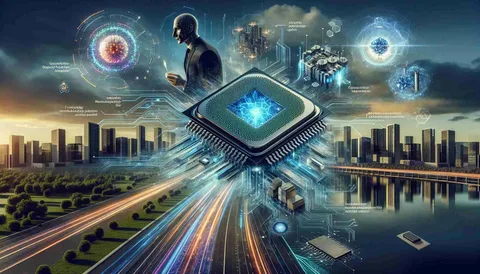
We are living at the edge of a technological renaissance. The pace of innovation is not just accelerating; it’s transforming the very fabric of our society, economy, and daily lives. Understanding the most impactful future technologies is no longer a task for science fiction enthusiasts—it’s essential for anyone who wants to thrive in the coming decade.
This article explores the top 10 world changing technologies that are poised to redefine our future. These aren’t distant dreams; they are active areas of development that will mature between 2024 and 2035, creating new industries, solving global challenges, and presenting unprecedented opportunities.
1. Artificial General Intelligence (AGI)
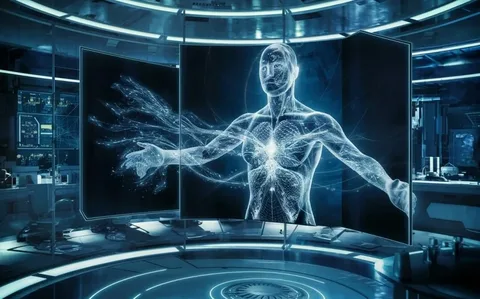
What it is: While most of us are familiar with Narrow AI (like the algorithms that recommend movies or drive cars), Artificial General Intelligence (AGI) is the holy grail. It refers to a machine with the ability to understand, learn, and apply its intelligence to solve any problem, much like a human being.
Why it’s a Game-Changer: AGI could be the last invention humanity ever needs to make, as it could itself solve complex global issues like climate change and disease. It would revolutionize every field, from scientific discovery and engineering to art and philosophy.
The Future Impact: The dawn of AGI will trigger a seismic shift in the job market, ethics, and what it means to be human. While true AGI is likely still a decade or more away, its potential makes it the most significant of all upcoming tech innovations.
2. Quantum Computing
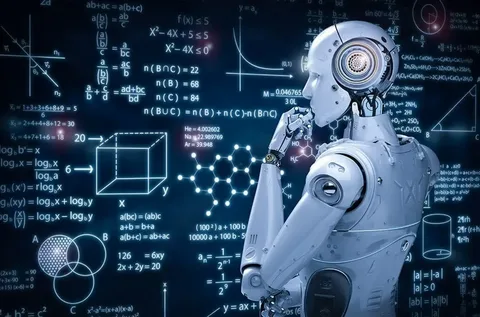
What it is: Instead of using traditional bits (0s and 1s), quantum computers use quantum bits or “qubits.” This allows them to perform mind-bogglingly complex calculations millions of times faster than today’s most powerful supercomputers.
Why it’s a Game-Changer: Quantum computing will allow us to model complex molecular interactions, revolutionizing drug discovery and materials science. It will break current encryption methods but also create unbreakable quantum encryption, reshaping cybersecurity.
The Future Impact: We are in the “noisy intermediate-scale quantum” (NISQ) era. In the next decade, fault-tolerant quantum computers will begin solving problems that are currently impossible, making them a cornerstone of sustainable technology and scientific advancement.
3. Brain-Computer Interfaces (BCIs)

What it is: BCIs create a direct communication pathway between the brain and an external device. Companies like Neuralink are pioneering this field, aiming to merge human cognition with computing power.
Why it’s a Game-Changer: The medical applications are profound: restoring sight to the blind, enabling paralyzed individuals to control robotic limbs, and treating neurological disorders. In the long term, BCIs could allow for direct brain-to-brain communication or downloading skills.
The Future Impact: This technology will challenge our concepts of privacy, identity, and human potential. It represents one of the most direct ways technologies of tomorrow will augment human capabilities.
4. Next-Generation Renewable Energy & Grid Storage
What it is: This goes beyond current solar and wind. Think of nuclear fusion, advanced geothermal, and perovskite solar cells that are far more efficient. Crucially, it also includes revolutionary grid storage solutions like solid-state batteries and gravity storage.
Why it’s a Game-Changer: Achieving commercial nuclear fusion would provide virtually limitless, clean energy. Coupled with advanced storage, it would solve the climate crisis, end our reliance on fossil fuels, and provide abundant power for global development.
The Future Impact: This is arguably the most critical set of future technologies for the survival and prosperity of our planet. It will decouple economic growth from environmental degradation.
5. Biotechnology & Gene Editing 2.0

What it is: While CRISPR-Cas9 was the first wave, next-generation gene editing tools like base and prime editing offer even greater precision. This also includes personalized medicine based on your DNA, lab-grown organs, and anti-aging therapies.
Why it’s a Game-Changer: We will move from treating diseases to curing them at the genetic level. Cancer could become a manageable condition, and inherited diseases could be eliminated. Gene editing could also make crops more nutritious and resilient.
The Future Impact: These advances will dramatically extend the human healthspan and reshape agriculture, but they also come with profound ethical questions about genetic inequality and “designer babies.”
read more about How to Master Generative AI in 2025: A Complete Guidehttps://codetinkerai.blog/2025/10/03/master-generative-ai-guide-2025/
6. Autonomous Systems and Robotics
What it is: This is the full realization of a self-driving world. It encompasses not just autonomous cars, but also delivery drones, robotic assistants in homes and factories, and autonomous ships and aircraft.
Why it’s a Game-Changer: It will redefine transportation, logistics, and manufacturing. Imagine a world with no traffic accidents, where goods are delivered by drone in minutes, and dangerous jobs are handled entirely by robots.
The Future Impact: The economic disruption will be massive, eliminating entire job categories while creating new ones. Cities will be redesigned with less need for parking, and supply chains will become hyper-efficient.
7. The Spatial Web & Web 3.0
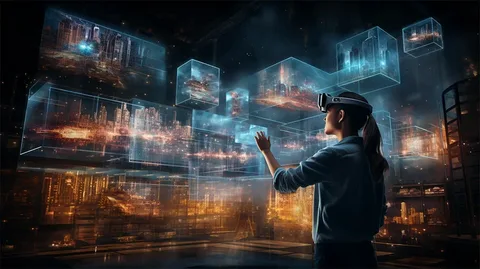
What it is: The Spatial Web is an evolution of the internet from 2D screens to an immersive, 3D world experienced through AR/VR glasses. Combined with the decentralized principles of Web3 (blockchain, digital ownership), it will create a new digital layer over our physical reality.
Why it’s a Game-Changer: You’ll be able to interact with digital information and people as if they were physically present. Digital assets, from art to real estate, will have verifiable ownership, creating new digital economies.
The Future Impact: The lines between the digital and physical worlds will blur forever, changing how we work, socialize, shop, and learn.
8. Nanotechnology and Advanced Materials
What it is: Nanotechnology involves manipulating matter at the atomic and molecular scale. This allows for the creation of materials with “impossible” properties: self-healing concrete, ultra-efficient filters for water purification, and smart fabrics that can change their properties.
Why it’s a Game-Changer: In medicine, nanobots could precisely deliver drugs to cancer cells. In electronics, it could lead to transistors the size of atoms, continuing Moore’s Law. It will make products stronger, lighter, and more efficient.
The Future Impact: This foundational technology will have ripple effects across all other industries, from construction and manufacturing to medicine and computing.
9. Neuromorphic Computing
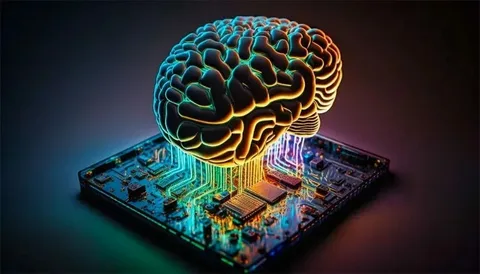
What it is: Instead of using traditional computer architecture, neuromorphic chips are designed to mimic the human brain’s neural structure. They are incredibly energy-efficient and excellent at processing sensory data and learning on the fly.
Why it’s a Game-Changer: This will enable a new generation of intelligent, low-power devices. Think of smartphones that need charging once a month, or sensors that can see, hear, and make complex decisions without being connected to the cloud.
The Future Impact: It will be the key to pervasive ambient computing, where smart devices are seamlessly integrated into our environment without being intrusive or energy-hungry.
10. Extended Reality (XR): AR, VR, and the Metaverse
What it is: Extended Reality is the umbrella term for all immersive technologies. Augmented Reality (AR) overlays digital information onto the real world, while Virtual Reality (VR) creates a completely simulated environment. The Metaverse is the persistent, shared universe these technologies access.
Why it’s a Game-Changer: XR will transform entertainment, education, and remote work. Surgeons will practice on virtual patients, engineers will collaborate on 3D models from different continents, and history classes will take place in ancient Rome.
The Future Impact: This will become a primary platform for human interaction and creativity, offering new depths of experience that are impossible on a flat screen.
Conclusion: A Future of Converging Technologies

The most important trend to understand is that these future technologies do not exist in a vacuum. They will converge and amplify each other. AI will design new materials via nanotechnology. Quantum computers will accelerate the development of AGI. BCIs will allow us to interact with the Spatial Web.
The next decade will be defined by our ability to steer these powerful world changing technologies toward the benefit of all humanity. The future isn’t just something that happens to us; it’s something we build. By understanding these trends today, you can be an active participant in shaping the world of tomorrow.



GIPHY App Key not set. Please check settings