

 Saba Khalil

When Apple announced its transition from Intel processors to its own custom chips, the tech world was watching. But few predicted the seismic shift in performance and battery life that Apple Silicon would deliver. The hallmark of this revolution isn’t just raw speed; it’s a profound, game-changing Apple Silicon efficiency that redefines what we expect from our computers. But how did Apple achieve this? The answer lies in a perfect storm of architectural decisions, deep integration, and a long-term vision.
This deep dive unravels the engineering secrets behind the remarkable Apple Silicon efficiency, transforming complex concepts into an accessible guide for anyone curious about the tech powering their MacBook, iPad, or even iPhone.
Read more about The Hidden World of Open-Source Hardware Development
The Architectural Foundation: ARM and the Power-Efficient Core
At the heart of Apple Silicon efficiency is the ARM architecture. Unlike the Complex Instruction Set Computing (CISC) architecture used by Intel and AMD (x86-64), ARM is based on Reduced Instruction Set Computing (RISC).
- Simplicity is Key: RISC philosophy uses simpler, more atomic instructions. This allows the processor to execute tasks with fewer cycles and, crucially, less power. While a complex x86 instruction might do more in one go, it requires more transistors and power. ARM’s simpler approach is the foundational layer of Apple Silicon efficiency.
- A Decade of Refinement: Apple didn’t just license ARM designs; they licensed the ARM instruction set and built their own custom cores from the ground up. Over a decade of development for the A-series chips in iPhones and iPads gave Apple an unparalleled head start in optimizing for performance-per-watt.
The System-on-a-Chip (SoC) Model: Everything is Integrated
Unifying Components for Maximum Efficiency
Perhaps the single biggest contributor to Apple Silicon efficiency is the System-on-a-Chip (SoC) design. Instead of having a separate CPU, GPU, RAM, and other controllers on the motherboard, Apple integrates them all onto a single piece of silicon.
- Reducing Distance, Saving Energy: In a traditional PC, data has to travel between discrete components across the motherboard. This journey consumes time and power. In an Apple Silicon SoC, the CPU, GPU, and Neural Engine are all adjacent, sharing resources. This drastically reduces the distance data must travel, cutting latency and power consumption significantly.
- The Unified Memory Architecture (UMA): This is a cornerstone of Apple Silicon efficiency. The CPU, GPU, and other cores share a single pool of memory. There’s no need to copy data between the “system memory” and “video memory,” a process that is slow and energy-intensive in discrete designs. All components work on the same data in one place, leading to blazingly fast and efficient performance, especially in graphics-intensive tasks.
The Secret Sauce: Heterogeneous Computing and Specialization

Raw clock speed isn’t the goal; intelligent task distribution is. Apple Silicon masters this through heterogeneous computing.
High-Performance vs. High-Efficiency Cores
Intelligent Workload Management
Apple’s SoCs feature a combination of high-performance (“P-cores”) and high-efficiency (“E-cores”) cores.
- P-Cores: These are designed for demanding single-threaded tasks like video editing, code compilation, or complex calculations. They are powerful but consume more energy.
- E-Cores: These cores are incredibly power-sipping, designed to handle background tasks like email syncing, music playback, or web browsing. They are so efficient that they can often perform these tasks using a fraction of the power of a P-core.
The magic is in the scheduler—the part of the macOS that assigns tasks to cores. It intelligently routes lightweight tasks to the E-cores, leaving the P-cores dormant until they are truly needed. This dynamic load balancing is a critical driver of the exceptional Apple Silicon efficiency and the legendary battery life in MacBooks.
Dedicated Engines for Specific Tasks
The Power of Specialization
Beyond the CPU, Apple Silicon includes specialized processors for specific workloads. This is the ultimate form of optimization.
- The Neural Engine: Designed exclusively for machine learning and artificial intelligence tasks, this dedicated hardware accelerates everything from photo analysis and voice recognition to live text translation, all with minimal power draw.
- Media Engine: This block includes dedicated hardware for encoding and decoding video (like H.264, HEVC, and ProRes). When you edit or export a video, this specialized engine does the heavy lifting instead of the general-purpose CPU or GPU, making the process incredibly fast and efficient.
- Secure Enclave: Handles encryption and security separately, offloading that work from the main CPU.
By having the right tool for every job, the main cores are free to handle general tasks, preventing power-hungry bottlenecks.
The Software Advantage: The Vertical Integration Loop
Hardware is only one half of the equation. The ultimate Apple Silicon efficiency is unlocked through a deep, symbiotic relationship with software.
- A Unified Platform: Apple controls both the hardware and the operating system (macOS, iOS, iPadOS). This allows them to optimize the software specifically for the silicon it runs on. Developers at Apple can write code with intimate knowledge of the chip’s architecture, cache sizes, and memory bandwidth.
- Rosetta 2 and Beyond: Even when running apps designed for Intel Macs through the Rosetta 2 translation layer, the efficiency is remarkable. The overhead of translation is minimized by the raw efficiency of the underlying hardware.
- Native App Ecosystem: As more developers build native Apple Silicon apps (Universal 2 binaries), they can directly leverage all the specialized hardware, pushing the Apple Silicon efficiency even further.
The Manufacturing Edge: TSMC’s Advanced Nodes
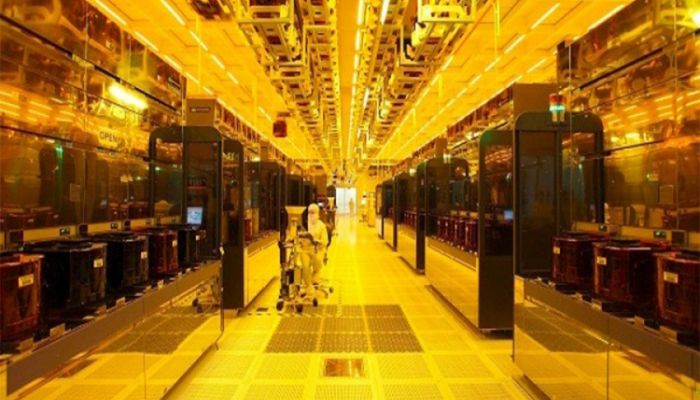
Apple’s partnership with Taiwan Semiconductor Manufacturing Company (TSMC) provides access to the world’s most advanced semiconductor manufacturing processes. Apple Silicon chips are built on TSMC’s 5-nanometer and now 3-nanometer processes. A smaller process node means more transistors can be packed into the same space, which directly leads to better performance and lower power consumption—the very definition of improved efficiency.
Conclusion: A Harmonious Engineering Symphony
The unparalleled Apple Silicon efficiency isn’t the result of a single trick. It’s the culmination of a coherent, multi-faceted strategy:
- A power-efficient ARM foundation.
- A revolutionary Unified Memory Architecture within a single SoC.
- Intelligent, heterogeneous core design that matches the core to the task.
- A fleet of specialized engines for AI, media, and security.
- Deep, system-level software and hardware integration.
This holistic approach allows Apple to deliver breathtaking performance without the punishing power drain and heat output of traditional processors. It’s a testament to the power of controlling the entire stack, from the silicon to the user interface. The result is a user experience that feels both magically powerful and effortlessly enduring—a true engineering marvel that continues to set a new standard for the entire computing industry.




GIPHY App Key not set. Please check settings