When people discuss artificial intelligence, conversations often polarize into either utopian visions of effortless productivity or dystopian fears of mass unemployment. But the real story of AI’s influence on work and creativity is far more nuanced—and surprisingly different from what most headlines suggest. The true AI impact on jobs and creative fields involves subtle transformations that are already reshaping industries in ways many haven’t noticed.
This article explores the less-discussed dimensions of how artificial intelligence is transforming work and creativity. Beyond the obvious automation of routine tasks, we’ll examine how AI is creating new roles, transforming existing ones, and unexpectedly enhancing human creativity in fields ranging from healthcare to Hollywood.
Rethinking the Narrative: Beyond Job Replacement
The common fear that AI will simply replace human workers represents an oversimplification of a much more complex transformation. The real AI impact on jobs involves restructuring rather than mere elimination. According to World Economic Forum predictions, while AI may displace 85 million jobs globally by 2025, it will simultaneously create 97 million new roles—a net positive that requires significant workforce adaptation.
This restructuring represents the core of AI impact on jobs: not mass unemployment, but a fundamental reshaping of what work looks like across industries. The most significant changes aren’t happening where most people are looking, creating a transformation that’s both more subtle and more profound than simple automation.
The Hidden Job Market Transformation
The most interesting aspect of AI impact on jobs lies in the creation of roles that didn’t exist five years ago. Positions like “AI ethics officer,” “prompt engineer,” and “machine learning operations specialist” have emerged directly from AI implementation. These roles don’t represent simple replacements but entirely new categories of work that blend technical and human-centric skills.
Meanwhile, traditional roles are evolving in unexpected ways. Rather than replacing financial analysts outright, AI has transformed them into “AI-assisted strategists” who interpret complex algorithmic outputs and provide contextual human judgment. This evolution represents the nuanced reality of AI impact on jobs—enhancement rather than replacement for many knowledge workers.
The Subtle AI Impact on Creative Professions
Perhaps the most misunderstood aspect of AI’s influence lies in creative fields. The narrative of “AI replacing artists” misses the more complex reality of how creative professionals are actually using these tools.
The New Creative Collaboration
The genuine AI impact on jobs in creative fields involves augmentation rather than replacement. Graphic designers aren’t being laid off en masse; instead, they’re using AI tools to accelerate brainstorming, generate initial concepts, and handle repetitive aspects of their workflow. This allows them to focus on higher-level creative direction and client collaboration.
In writing and content creation, we’re seeing a similar pattern. Rather than replacing writers, AI serves as a collaborative tool that helps overcome creative blocks, research efficiently, and generate multiple stylistic variations. The human professional then curates, refines, and adds the emotional depth and cultural context that AI cannot replicate.
H3: Unexpected Creative Renaissance Through AI Tools
The most surprising AI impact on jobs in creative industries might be the democratization of creative expression. AI tools have enabled:
- Small businesses to create professional-quality marketing materials without agency budgets
- Individuals with creative ideas but limited technical skills to bring their visions to life
- Established artists to experiment with new styles and techniques at unprecedented speed
- Cross-disciplinary creators to work across mediums that previously required years of specialized training
This expansion of who can create and what they can create represents a fundamental shift in the creative landscape—one that creates new opportunities even as it transforms existing roles.
The Skills Shift: Preparing for the AI-Augmented Workplace
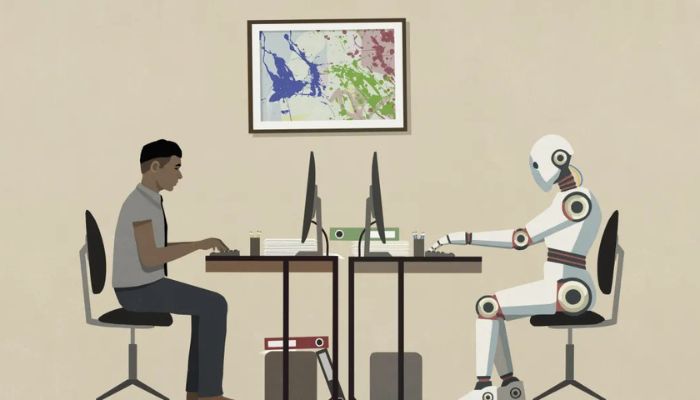
Understanding the real AI impact on jobs requires recognizing how the demanded skill set is evolving. The most valuable employees in the AI era aren’t necessarily those with the deepest technical expertise, but those who can effectively bridge human and artificial intelligence.
The Rise of “Human Skills” in a Technical World
Paradoxically, as AI handles more technical tasks, distinctly human capabilities are becoming more valuable. Skills like critical thinking, emotional intelligence, creativity, and ethical judgment are increasingly differentiating human workers from AI systems. This represents a fascinating dimension of AI impact on jobs: the revaluation of precisely those capabilities that are most difficult to automate.
Employers across industries report increased demand for:
- Complex problem-solving in ambiguous situations
- Interpersonal communication and collaboration
- Adaptability and continuous learning
- Ethical reasoning and decision-making
These skills represent the human complement to AI capabilities—the pieces that complete the puzzle of effective human-AI collaboration.
Industries Experiencing Unexpected AI Transformations
While much attention focuses on manufacturing and customer service, the AI impact on jobs extends to fields where the changes are less visible but equally significant.
Healthcare’s Quiet Revolution
Beyond robotic surgery, AI is transforming healthcare roles in subtler ways. Radiologists are evolving from image scanners to AI-supervised diagnosticians who verify and interpret algorithmic findings. Nurses use AI-powered documentation tools that free up time for patient care. The AI impact on jobs in healthcare means less administrative burden and more human interaction for medical professionals.
Education’s Personalized Learning Facilitators
The AI impact on jobs in education isn’t about replacing teachers but transforming them into learning facilitators. AI handles personalized content delivery and assessment, allowing educators to focus on mentorship, emotional support, and fostering critical thinking. This shift from “sage on the stage” to “guide on the side” represents a fundamental evolution of the teaching profession.
Scientific Research Acceleration
In research fields, AI isn’t replacing scientists but dramatically accelerating their work. Researchers who once spent months on literature reviews can now use AI to identify relevant studies and patterns across disciplines. The AI impact on jobs in science means faster discovery cycles and new opportunities for cross-disciplinary innovation.
Navigating the Transition: Strategies for Individuals and Organizations
Understanding the real AI impact on jobs is only half the battle—successfully navigating this transformation requires proactive strategies.
For Individuals: Future-Proofing Your Career
The workers who will thrive in the AI-augmented workplace are those who:
- Develop T-shaped skills: deep expertise in one area complemented by broad knowledge across disciplines
- Embrace continuous learning, particularly at the intersection of their field and AI applications
- Cultivate uniquely human skills like creativity, empathy, and ethical judgment
- Maintain flexibility and adaptability as roles continue to evolve
For Organizations: Building AI-Ready Cultures
Companies successfully managing the AI impact on jobs tend to:
- Invest in reskilling programs that prepare employees for evolving roles
- Foster cultures of experimentation and learning around AI tools
- Develop ethical frameworks for AI implementation that consider workforce impact
- Create hybrid teams that leverage both human and artificial intelligence
The Bigger Picture: AI and the Future of Human Potential
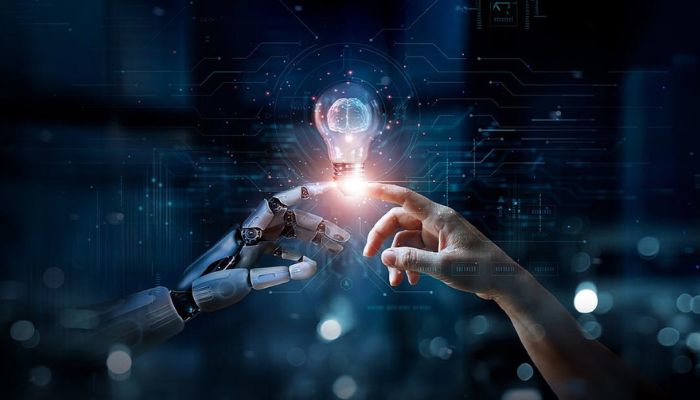
The most profound AI impact on jobs might not be on specific roles or industries, but on our fundamental relationship with work itself. As AI handles more routine tasks, both cognitive and manual, humans have the opportunity to focus on what we do best: creative problem-solving, emotional connection, and meaning-making.
This transition won’t be seamless or evenly distributed. There will be legitimate disruptions and challenging transitions. But understanding the nuanced reality of AI impact on jobs allows us to approach these changes with clearer vision and greater agency.
Read more about How to Fine-Tune Language Models for Your Business Needs
Conclusion: Embracing the Human-AI Partnership
The true story of AI’s influence on work and creativity is neither purely optimistic nor pessimistic—it’s complex and context-dependent. The AI impact on jobs involves transformation more than replacement, creating new opportunities even as it changes existing ones. In creative fields, AI serves as both tool and collaborator, expanding what’s possible rather than simply automating what exists.
As we move forward, the most successful approach will be one that recognizes AI as a powerful tool for augmenting human capabilities rather than replacing them. By focusing on the unique strengths that humans bring to the table—creativity, empathy, ethics, and contextual understanding—we can navigate the changing landscape of work and creativity with confidence, turning technological disruption into human opportunity.
Leave a Reply