

 Saba Khalil
The world of Artificial Intelligence (AI) and Machine Learning (ML) can seem like a futuristic realm reserved for PhDs and tech giants. But what if I told you that the gateway to this exciting field is more accessible than you think? The key lies in Python, a versatile and beginner-friendly programming language, and its powerful ecosystem of libraries.
If you’re wondering how to start machine learning, you’ve come to the right place. This guide will walk you through the five essential Python libraries that form the bedrock of almost every machine learning project. Think of them as your fundamental toolbox for data science and AI programming.
By mastering these libraries, you’ll be well on your way from a curious beginner to someone who can confidently build your first ML model. Let’s dive in!
Why Python for Machine Learning?
Before we look at the specific tools, let’s address the “why.” Python has become the undisputed champion in the data science and ML communities for a few simple reasons:
- Readability: Its clean syntax resembles everyday English, making it easy to learn and understand.
- Vast Community: A massive, active community means endless tutorials, forums, and support.
- The Secret Sauce: Libraries: Python’s true power comes from its specialized libraries, which are pre-written code bundles that let you perform complex mathematical and analytical tasks with just a few lines of code.
Now, let’s open that toolbox.
1. NumPy: The Foundation of Numerical Computing
What it is: NumPy, which stands for Numerical Python, is the absolute bedrock upon which the entire Python data science ecosystem is built. You simply cannot do machine learning for beginners without it.
Why it’s Essential: At its heart, ML is all about data and numbers. NumPy introduces the powerful ndarray (N-dimensional array) object, which allows you to efficiently store and manipulate large datasets of numbers. It’s incredibly fast because it’s written in C and Fortran, but you get to use it with simple Python commands.
What you’ll use it for:
- Performing complex mathematical operations on entire datasets at once.
- Handling multi-dimensional arrays and matrices.
- Serving as the data structure that other libraries (like Pandas and Scikit-Learn) rely on.
Think of it as: The bricks and mortar for your ML projects. Everything else is built on top of it.
2. Pandas: Your Data Wrangling Superpower
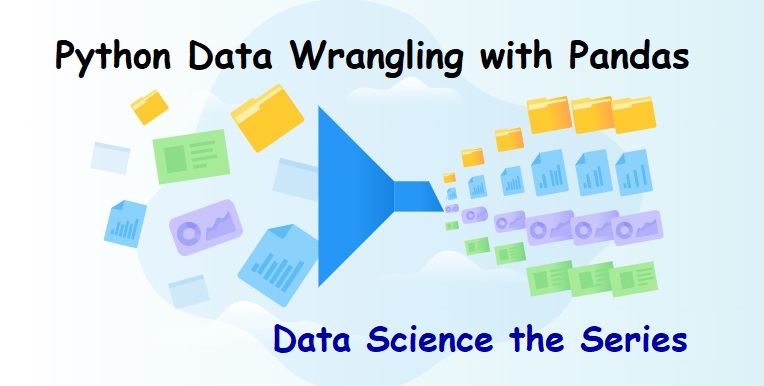
What it is: If NumPy is the bricks, Pandas is the master architect that designs the house. It’s the go-to library for data manipulation and analysis.
Why it’s Essential: In the real world, data is messy. It comes in CSV files, Excel spreadsheets, and databases, often with missing values, strange formatting, and irrelevant information. Pandas gives you the tools to clean, transform, and explore this raw data, a critical step known as “data wrangling.”
read more about The Rise of Quantum Computing: What It Means for Cybersecurity and Data Privacyhttps://codetinkerai.blog/wp-admin/post.php?post=252&action=edit
What you’ll use it for:
- Loading data from various file formats (CSV, Excel, SQL).
- Cleaning data by handling missing values and removing duplicates.
- Filtering, grouping, and sorting data to find meaningful patterns.
- Its primary data structures, Series (1-dimensional) and DataFrames (2-dimensional, like a spreadsheet), are intuitive to work with.
Think of it as: Your digital spreadsheet on steroids, giving you unparalleled control over your data.
3. Matplotlib & Seaborn: Visualizing Your Data’s Story
What they are: Matplotlib is the foundational plotting library for Python, offering immense control over every aspect of a graph. Seaborn is built on top of Matplotlib and provides a higher-level interface for creating statistically-oriented, beautiful visualizations with much less code.
Why they’re Essential: A huge part of machine learning for beginners is understanding your data before you even build a model. Visualizations help you see trends, spot outliers, and understand relationships between variables that you might miss in a table of numbers.
What you’ll use them for:
- Creating histograms to understand data distribution.
- Plotting scatter plots to see correlations.
- Generating bar charts, line plots, and heatmaps.
- Seaborn is particularly great for visualizing the results of your models.
Think of them as: Your data’s storytelling tools, turning numbers into compelling visual narratives.
4. Scikit-Learn: The Machine Learning Workhorse
What it is: This is the library you’ve been waiting for. Scikit-Learn is the quintessential library for classical machine learning in Python. It’s user-friendly, efficient, and incredibly well-documented, making it perfect for beginners.
Why it’s Essential: Scikit-Learn provides a consistent and simple interface for dozens of the most popular machine learning algorithms. It handles all the complex math in the background, allowing you to focus on the core concepts of training and evaluating models.
What you’ll use it for:
- Classification (e.g., spam detection, image recognition).
- Regression (e.g., predicting house prices, stock values).
- Clustering (e.g., customer segmentation).
- It also includes all the essential tools for splitting data, preprocessing features, and evaluating model performance, making it a complete package.
Think of it as: Your all-in-one ML toolkit, where you can grab a pre-built algorithm and start using it right away.
5. TensorFlow & PyTorch: Diving into Deep Learning
What they are: While Scikit-Learn is perfect for most standard tasks, TensorFlow (backed by Google) and PyTorch (backed by Meta) are the powerhouses for Deep Learning—a subfield of ML that uses complex neural networks.
Why they’re Essential for the Journey: As a beginner, you might not use these on day one. However, it’s crucial to know they exist. Once you’re comfortable with the basics and want to tackle more advanced problems like computer vision, natural language processing, or building sophisticated AI, these libraries are your next step.
What you’ll use them for:
- Building and training deep neural networks.
- Creating image recognition systems.
- Developing AI for games and complex simulations.
Think of them as: The advanced engineering lab you graduate to after mastering the fundamentals in your starter toolbox.
Your Beginner’s Roadmap to Getting Started
Feeling overwhelmed? Don’t be! The path to learning is sequential. Here’s a simple roadmap:
- Master the Basics: Get comfortable with core Python syntax.
- Learn NumPy: Understand arrays and numerical operations.
- Become a Pandas Pro: Practice loading and cleaning different datasets.
- Visualize with Matplotlib/Seaborn: Create plots to explore your cleaned data.
- Build Your First Model with Scikit-Learn: Start with a simple algorithm like Linear Regression or a Classification model. Follow a tutorial to see the entire process from end-to-end.
Conclusion: Your Journey Starts Now

The path to mastering machine learning is a marathon, not a sprint. By focusing on these five essential Python libraries, you are building a strong, practical foundation. Start with NumPy and Pandas, visualize your progress with Matplotlib, and then take the exciting leap into building intelligent systems with Scikit-Learn.
The world of AI programming is at your fingertips. Install Python, open a Jupyter Notebook, and import these powerful libraries. Your adventure to build your first ML model begins today.



GIPHY App Key not set. Please check settings