
Imagine a surgeon performing a complex procedure without a single incision, or a drug delivering its payload directly to a single cancerous cell without harming the healthy tissue around it. This is not a scene from a science fiction movie; it is the rapidly approaching future of healthcare, powered by the incredible field of micro-robotics in medicine. This transformative technology, which involves the design and application of robots on a millimeter to micrometer scale, is poised to redefine the boundaries of medical science, offering new hope for minimally invasive treatments, precise diagnostics, and personalized therapeutic strategies.
The core promise of micro-robotics in medicine lies in its ability to operate at a scale that was previously inaccessible. These tiny machines, often inspired by biological organisms like bacteria or sperm cells, can navigate through the intricate landscapes of the human body—such as the bloodstream, the digestive tract, or the delicate structures of the eye—to perform tasks with unparalleled accuracy. This article delves into the fascinating world of medical micro-robots, exploring how they work, their groundbreaking applications, and the challenges that must be overcome to realize their full potential.
What Are Medical Micro-Robots and How Do They Work?
At its heart, the field of micro-robotics in medicine involves creating tiny, untethered devices designed to perform specific functions inside the body. Unlike traditional robots, these are not built with nuts and bolts. They are often constructed from advanced biocompatible materials like hydrogels or biodegradable polymers and can be powered by external magnetic fields, chemical reactions, or even ultrasound.
The operation of these micro-robotic systems is a feat of engineering. For instance, a common method of control involves using external magnetic fields to precisely steer and propel swarms of magnetic micro-robots through bodily fluids. This allows a clinician to guide them to a target site, such as a tumor, without any physical connection to the outside world. This level of control is what makes micro-robotic technology so revolutionary, turning the entire human body into a navigable space for medical intervention.
Revolutionizing Surgery with Minimally Invasive Micro-Robots
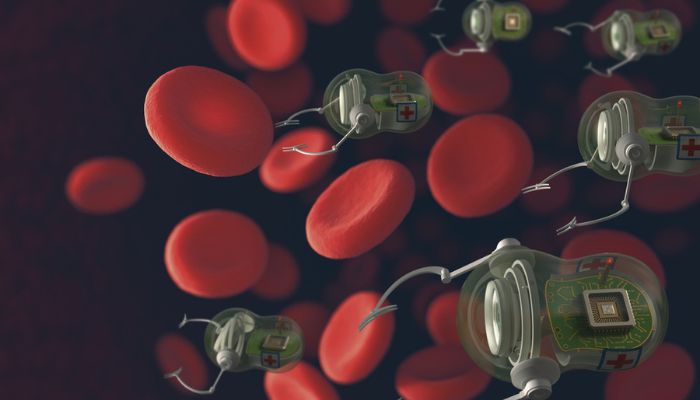
One of the most immediate applications for this technology is in the realm of surgery. The goal of micro-robotics in medicine is to make procedures less invasive, reducing patient trauma, scarring, and recovery time.
- Precision Micro-Surgery: Imagine a micro-robot capable of performing delicate eye surgery to restore vision or clearing a clogged blood vessel in the brain from within. These devices can be guided to operate on structures that are far too small and fragile for a surgeon’s hand or even the most advanced traditional robotic systems.
- In-body Actuation and Manipulation: Micro-robots can act as tiny hands inside the body. They could be used to hold tissues in place, apply localized therapeutic agents, or even remove microscopic plaque from artery walls, all through natural orifices or tiny incisions.
The Era of Targeted Drug Delivery and Cellular Therapy
Perhaps the most promising application of micro-robotics in medicine is the ability to deliver treatments directly to the site of disease. This “magic bullet” approach could dramatically increase the efficacy of drugs while minimizing debilitating side effects.
Read more about AI for Good: How Artificial Intelligence is Our Shield Against Natural Disasters
- On-Demand Cancer Treatment: A swarm of drug-loaded micro-robots could be navigated to a tumor. Once in position, they could release their chemotherapy payload directly into the cancerous cells, sparing the surrounding healthy tissue from damage. This targeted approach could make treatments more potent and tolerable for patients.
- Managing Chronic Diseases: For conditions like diabetes, micro-robots could act as autonomous systems within the body, monitoring blood glucose levels and releasing insulin as needed, creating a bio-responsive, closed-loop system for disease management.
Transforming Diagnostics and Biopsy Procedures
Beyond treatment, micro-robotics in medicine is set to revolutionize how we diagnose disease. These devices can act as mobile labs, gathering critical information from deep inside the body.
- Micro-Scale Biopsies: A micro-robot could be directed to a suspicious lesion to collect a tissue sample for analysis, enabling earlier and more accurate diagnosis of conditions like cancer without the need for major surgical intervention.
- In-situ Sensing and Imaging: Some micro-robots are being developed as mobile sensors. They could travel to a specific organ, measure chemical markers of disease (like pH or specific proteins), and transmit that data wirelessly to an external device, providing real-time diagnostic information.
The Future of Rehabilitation and Tissue Engineering
The impact of micro-robotic systems extends to healing and regeneration. Researchers are exploring how these tiny machines can assist in physical therapy and even help build new tissues.
- Cellular-Level Rehabilitation: Magnetic micro-robots could be used to apply precise mechanical forces to individual cells or tissues, stimulating repair and regeneration in damaged nerves or muscles.
- Scaffolds for Growth: In tissue engineering, micro-robots can be used as programmable, dynamic scaffolds to guide the growth and organization of cells into functional tissues, bringing us closer to the dream of engineering replacement organs.
Navigating the Challenges on the Path to Clinical Use

Despite the immense promise, the widespread adoption of micro-robotics in medicine faces significant hurdles. Ensuring the biocompatibility and safe biodegradation of these devices is paramount. Precise control and tracking of multiple micro-robots deep within the body remain complex technical challenges. Furthermore, navigating the rigorous regulatory pathway for approval from bodies like the FDA requires extensive clinical trials to prove both safety and efficacy. However, with the pace of current research, these challenges are steadily being addressed.
Conclusion: A New Frontier in Healthcare is Dawning
The development of micro-robotics in medicine represents a paradigm shift in how we approach health and healing. By operating at the same scale as our cells and tissues, these tiny technological marvels offer a future of medicine that is less invasive, more precise, and profoundly personalized. While there is still work to be done, the path forward is clear. As research continues to bridge the gap between laboratory innovation and clinical practice, the “tiny tech” of micro-robotics is undoubtedly destined to make a very big impact on the future of global health.
Leave a Reply