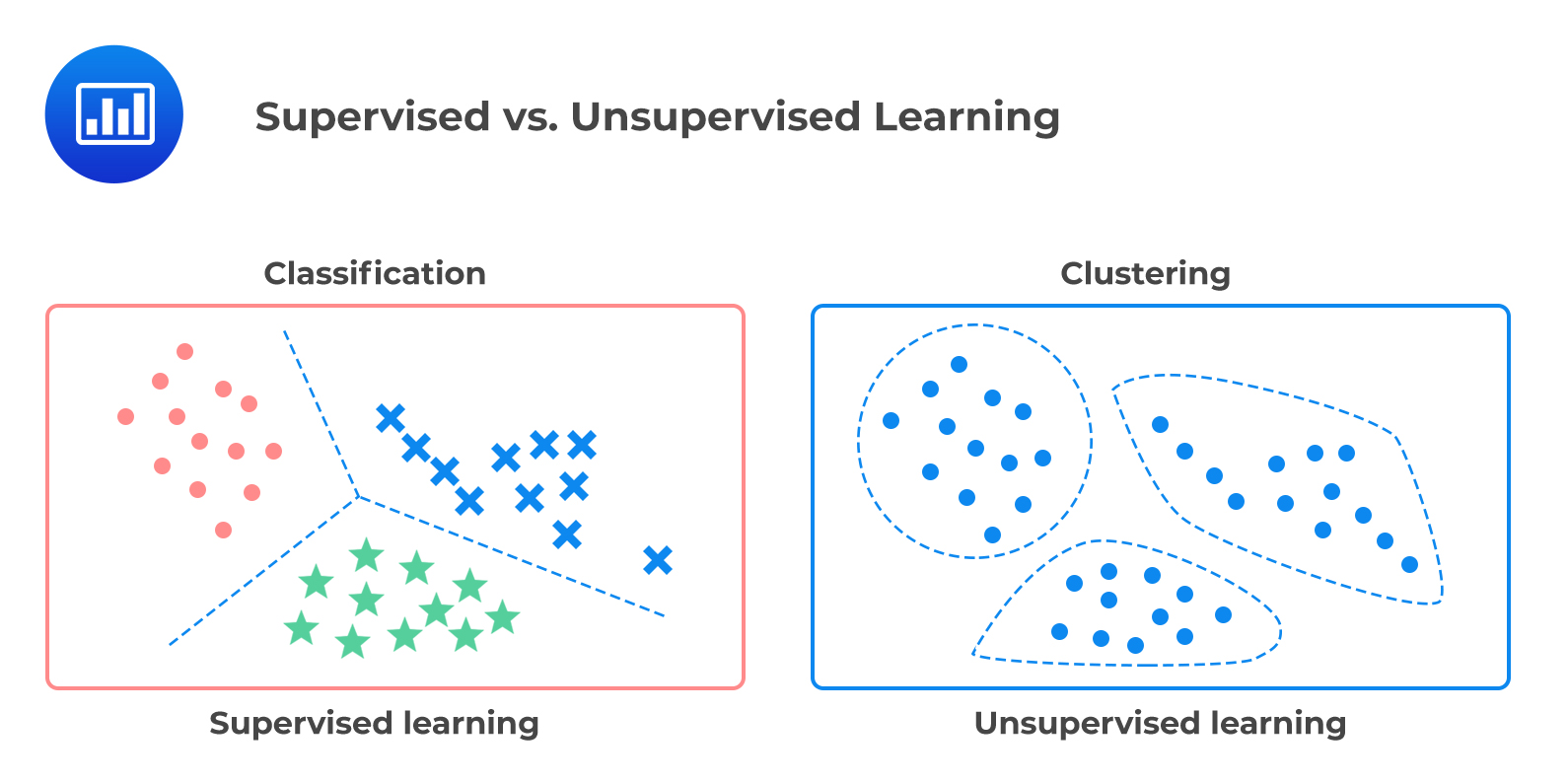
In the rapidly evolving landscape of artificial intelligence, understanding the fundamental difference between supervised and unsupervised learning remains crucial for anyone looking to grasp how machines truly learn. As we move into 2025, these concepts have become more relevant than ever, powering everything from advanced healthcare diagnostics to personalized shopping experiences.
If you’ve ever wondered how Netflix knows exactly what you want to watch next, or how your bank detects fraudulent transactions before you even notice, you’re encountering the practical applications of these two machine learning paradigms.
This comprehensive guide will demystify supervised vs unsupervised learninghttps://cloud.google.com/discover/supervised-vs-unsupervised-learning using clear explanations, relatable analogies, and real-world examples that show how these technologies are shaping our world in 2025.
The Core Difference: The Answer Key Analogy
The simplest way to understand supervised vs unsupervised learning is through a school analogy:
- Supervised Learning = Learning with an Answer Key
Imagine studying for a test with a textbook that includes both practice questions AND answers. You can check your work, learn from mistakes, and gradually understand the patterns. - Unsupervised Learning = Discovering Patterns Without Guidance
Now imagine being given a dataset with no labels or answers—like being handed a thousand different leaves and being asked to organize them without any botanical knowledge. You’d naturally group them by color, shape, or size based on the patterns you observe.
This fundamental difference—the presence or absence of labeled data—defines the entire supervised vs unsupervised learning paradigm.
What is Supervised Learning? The Guided Approach

Supervised learning involves training algorithms using labeled datasets, where each example includes both input data and the correct output. The model learns to map inputs to outputs, gradually improving its ability to make accurate predictions on new, unseen data.
Key Characteristics for 2025:
- ✅ Uses labeled training data
- ✅ Direct feedback mechanism
- ✅ Predicts outcomes/classifications
- ✅ Performance is easily measurable
- ✅ Requires human intervention for labeling
Real-World Supervised Learning Examples in 2025:
- Medical Diagnosis Systems
Modern healthcare AI uses supervised learning to analyze medical images. Radiologists label thousands of X-rays, MRIs, and CT scans as “healthy” or showing specific conditions. The trained model can then assist doctors in detecting diseases like cancer with remarkable accuracy. - Autonomous Vehicle Navigation
Self-driving cars use supervised learning to recognize traffic signs, pedestrians, and other vehicles. They’re trained on millions of labeled images, learning to identify stop signs, traffic lights, and potential hazards. - Sentiment Analysis for Customer Service
Companies train models on customer messages labeled as “positive,” “negative,” or “neutral” to automatically route complaints, measure satisfaction, and identify emerging issues.
What is Unsupervised Learning? The Pattern Detective

Unsupervised learning algorithms work with unlabeled data, searching for inherent patterns, structures, or groupings without any predefined categories or guidance.
Key Characteristics for 2025:
- 🔍 Works with unlabeled data
- 🔍 No direct feedback mechanism
- 🔍 Discovers hidden patterns
- 🔍 Performance can be subjective
- 🔍 Minimal human intervention needed
Real-World Unsupervised Learning Examples in 2025:
- Advanced Customer Segmentation
E-commerce platforms analyze purchasing behavior to identify micro-segments of customers they didn’t know existed, enabling hyper-personalized marketing campaigns that go beyond traditional demographics. - Anomaly Detection in Cybersecurity
Systems monitor network traffic patterns to identify unusual behavior that could indicate security breaches, zero-day attacks, or internal threats—without knowing what “normal” looks like in advance. - Genomic Pattern Discovery
Researchers use unsupervised learning to identify previously unknown genetic markers and biological patterns, accelerating drug discovery and personalized medicine.
Supervised vs Unsupervised Learning: 2025 Comparison Table
| Aspect | Supervised Learning | Unsupervised Learning |
|---|---|---|
| Data Requirements | Labeled data | Raw, unlabeled data |
| Computational Complexity | Generally higher | Often lower |
| Primary Goal | Prediction & Classification | Pattern discovery & insight generation |
| Common Algorithms | Random Forests, Neural Networks, SVM | K-means, DBSCAN, Autoencoders |
| Interpretability | More interpretable results | Can be harder to interpret |
| Human Involvement | High (for labeling) | Minimal |
| 2025 Applications | Diagnostic AI, Fraud detection, Predictive maintenance | Market basket analysis, Social network analysis, Drug discovery |

When to Use Each Approach: A Practical 2025 Guide
Choose Supervised Learning When:
- You have clearly labeled historical data
- You need to make specific predictions or classifications
- Accuracy and precision are critical
- You can afford the time/cost of data labeling
- The problem has well-defined outcomes
Example: Predicting customer churn for a subscription service where you have historical data showing which customers left and why.
Choose Unsupervised Learning When:
- You’re exploring unknown data patterns
- Data labeling is impractical or expensive
- You want to discover hidden segments or relationships
- You’re dealing with completely new problem domains
- You need to reduce data dimensionality
Example: Analyzing user behavior on a new social media platform to discover natural user types and usage patterns.
The Emerging Middle Ground: Semi-Supervised and Self-Supervised Learning

As we move further into 2025, the lines between supervised and unsupervised learning are blurring with hybrid approaches:
read more about Top 10 Future Technologies That Will Change the Worldhttps://codetinkerai.blog/wp-admin/post.php?post=274&action=edit
Semi-Supervised Learning
This approach uses a small amount of labeled data combined with a large amount of unlabeled data. It’s particularly useful when obtaining fully labeled datasets is expensive or time-consuming.
2025 Application: Medical image analysis where experts label a small subset of images, and the model learns from both labeled and unlabeled data.
Self-Supervised Learning
Models generate their own labels from the data itself, creating a form of supervised learning without human intervention.
2025 Application: Large language models like GPT-4 that learn by predicting the next word in a sentence, using the surrounding context as implicit labels.
Common Challenges and Solutions in 2025
Supervised Learning Challenges:
- Data Labeling Costs: Automated labeling tools and crowd-sourcing platforms are reducing this burden
- Overfitting: Advanced regularization techniques and more sophisticated validation methods
- Label Quality: Improved data curation pipelines and quality assurance protocols
Unsupervised Learning Challenges:
- Evaluation Difficulty: New metrics and visualization tools for assessing cluster quality
- Interpretability: Enhanced explanation algorithms and visualization dashboards
- Scalability: Distributed computing and optimized algorithms for large datasets
Getting Started in 2025: Your Learning Path
For Supervised Learning:
- Start with classification using scikit-learn’s built-in datasets
- Practice with real-world datasets from Kaggle
- Learn about train-test splits and cross-validation
- Explore deep learning frameworks like TensorFlow or PyTorch
For Unsupervised Learning:
- Begin with clustering algorithms like K-means
- Experiment with dimensionality reduction using PCA
- Work with anomaly detection datasets
- Explore neural network-based approaches like autoencoders
The Future Beyond 2025

The distinction between supervised and unsupervised learning will continue to evolve as:
- Reinforcement learning bridges the gap between both approaches
- Foundation models demonstrate unprecedented few-shot learning capabilities
- Neuromorphic computing enables more brain-like learning patterns
- Federated learning allows models to learn from decentralized data while preserving privacy
Conclusion: Two Sides of the Same Coin
Understanding the difference between supervised and unsupervised learning is fundamental to grasping how artificial intelligence systems work. While they approach learning from different directions, both are essential tools in the modern AI toolkit.
As we progress through 2025, the most powerful applications will likely combine both approaches, using unsupervised learning to discover patterns and supervised learning to make precise predictions based on those discoveries.
Whether you’re a business leader making technology decisions, a developer building AI applications, or simply someone curious about how modern technology works, recognizing when to apply supervised vs unsupervised learning will help you better understand and leverage the AI revolution shaping our world.
Leave a Reply