
For decades, the password has been the cornerstone of digital security. But let’s be honest: the relationship is broken. We struggle to create complex, unique passwords for every account, and then we can’t remember them. This human flaw is exactly what cybercriminals exploit, making stolen or guessed passwords the leading cause of data breaches. This widespread vulnerability is precisely why the industry is shifting towards Passwordless Authentication Security as a more robust and user-friendly foundation for our digital lives.
Enter passwordless authentication, a paradigm shift promising a more secure and convenient future. But it raises a critical question: Is it truly safe? This guide delves deep into the passwordless authentication security model, separating hype from reality and giving you the facts you need to understand this evolving landscape.
Read more about Ransomware Prevention Guide: How to Protect and Respond
What is Passwordless Authentication? Moving Beyond the Password
Simply put, passwordless authentication is any method that verifies a user’s identity without requiring them to type a memorized secret (a password). It replaces “something you know” with one or more of the following factors:
- Something You Have: A physical device in your possession, like your smartphone, a security key (e.g., YubiKey), or a smart card.
- Something You Are: Inherent biological characteristics, otherwise known as biometrics. This includes fingerprints, facial recognition, or iris scans.
By relying on these alternative factors, passwordless authentication security aims to eliminate the risks associated with weak, reused, and stolen passwords.
How Passwordless Authentication Works: The Magic Behind the Login
The process might seem like magic, but it’s built on robust cryptographic principles. While methods vary, a common flow for a phishing-resistant option like FIDO2/WebAuthn looks like this:
- Initiation: You attempt to log in to a website or app.
- Challenge: The service sends a unique, one-time “challenge” to your device.
- Unlock: You prove possession of your device using a biometric (your face or fingerprint) or a PIN. This action unlocks a private cryptographic key stored securely on your device.
- Response: Your device uses the private key to sign the challenge and sends this “signed response” back to the service.
- Verification: The service verifies the signature using your public key. A successful verification grants you access.
Crucially, your private key never leaves your device. This makes the system inherently resistant to phishing attacks, as there is no password for you to accidentally type into a fake website.
The Security Advantages: Why Passwordless is a Game-Changer
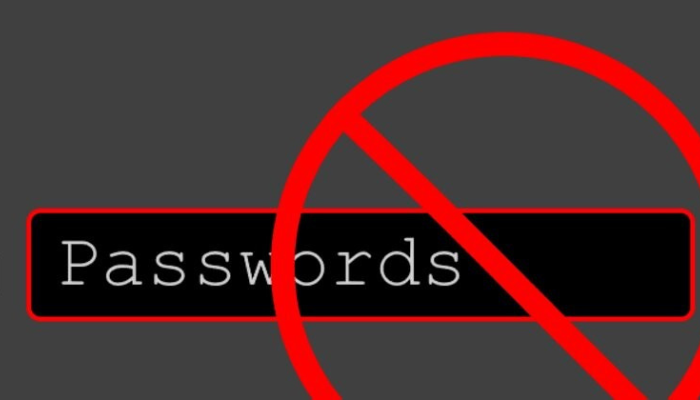
The passwordless authentication security model offers several distinct advantages over traditional passwords.
H2: Eliminating Phishing and Credential Theft
This is the most significant benefit. Since there is no password to steal, attacks that rely on tricking users into entering their credentials on fake sites become obsolete. The cryptographic proof is tied to the specific website, so a login attempt on a malicious site will automatically fail.
H2: Ending Password Reuse and Weakness
Human behavior is the weakest link. Passwordless authentication security completely bypasses the human element of creating and remembering passwords. This eradicates the risks of “123456,” “password,” and the dangerous habit of using the same password across multiple accounts.
H3: Robust Resistance to Brute-Force Attacks
Unlike a password, which can be theoretically guessed through repeated attempts, a cryptographic key is immensely long and complex. Attempting a brute-force attack on a modern private key is computationally infeasible, even for the most powerful supercomputers.
Addressing the Concerns: Is Passwordless Authentication Truly Secure?
No security system is perfect, and it’s crucial to address the legitimate concerns surrounding passwordless authentication security.
H2: The “Single Point of Failure” Myth
A common worry is: “If I lose my phone or security key, am I locked out forever?” While this is a valid concern, modern systems are designed with recovery options. These can include:
- Using multiple registered devices (e.g., your phone and a backup security key).
- Cloud-based recovery systems that require multiple steps of verification.
- Providing backup codes during the initial setup.
The risk of losing a device is often easier to manage and more immediate than the silent, ongoing risk of a compromised password.
H2: Biometric Data: What Happens If It’s Stolen?
The fear of having your fingerprint or face “hacked” is understandable. However, passwordless authentication security using biometrics is often misunderstood.
- Your Biometric Template is Not a Photo: When you enroll, your device creates a mathematical representation (a template) of your biometric, not an actual image.
- It Stays on Your Device: This template is typically stored securely in a hardware enclave on your device (like Apple’s Secure Enclave or Android’s Titan M chip). It is never sent to the external server.
- It’s Useless to Attackers: Even if a hacker could steal the encrypted template, they cannot reverse-engineer it to recreate your fingerprint or face. Furthermore, since it’s stored locally, a breach of a company’s server does not expose your biometric data.
H3: Device-Level Vulnerabilities
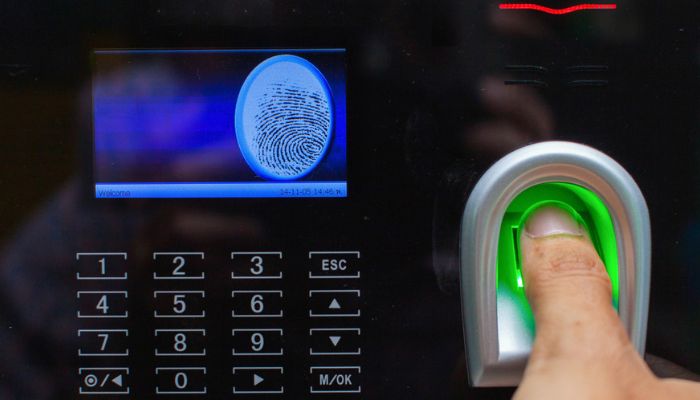
The overall passwordless authentication security now depends on the security of your device. A compromised phone with malware could potentially intercept authentication prompts. This is why keeping your device’s operating system updated is non-negotiable in a passwordless world.
Lesser-Known Insights About Passwordless Security
Beyond the common discussions, there are nuanced aspects of passwordless authentication security that are often overlooked.
- It’s Not Just for Tech Giants: While companies like Apple, Google, and Microsoft are major proponents, the FIDO2 standard is an open web standard. This means it can be implemented by banks, healthcare providers, and any other service looking to enhance security.
- The Privacy Advantage: Because your biometric data never leaves your device and your login creates a unique, unlinkable signature for each service, passwordless authentication can offer stronger privacy protections than some traditional login methods.
- The User Experience is the Security Feature: The sheer convenience of logging in with a glance or a touch dramatically increases adoption and compliance. When security is easy, people use it correctly, which in itself creates a more secure environment for everyone.
Conclusion: A More Secure and Seamless Future
So, is passwordless authentication secure? The evidence strongly suggests that it provides a superior passwordless authentication security model compared to the frail, human-dependent password system. It effectively neutralizes the most common and damaging cyberattacks today.
While it introduces new considerations—like safeguarding your physical devices—these are often more manageable and tangible risks than the silent scourge of credential theft. The transition to a passwordless world is not just a trend; it is a necessary evolution in our ongoing battle to protect our digital lives. By understanding how it works and its real-world security implications, you can confidently embrace this more secure and convenient way to log in.
Leave a Reply