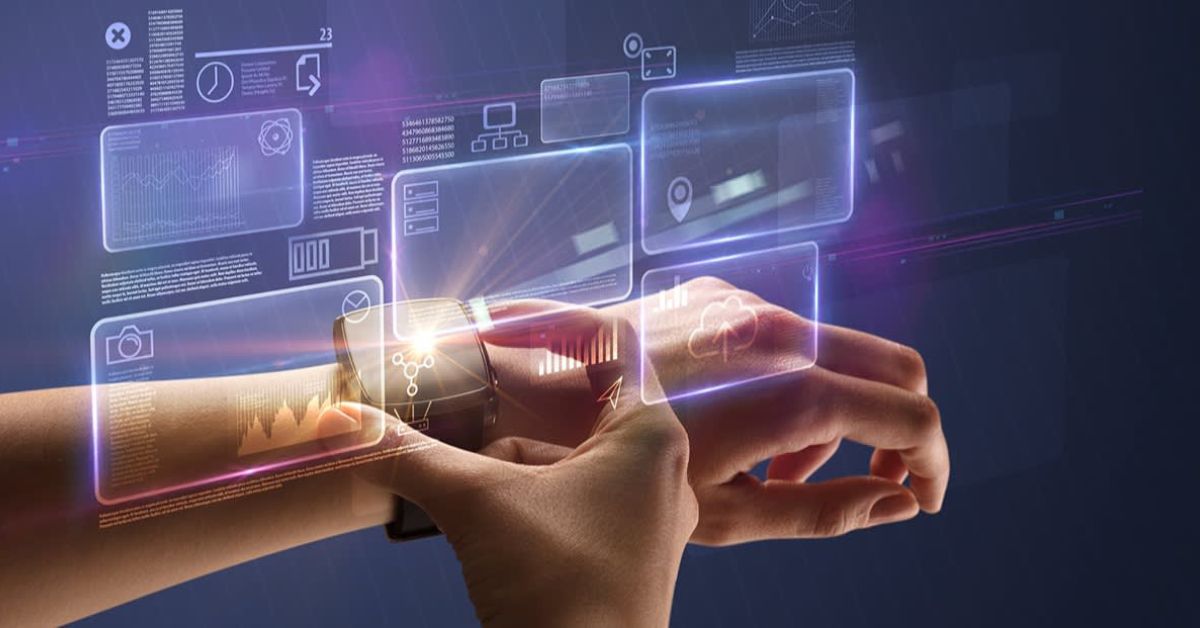
When you think of Augmented and Virtual Reality, you might picture today’s bulky headsets or smartphone-based filters. But the real revolution in immersive technology is happening in R&D labs and stealth-mode startups, far from the public eye. The future of next-generation AR/VR hardware is being forged with breakthroughs that sound like science fiction, promising to dissolve the barrier between the digital and physical worlds entirely.
This article pulls back the curtain on the astonishing developments that will redefine our reality. We are moving beyond simple screens and controllers into a new era of human-computer interaction.
Beyond Screens: The Quest for Visual Fidelity
The current goal of AR/VR display technology is to create digital content that is indistinguishable from reality. This requires solving two core challenges: resolution and focus.
Light Field Displays: The End of Eyestrain
Current VR headsets present a fixed focal plane, forcing your eyes to focus on a screen just inches away, even if the virtual object appears far off. This conflict between vergence and accommodation is a primary cause of VR-induced eyestrain and nausea.
The solution? Light field displays. This next-generation AR/VR hardware technology mimics how light works in the real world. Instead of a flat image, these displays project bundles of light rays that travel in different directions. Your eyes can naturally focus at different depths—on a virtual flower in your hand and then on a mountain in the distance—just as you would in real life. The result is profound comfort and a level of realism that flat screens can never achieve.
Holographic Waveguides for Truly Seamless AR
For AR to become an integral part of our daily lives, the glasses must be as slim and stylish as regular eyewear. Today’s AR displays often use “birdbath” optics or bulky prism systems. The true future lies in holographic waveguides.
Think of these as incredibly thin glass plates with microscopic etchings. They trap light from a tiny projector on the temple of the glasses and “pipe” it directly to your retina, painting digital images onto the real world. This technology is the key to creating next-generation AR/VR hardware that looks like a pair of ordinary glasses while projecting vibrant, full-color information directly into your field of view.
The New Interaction Paradigm: From Controllers to Intention

How we interact with virtual worlds is poised for its most dramatic shift. The era of handheld controllers is fleeting.
Neural Interfaces: The Ultimate Controller
What if you could control a digital environment with a thought? This isn’t a fantasy; it’s the goal of companies developing non-invasive neural interfaces. Using technologies like high-density electroencephalography (EEG) or functional near-infrared spectroscopy (fNIRS), these headbands or integrated headset components can read brain activity.
The initial applications are subtle but powerful: a furrowed brow to select a menu, a state of calm to dim the lights in a virtual environment, or even measuring cognitive load to adjust the difficulty of a training simulation. This direct link between brain and machine represents the ultimate frontier for next-generation AR/VR hardware, moving us from manual control to intuitive intention.
Electrotactile Haptics: Feeling the Digital
While rumble motors provide basic feedback, they can’t simulate texture, weight, or temperature. Enter electrotactile haptics. This technology uses micro-pulses of electrical current to stimulate nerve endings directly on your skin. By carefully modulating the frequency and amplitude of these pulses, it can create sensations of touch, pressure, and even the feeling of different materials.
Imagine feeling the roughness of a virtual brick wall or the gentle pushback from a digital button—all without any moving parts on your skin. When combined with neural input, this creates a closed-loop system where your intentions are executed, and the digital world talks back through your sense of touch.
The Invisible Engine: Power and Form Factor
For next-generation AR/VR hardware to be adopted universally, it must be socially acceptable and all-day comfortable. This demands a revolution in power and processing.
Photonic Chiplets and Edge Computing
The immense computational power required for photorealistic graphics and complex AI has traditionally demanded a tethered connection to a powerful PC or a bulky, hot headset. The future is distributed computing.
Advanced semiconductor designs using silicon photonics (transmitting data using light instead of electricity) are enabling ultra-fast, low-power chipsets specifically designed for AR/VR tasks. These “chiplets” can be distributed around the frame of AR glasses to manage thermal load. Furthermore, heavy processing will be offloaded via 5G/6G to local edge servers, with the device itself handling only the final display and tracking. This allows the next-generation AR/VR hardware to be lightweight, cool, and have a battery life measured in days, not hours.
Read more about Raspberry Pi Projects: The Unsung Engine of Modern Innovation You Didn’t Know About
Context-Aware Sensors and Ambient AI
Future devices will be packed with a suite of passive, low-power sensors that are always on. These won’t just be cameras for tracking; they will include micro-LIDAR for precise depth mapping, ambient light sensors for perfect visual blending, and microphones that listen for contextual cues.
This sensor fusion, powered by a dedicated, low-power AI co-processor, will enable the hardware to understand your environment and your needs without you asking. It will know you’ve walked into your kitchen and automatically pull up your recipe overlay, or see you holding a foreign product and instantly offer a translation. The hardware itself becomes an intelligent, context-aware companion.
Conclusion: A Converging Reality
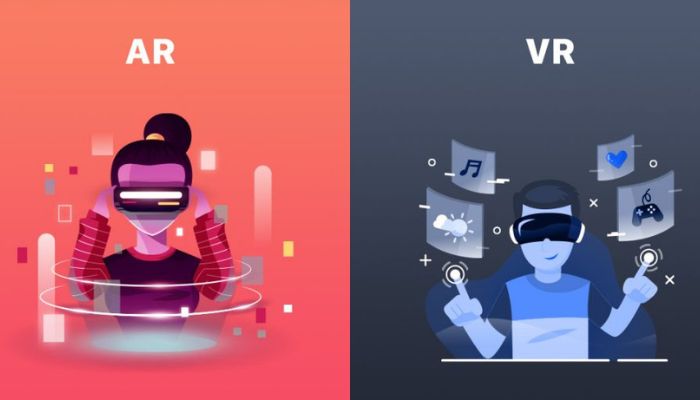
The future of next-generation AR/VR hardware is not a single gadget, but a confluence of technologies—light fields, neural inputs, electrotactile feedback, and photonic computing—all maturing simultaneously. These advancements are steering us toward a world where digital information is seamlessly woven into our physical reality, and our interactions with it are as natural as thought and touch. The hardware we know today is merely a prototype for the invisible, intuitive, and intelligent interfaces of tomorrow. The line between what is real and what is rendered is about to become beautifully blurred.