
Imagine a world where your smartwatch charges as you walk, your thermostat powers itself from the subtle temperature changes in your home, and the sensors monitoring a bridge’s structural health never need a battery replacement. This isn’t science fiction; it’s the emerging reality promised by energy harvesting tech.
For decades, our relationship with electronics has been tethered to the humble battery. We hunt for outlets, carry power banks, and contribute to a growing stream of electronic waste. But what if we could cut the cord for good? A quiet revolution is underway, developing technologies that scavenge minuscule amounts of power from our environment—from light, heat, movement, and even radio waves.
This article delves into the fascinating world of energy harvesting technology, exploring how it works, its groundbreaking applications, and whether it truly has the potential to render traditional batteries a relic of the past.
What is Energy Harvesting Technology? The Principles Explained
At its core, energy harvesting tech is the process of capturing and converting ambient energy from the environment into usable electrical energy. Think of it as a device that can “eat” its surroundings to power itself. The principle isn’t new—solar-powered calculators have been around for decades. However, the scale and efficiency of modern energy harvesting systems are what make them revolutionary.
The process typically involves three key components:
- A Harvester or Transducer: This is the part that captures the ambient energy (e.g., a solar cell for light, a piezoelectric material for vibration).
- A Power Management Circuit (PMC): This is the brain of the operation. It conditions the captured energy—which is often irregular and tiny—into a stable, stored voltage that an electronic device can use.
- Storage Buffer (Optional): A small capacitor or a solid-state battery that stores the harvested energy for later use, ensuring power is available even when the ambient source is not (e.g., at night for a solar device).
The Different Flavors of Ambient Energy

Energy harvesting technology isn’t a one-trick pony. It encompasses a diverse family of methods, each tapping into a different power source.
1. Photovoltaic (Light) Harvesting
This is the most familiar form. It uses solar cells to convert light, both from the sun and indoor lighting, into electricity. Advances here are focused on efficiency in low-light conditions, making it viable for perpetually powered indoor sensors.
2. Piezoelectric (Kinetic) Harvesting
This method captures energy from motion and vibration. Piezoelectric materials generate a small electrical charge when they are mechanically stressed. This is perfect for harvesting energy from footsteps, industrial machinery vibrations, or even the movement of a person’s body.
3. Thermoelectric (Heat) Harvesting
This technology exploits temperature differences. A thermoelectric generator (TEG) can convert waste heat from engines, machinery, or even the temperature gradient between your body and the ambient air into power. It’s all about capturing energy that would otherwise be lost.
4. RF (Radio Frequency) Harvesting
Our environment is saturated with radio waves from Wi-Fi routers, cell towers, and broadcast signals. RF harvesters act like miniature antennas, capturing these stray signals and converting them into a trickle of direct current (DC) power.
The Real-World Impact: Applications of Energy Harvesting Tech
The potential applications for this technology are vast and transformative, particularly in the realm of the Internet of Things (IoT).
Powering the Internet of Things (IoT)

The true killer app for energy harvesting tech is the IoT. Billions of sensors are being deployed for smart homes, agriculture, and industrial monitoring. Replacing batteries in all of them is a logistical and environmental nightmare. Energy harvesting offers a perpetual power solution for:
- Smart Building Sensors: Room occupancy, temperature, and light sensors can power themselves.
- Wireless Sensor Networks: Industrial equipment can be monitored by sensors that harvest vibration or heat energy, predicting maintenance needs without human intervention.
- Precision Agriculture: Soil moisture and climate sensors scattered across fields can run indefinitely on solar power.
Revolutionizing Wearables and Consumer Electronics
Why charge your fitness tracker when your body can power it? Kinetic and thermoelectric energy harvesting can be integrated into wearables, creating devices that are truly autonomous. Imagine a smartwatch that charges as you type or walk, or hearing aids that are powered by the heat of your inner ear.
Enabling “Set-and-Forget” Industrial Systems
In large-scale infrastructure like bridges, pipelines, and remote weather stations, energy harvesting technology is a game-changer. Sensors can be embedded during construction and left to monitor structural health for decades, powered by the very vibrations and temperature shifts they are designed to withstand.
The Road Ahead: Benefits and Challenges of This Technology
The vision of a battery-free world is compelling, but it’s not without its hurdles. Let’s weigh the immense benefits against the current challenges.
The Compelling Benefits
- Near-Perpetual Operation: Devices can function for decades without maintenance.
- Reduced Environmental Impact: Drastically cuts down on the billions of disposable batteries ending up in landfills each year.
- Enhanced Reliability and Safety: No battery means no risk of leakage, corrosion, or the need for hazardous replacements in hard-to-reach places.
- Unprecedented Deployment Freedom: Enables the placement of electronics in completely remote or sealed environments.
The Current Hurdles for Energy Harvesting Tech
- Intermittent and Unreliable Power: Ambient energy isn’t always available (e.g., no sun at night, no vibration when a machine is off). This requires sophisticated power management and energy storage buffers.
- Low Power Output: Current energy harvesting systems generate microwatts to milliwatts of power. They are ideal for low-power electronics like sensors but cannot yet power energy-intensive devices like smartphones or laptops.
- High Initial Cost: The sophisticated materials and power management circuits can make energy harvesting solutions more expensive upfront than a simple battery, though the total cost of ownership over time may be lower.
- Integration Complexity: Designing a device that can efficiently harvest, manage, and store erratic energy flows is a significant engineering challenge.
The Verdict: Will Energy Harvesting Tech Make Batteries Obsolete?
So, will your AA batteries soon be museum pieces? The answer is nuanced.
In the short term, energy harvesting technology is unlikely to completely replace batteries, especially in high-drain applications. However, it is poised to make batteries obsolete for specific, massive-scale use cases.
The future is not necessarily a binary choice between harvesting and batteries, but rather a synergy. We are already seeing the rise of energy harvesting systems used to trickle-charge a battery, dramatically extending its lifespan from years to decades. This hybrid approach offers the best of both worlds: the burst power capability of a battery with the perpetual energy top-up from harvesting.
The true obsolescence will occur in the realm of the IoT. For the trillion-sensor future we’re heading towards, disposable batteries are simply not a feasible solution. In that domain, energy harvesting tech isn’t just an alternative; it’s the only sustainable path forward.
Read more about Green Nanotechnology: Building a Sustainable Future, Atom by Atom
Conclusion: A Sustainable, Self-Powered Future
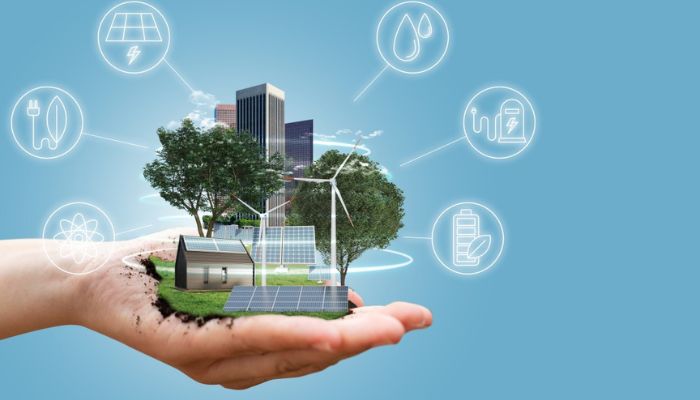
Energy harvesting technology represents a fundamental shift in how we think about powering our world. It moves us from a paradigm of energy storage to one of energy ambience—where our devices live off the land, so to speak.
While it won’t eliminate the need for batteries in every device overnight, its potential to disrupt industries and enable a more sustainable, wire-free future is undeniable. The research is accelerating, efficiencies are improving, and costs are falling. The day when you never have to think about charging your small devices or replacing a sensor’s battery is closer than you think. The age of energy harvesting is dawning, and it promises to power our world in a quieter, cleaner, and smarter way.