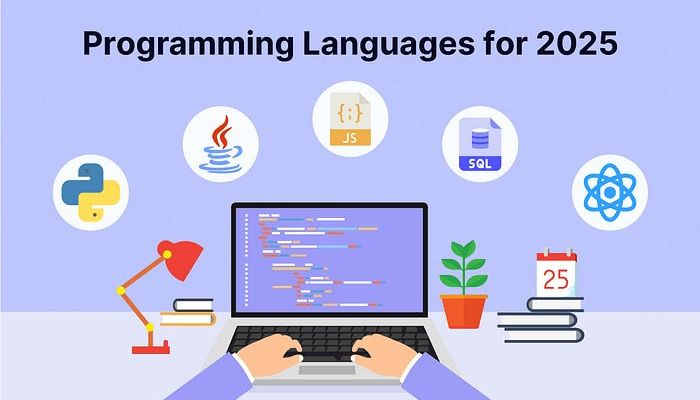
Tag: software development trends

  • The Dawn of the Post-JavaScript Era: Web Development Trends for 2025

    The Dawn of the Post-JavaScript Era: Web Development Trends for 2025


    For years, the web development landscape has been dominated by a single, powerful paradigm: JavaScript everywhere. Frameworks like React, Vue, and Angular have been the undisputed champions of frontend development. But as we look toward 2025, a quiet revolution is brewing on the horizon, promising to challenge our fundamental assumptions about how we build for the web. The most forward-thinking developers are beginning to explore the potential of post-JavaScript era frameworks, a trend that prioritizes simplicity, performance, and a radical shift in architecture.

    This isn’t about JavaScript disappearing—it’s about it receding into the background. Let’s dive into this and other less-known trends that will define the cutting edge of web development in 2025.

    What Are Post-JavaScript Era Frameworks?

    The term “post-JavaScript era frameworks” can be misleading. It doesn’t mean JavaScript is obsolete. Instead, it describes a new class of frameworks where developers write little to no client-side JavaScript themselves. The framework itself handles the interactivity, often compiling your code into highly optimized, minimal JavaScript or using alternative approaches.

    The core philosophy is a return to the web’s roots—using HTML as the primary language of structure—but supercharged with modern capabilities. Think of it as a “server-first” mentality, where the heavy lifting happens on the server, and the browser receives precisely what it needs, leading to blistering performance and a simpler developer experience.

    The Key Players and Technologies

    Two primary technologies are spearheading this movement:

    1. HTMX: This library is causing a major stir. HTMX allows you to access modern browser features like AJAX, CSS Transitions, and WebSockets directly from HTML attributes. Want a button to fetch and insert new content without a page reload? You don’t write a fetch function; you simply add hx-get="/new-content" and hx-target="#container" to your button element. It dramatically reduces the amount of custom JavaScript you need to write.
    2. Hyperscript: Often used alongside HTMX, Hyperscript is a scripting language designed to be embedded in HTML. Its syntax is incredibly concise and readable, aimed at handling the small bits of client-side logic that HTMX doesn’t cover, further reducing the reliance on verbose JavaScript.

    The Tangible Benefits of This Architectural Shift

    Why should developers and businesses care about this shift? The advantages are profound and directly impact key metrics.

    1. Unmatched Developer Experience and Speed

    For full-stack developers, especially those working with backend languages like Python, Go, or Ruby, the context-switching between server-side templates and a separate, complex JavaScript frontend is a major productivity drain. Post-JavaScript era frameworks eliminate this. You can build dynamic, modern interfaces primarily using your backend language and HTML, leading to faster development cycles and a gentler learning curve for new team members.

    2. Blazing-Fast Performance and Core Web Vitals

    post-JavaScript era frameworks

    By shifting complexity back to the server, the initial page load is incredibly fast. The browser receives plain, pre-rendered HTML. Subsequent interactions are handled efficiently with small HTML fragments over the wire. This architecture naturally results in superior scores on Google’s Core Web Vitals—especially Largest Contentful Paint (LCP) and Cumulative Layout Shift (CLS)—which are critical for SEO and user retention.

    3. Enhanced Reliability and Maintainability

    Less custom JavaScript means fewer potential bugs, less memory leakage, and a more predictable application state. Your application’s logic remains centralized on the server, making it easier to debug, test, and maintain over the long term. This robustness is a significant business advantage, reducing downtime and technical debt.

    While the move towards new frameworks is pivotal, other trends are emerging in parallel.

    AI-Native Development with WebGPU

    We’re moving beyond simple AI API integrations. With the maturation of WebGPU, developers can now run complex machine learning models directly in the browser. Imagine photo-editing web apps with AI-powered filters that work offline, or real-time voice assistants processed entirely client-side. This unlocks a new tier of privacy-conscious, high-performance web applications that were previously impossible.

    Read more Programming Languages 2025: The Essential Guide for Future-Proof Developers

    The Rise of “Zero-Bundle” Frameworks

    Taking the concept of post-JavaScript era frameworks a step further, new entrants like Qwik are pioneering “resumability.” Instead of hydrating a page by re-downloading and re-executing JavaScript on the client, Qwik serializes the application state on the server and “resumes” it in the browser instantly. The result is virtually zero JavaScript bundle sent to the client for interaction, leading to near-instantaneous load times.

    What This Means for Your Business and Projects

    For business leaders and project managers, these trends translate into concrete benefits: reduced development costs, faster time-to-market for new features, and inherently more stable and performant web products. For developers, it’s an exciting call to expand your toolkit. The future isn’t about abandoning JavaScript, but about choosing the right architectural paradigm for the problem at hand.

    post-JavaScript era frameworks

    The monolithic JavaScript SPA (Single Page Application) will no longer be the default answer for every project. As we move into 2025, the most successful web teams will be those that understand and can leverage the power of these post-JavaScript era frameworks to build a faster, simpler, and more robust web.

  • Programming Languages 2025: The Essential Guide for Future-Proof Developers

    Programming Languages 2025: The Essential Guide for Future-Proof Developers

    The tech landscape is shifting at a breathtaking pace. While established giants like Python and JavaScript continue to dominate, the horizon is buzzing with specialized tools designed for the next wave of computing. Knowing which programming languages 2025 will demand isn’t just about staying current; it’s about positioning yourself at the forefront of fields like AI, systems programming, and Web3.

    This guide moves beyond the mainstream to explore the powerful, niche, and emerging programming languages 2025 has on its radar. These are the languages that offer unique advantages, solve specific problems elegantly, and are gaining traction in cutting-edge industries. Let’s dive into the languages you probably haven’t considered but absolutely should.

    Why Your Next Language Matters More Than Ever

    Choosing what to learn next is a strategic career decision. The right programming languages 2025 will prioritize performance, safety, and developer productivity in new ways. We’re seeing a clear trend towards languages that prevent common bugs at compile time, excel in resource-constrained environments, and provide first-class support for concurrency. Learning a language from this list isn’t just about syntax; it’s about adopting a new paradigm for building robust and efficient software.

    The Top Contenders: Programming Languages to Master for 2025

    Here are the languages that are set to move from the sidelines to the spotlight.

    The Rise of Memory-Safe and Performant Systems Languages

    The demand for software that is both blisteringly fast and inherently secure has never been higher. This is where modern systems languages shine.

    Rust: The Safe Concurrency Champion

    You’ve likely heard of Rust, but its importance will only grow in 2025. Rust’s core promise—memory safety without a garbage collector—makes it ideal for performance-critical applications where C++ was once the only option. Its sophisticated ownership model eliminates entire classes of bugs, from null pointer dereferences to data races. What makes it a top programming language for 2025 is its exploding adoption in the Linux kernel, web infrastructure (like Firefox and Deno), and blockchain development. If you work anywhere near systems programming, embedded devices, or Web3, Rust is no longer optional.

    Zig: The Simplicity-First Challenger

    While Rust adds powerful guarantees, Zig takes a different approach: simplicity and transparency. Zig aims to be a true successor to C, offering competitive performance and control with a much smaller and easier-to-understand language specification. Its killer feature is its deep integration with C, making it an excellent tool for incrementally improving existing C codebases or writing new, high-performance libraries. For developers tired of language complexity, Zig offers a refreshing, no-nonsense path to building efficient software.

    Languages for the AI and Data Science Frontier

    Python’s reign in data science is secure, but the next generation of AI requires more speed and specialized tooling.

    Mojo: The AI Speed Revolution

    This is perhaps the most exciting entry on the list. Mojo is a new language that aims to be a superset of Python, combining Python’s usability and ecosystem with the performance of C. It is specifically designed for AI and machine learning workloads, offering features like auto-tuning and compile-time meta-programming. For data scientists and ML engineers who love Python but are hindered by its speed limitations, Mojo represents a potential game-changer and is a critical programming language for 2025 to watch.

    Read more about How to Build a Simple SaaS in 30 Days: A Strategic Blueprint

    Julia: The High-Performance Numerics Expert

    programming languages 2025

    Julia was built from the ground up for scientific computing and numerical analysis. Its syntax is as easy as Python’s for prototyping, but it compiles to machine code that rivals C in speed. Julia eliminates the “two-language problem,” where you prototype in a slow language and then rewrite performance-critical parts in C++. For fields like quantitative finance, engineering simulation, and scientific research, Julia is becoming the go-to tool, making it a strategic bet among the key programming languages 2025 will prioritize.

    Modern Web and Application Development Evolves

    The web is maturing, and the tools for building on it are becoming more robust and full-featured.

    TypeScript: The Mature, Type-Safe Standard

    TypeScript is no longer “emerging,” but its role in 2025 is more crucial than ever. As web applications grow in complexity, the safety provided by static typing is no longer a luxury—it’s a necessity for maintaining large codebases. TypeScript’s incredible ecosystem and its position as the de facto standard for new JavaScript frameworks make it the most practical and high-impact language for any web developer to master.

    Elixir: The Concurrency and Reliability Powerhouse

    Elixir, built on the battle-tested Erlang VM (BEAM), is designed for building scalable and maintainable applications. Its functional nature and “let it crash” philosophy make it exceptionally resilient. Elixir shines for real-time applications like live chat, messaging platforms, and IoT backends where thousands of concurrent connections are the norm. As demand for real-time features grows, Elixir’s value will continue to rise, securing its place among the top programming languages 2025 has to offer.

    The Niche Players with Massive Potential

    Some languages serve a specific domain so well that they are worth learning for that reason alone.

    Go (Golang): The Cloud-Native Backend King

    Go’s strength lies in its simplicity, fast compilation, and excellent built-in support for concurrency (goroutines). This makes it perfectly suited for building distributed systems, cloud-native tools, and API backends. With the cloud computing market expanding relentlessly, Go’s relevance for backend and infrastructure roles makes it one of the most relevant programming languages 2025 has to offer.

    How to Choose Your Next Language

    With so many compelling options, how do you decide? Follow this simple framework:

    1. Align with Your Career Goals: Aspiring AI engineer? Look at Mojo. Systems programmer? Dive into Rust or Zig. Web developer? Master TypeScript.
    2. Solve a Personal Pain Point: Is there a project at work that could be faster or more reliable? Learning a language that addresses that specific problem gives you immediate, practical experience.
    3. Embrace the Learning Mindset: The goal isn’t just to learn a syntax; it’s to understand the new paradigms and concepts the language introduces, like Rust’s ownership or Elixir’s functional concurrency.

    Conclusion: Your Strategic Advantage Awaits

    The most successful developers in 2025 won’t just be experts in one language; they will be polyglots who understand how to apply the right tool for the job. By exploring one of these forward-thinking programming languages 2025 is set to embrace, you’re not just learning a new skill—you’re investing in a mindset of efficiency, safety, and innovation. Choose one that sparks your curiosity, start a small project, and build your way to the forefront of the next technological wave.

    programming languages 2025