Tag: Smart Manufacturing

  • Adaptive Robotics: How AI is Forging a New Generation of Intelligent Machines

    Adaptive Robotics: How AI is Forging a New Generation of Intelligent Machines

    For decades, the word “robot” conjured images of powerful but mindless machines, bolted to factory floors, performing the same repetitive task with unerring precision but zero understanding. They operated in meticulously controlled environments, and any deviation—a misplaced part, an unexpected obstacle—would lead to failure. But a profound transformation is reshaping the very nature of automation. Welcome to the era of adaptive robotics, a field where machines perceive, learn, and dynamically respond to the unpredictable nature of the real world.

    This shift from programmed automation to intelligent adaptation is powered by breakthroughs in Artificial Intelligence. Adaptive robotics is not merely an incremental improvement; it’s a fundamental reimagining of what robots are and what they can do. This article will delve into how AI acts as the cognitive engine for these machines, explore their real-world applications, and illuminate the future they are building.

    What is Adaptive Robotics? Beyond Repetition and Rigidity

    At its core, adaptive robotics refers to robotic systems capable of modifying their behavior in real-time based on sensory feedback and changing conditions in their environment. Unlike their traditional counterparts, these robots do not rely solely on pre-programmed paths and actions.

    Think of the difference between a student who can only recite memorized facts and one who can critically analyze a new problem and devise a solution. Adaptive robotics gives machines a form of this critical thinking ability. They can handle variability, recover from errors autonomously, and perform complex tasks in unstructured settings—from a cluttered warehouse to a busy operating room.

    The AI Engine: Core Technologies Driving Adaptation

    The “intelligence” in adaptive robotics stems from a powerful combination of AI disciplines. It’s a symphony of technologies working in concert to create a responsive and learning system.

    Read more about Sustainable Tech: How Greener Hardware is Building a Better Future

    Perception and Computer Vision: The Art of Seeing and Understanding

    A robot cannot adapt to a world it cannot perceive. While cameras and sensors (LiDAR, torque sensors) act as its eyes and ears, AI-powered computer vision gives it a brain to interpret what it sees.

    • How it Works: Deep learning models, trained on millions of images, enable robots to identify objects, gauge distances, detect defects, and even interpret human gestures. For instance, an adaptive robotics system on a production line doesn’t just see a component; it identifies its type, orientation, and any potential flaws, then decides the correct action to take.
    • Real-World Example: In agricultural robotics, harvesting machines use computer vision to distinguish ripe fruit from unripe ones and leaves, adapting their grip and picking motion for each piece of produce.

    Machine Learning and Reinforcement Learning: The Power to Learn from Experience

    adaptive robotics

    This is the cornerstone of true adaptation. Machine Learning (ML) allows robots to improve their performance based on data and experience, moving beyond explicit programming.

    • How it Works: Through a technique called Reinforcement Learning (RL), a robot can learn complex tasks through trial and error in a simulated environment. It receives rewards for successful actions and penalties for failures, gradually discovering the optimal strategy to achieve a goal. This is how a robotic arm can learn the delicate touch needed to assemble a device or how a walking robot learns to regain its balance after a stumble.
    • Real-World Example: Google’s DeepMind has used RL to teach robotic limbs complex dexterity tasks, like manipulating blocks, without a single line of task-specific code.

    Real-Time Path Planning and Control: Making Smart Decisions Instantly

    Perception and learning are futile without the ability to make a timely decision. This layer of AI involves sophisticated algorithms that process sensory data and the robot’s internal model to calculate the best possible action in milliseconds.

    • How it Works: These algorithms continuously re-plan the robot’s path to avoid dynamic obstacles, compensate for slippage, or adjust grip force. It’s the executive function that answers the question, “Given what I know and see, what should I do right now?”
    • Real-World Example: Autonomous mobile robots (AMRs) in warehouses use this technology to navigate busy floors, rerouting themselves around human workers, other robots, and unexpected obstacles to deliver goods efficiently.

    The Transformative Impact: Applications of Adaptive Robotics Today

    The theoretical promise of adaptive robotics is already delivering tangible value across a wide range of industries.

    • Advanced Manufacturing: Robots can now perform complex assembly where parts are not perfectly aligned, using force feedback to “feel” their way, much like a human inserting a key into a lock.
    • Logistics and Supply Chain: Adaptive robotics systems are revolutionizing order fulfillment by picking and placing millions of different-sized items from bins, a task once considered far too variable for automation.
    • Healthcare and Assisted Surgery: Surgical robots are incorporating adaptive control to provide haptic feedback to surgeons and can even enforce “no-fly zones” to prevent accidental damage to critical tissues.
    • Disaster Response and Exploration: Search-and-rescue robots can traverse unstable rubble, while underwater robots can autonomously map and inspect pipelines, adapting to currents and changing terrain.

    The Future is Adaptive: Benefits and Emerging Potential

    The adoption of adaptive robotics offers a suite of compelling benefits that extend far beyond simple automation.

    • Unmatched Flexibility: Production lines can switch between different products with minimal downtime, enabling cost-effective, high-mix, low-volume manufacturing.
    • Enhanced Safety and Collaboration: By reliably perceiving humans, adaptive robotics enables true human-robot collaboration (HRC), where robots and people work side-by-side, each performing their strengths.
    • Resilience in Unstructured Environments: This technology opens up automation for industries like construction, forestry, and mining, where the environment is constantly changing and unpredictable.
    • The Path to General Intelligence: While today’s applications are specialized, the continued convergence of these AI technologies is the most credible path toward creating more general-purpose robots capable of performing a wide array of tasks in human-centric environments.

    Conclusion: Embracing an Intelligent Partnership

    The age of rigid, single-purpose automation is giving way to a new paradigm defined by intelligence and flexibility. Adaptive robotics, fueled by the symbiotic relationship of AI, machine learning, and advanced sensors, is not just replacing manual labor; it is augmenting human capability and solving problems once thought impossible to automate. These machines are evolving from isolated tools into collaborative partners, capable of understanding and navigating the complexity of our world. As the technology continues to mature, the potential for adaptive robotics to drive innovation, improve safety, and enhance our quality of life is truly boundless.

  • Edge AI: Making Artificial Intelligence Work Without the Cloud

    Edge AI: Making Artificial Intelligence Work Without the Cloud

    Imagine a self-driving car that needs to instantly recognize a pedestrian stepping into the street. Now, imagine it has to send that video footage to a data center hundreds of miles away, wait for the cloud to process it, and then receive a command to brake. The delay, or latency, would be catastrophic. This is the fundamental limitation of cloud-dependent artificial intelligence. Enter Edge AI—a transformative paradigm that moves the computational power of AI from a centralized cloud directly to the devices where data is generated. This isn’t just an incremental improvement; it’s a revolutionary shift making our devices smarter, faster, and more private. This article demystifies this technology, exploring how it works, why it matters, and how it’s unlocking a new era of intelligent, autonomous technology.

    The Brain in the Device: Understanding On-Device Intelligence

    At its core, Edge AI is the deployment of machine learning algorithms on local hardware devices. Instead of relying on a constant internet connection to a powerful remote server, the AI model runs directly on the device itself—be it a smartphone, a security camera, a smart sensor, or a medical instrument.

    Think of it this way:

    • Cloud AI: Your device is a terminal, collecting data (e.g., a voice command) and sending it to a distant “brain” (the cloud server) for understanding. The answer then travels back to your device.
    • Edge AI: Your device has its own brain. It can process, analyze, and make decisions based on the data it collects, entirely on its own, in the blink of an eye.

    This local processing is the defining characteristic of Edge AI and the source of its profound advantages.

    H2: The Core Benefits of Deploying Edge AI

     Edge AI

    Why is the industry shifting towards this decentralized model? The benefits address some of the most critical challenges of our connected world.

    H3: Blazing-Fast Speed and Ultra-Low Latency

    As in the self-driving car example, speed is everything. Edge AI eliminates the network round-trip to the cloud. For applications like industrial robotics, augmented reality, and real-time video analytics, decisions need to be made in milliseconds. By processing data locally, Edge AI delivers immediate insights and actions, enabling technologies that simply wouldn’t be possible with cloud latency.

    H3: Enhanced Data Privacy and Security

    When sensitive data—like video from your home, medical images, or proprietary industrial designs—is processed locally, it never has to leave the device. This drastically reduces the risk of exposure during transmission or storage in the cloud. Edge AI ensures that your most private data stays where it belongs, fostering a new level of trust and security for personal and enterprise applications.

    H3: Unmatched Reliability and Offline Operation

    An internet connection is not always guaranteed. A cloud-dependent AI system fails when the network goes down. Edge AI devices, however, continue to operate flawlessly in a tunnel, on a remote oil rig, or during a network outage. This reliability is critical for mission-critical applications in manufacturing, agriculture, and healthcare, ensuring continuous operation regardless of connectivity.

    H3: Bandwidth and Cost Efficiency

    Streaming raw data from millions of devices—especially high-volume data like video—consumes enormous bandwidth and incurs significant cloud storage and processing costs. Edge AI acts as a smart filter; instead of sending all the data, the device only transmits valuable, processed insights (e.g., “anomaly detected on assembly line at 3:04 PM”). This optimizes bandwidth and dramatically reduces operational costs.

    Read more about Can Digital Twins Make Manufacturing Truly Zero-Waste?

    H2: How Edge AI is Transforming Key Industries

     Edge AI

    The practical applications of Edge AI are vast and growing, creating smarter and more responsive systems across every sector.

    • Manufacturing: Smart cameras on assembly lines use Edge AI for real-time visual inspection, instantly identifying microscopic defects that would be invisible to the human eye, thereby reducing waste to near-zero.
    • Healthcare: Portable ultrasound machines with embedded Edge AI can guide sonographers to capture perfect images, while smart wearables can analyze heart rhythms locally to detect atrial fibrillation and alert the user without a phone.
    • Retail: Smart stores utilize Edge AI in cameras to analyze customer behavior, manage inventory by tracking stock levels on shelves, and enable frictionless checkout experiences, all while keeping video data anonymized and local.
    • Smart Cities: Traffic cameras with Edge AI can optimize signal timing in real-time to reduce congestion, while public safety systems can detect unusual activity without creating a massive, centralized surveillance database.

    H2: The Technology Behind the Magic: How Edge AI Works

    Making Edge AI possible requires a convergence of several advanced technologies.

    1. TinyML: This is the field of machine learning dedicated to creating and optimizing models that can run on extremely low-power, resource-constrained devices. It involves techniques like model pruning and quantization to shrink large neural networks without sacrificing significant accuracy.
    2. Specialized Hardware: The rise of powerful, energy-efficient processors—like NPUs (Neural Processing Units) and TPUs (Tensor Processing Units)—is crucial. These chips are specifically designed to handle the parallel computations required for Edge AI efficiently, unlike general-purpose CPUs.
    3. Edge Computing Platforms: Frameworks from major cloud providers (like AWS IoT Greengrass and Azure IoT Edge) help manage and deploy AI models to edge devices at scale, allowing for updates and monitoring without physical access.

    H2: Conclusion: The Decentralized, Intelligent Future is Here

     Edge AI

    Edge AI is far more than a technical buzzword; it is the essential evolution of artificial intelligence for a real-time, privacy-conscious, and physically interactive world. By moving intelligence from the cloud to the device, we are not replacing cloud computing but complementing it with a powerful, distributed layer of smarts. This synergy creates a more robust, efficient, and capable technological ecosystem.

    The future will be built by devices that can see, hear, reason, and act autonomously. From creating truly smart homes that respect our privacy to enabling the autonomous industries of tomorrow, Edge AI is the foundational technology that makes it all possible. It represents a future where intelligence is not a remote service, but an embedded, seamless, and instantaneous part of our everyday tools.

  • Can Digital Twins Make Manufacturing Truly Zero-Waste?

    Can Digital Twins Make Manufacturing Truly Zero-Waste?

    Imagine being able to test every aspect of a factory’s operation—every machine setting, every material flow, every energy draw—in a perfect virtual copy before anything is ever built or changed in the real world. This is the power of the digital twin, a technology poised to revolutionize industrial sustainability. At the same time, the urgent goal of zero-waste manufacturing pushes companies to eliminate not just landfill trash, but all systemic waste: wasted materials, energy, and time. This article explores the critical intersection of these two concepts, asking a pivotal question: Can the implementation of Digital Twins Zero-Waste strategies be the key to achieving truly circular and waste-free production?

    Understanding the Core Concepts: A Digital Replica for a Physical Goal

    To appreciate the synergy, we must first define the terms clearly.

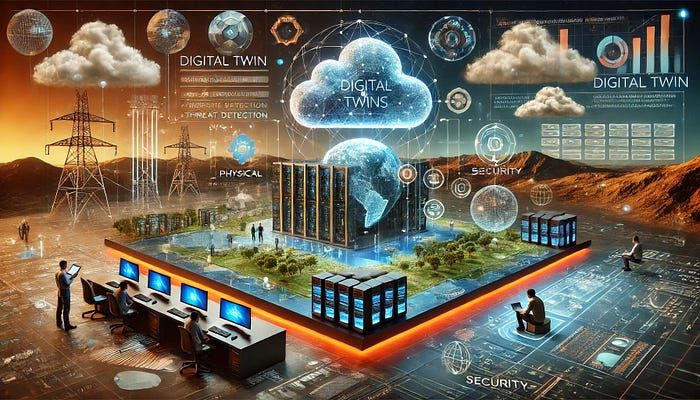
    digital twin is far more than a static CAD model. It is a dynamic, virtual replica of a physical asset, process, or system that is continuously updated with data from sensors, controllers, and enterprise software. This creates a living digital simulation that mirrors the real world in real-time, allowing for deep analysis, experimentation, and prediction.

    Zero-waste manufacturing is a rigorous philosophy that aims to redesign resource life cycles so that all materials are reused, repurposed, or recovered. The ultimate goal is to completely eliminate the concept of “waste,” sending nothing to landfills, incinerators, or the environment. It’s about building a closed-loop system where every output becomes an input for another process.

    H2: The Mechanics of Waste Elimination: How Digital Twins Drive Efficiency

     Digital Twins Zero-Waste

    The pursuit of zero-waste manufacturing through digital twins is not a single action but a continuous process of optimization across the entire product lifecycle. Here’s how this technology systematically attacks waste.

    Read more about How to Start Learning Programming from Scratch in 2025 You Didn’t Know About

    H3: Virtual Prototyping and Design for Disassembly

    The most effective way to manage waste is to prevent it at the design stage. Digital twin technology enables engineers to create and test products and production processes in a risk-free digital sandbox.

    • Material Optimization: Engineers can simulate production to minimize scrap and off-cuts, using the exact amount of raw material required.
    • Sustainable Material Selection: The twin can analyze the long-term environmental impact of different materials, guiding choices towards more durable, recyclable, or biodegradable options.
    • Design for Circularity: Products can be virtually disassembled to ensure that at their end-of-life, components can be easily separated, repaired, or recycled, a core principle of the zero-waste vision.

    H3: Process Optimization and Real-Time Resource Management

    On the factory floor, digital twins act as a central nervous system, identifying and rectifying inefficiencies as they happen.

    • Energy Consumption: The twin can monitor and simulate the energy draw of entire production lines, identifying opportunities to reduce power usage during peak hours or machine idle times.
    • Yield Optimization: By analyzing data from sensors on mixing, cutting, or forming machines, the twin can recommend adjustments to maximize output from raw materials, directly reducing material waste.
    • Logistics and Flow: Simulating material handling and logistics within the factory can pinpoint bottlenecks that lead to product damage or spoilage, common sources of waste in industries like food and pharmaceuticals.

    H2: Overcoming Implementation Hurdles in Sustainable Manufacturing

    While the potential is vast, the path to a Digital Twins Zero-Waste system is not without its challenges.

    H3: The Data Integrity and Integration Challenge

     Digital Twins Zero-Waste

    A digital twin is only as good as the data it receives. Creating a high-fidelity twin requires:

    • A Robust Sensor Network: Significant upfront investment in IoT sensors and data infrastructure is necessary.
    • System Interoperability: Data must flow seamlessly from machines, ERP systems, and supply chain partners into the twin, which can be a complex technical task.
    • Data Cleansing: Inaccurate or “dirty” data will lead to flawed simulations and poor decision-making, potentially increasing waste instead of reducing it.

    H3: Cultural and Skillset Shifts

    Adopting a digital twin model requires a cultural shift from reactive, experience-based decision-making to a proactive, data-driven approach.

    • Workforce Training: Employees at all levels need to understand how to interpret and act on the insights provided by the twin.
    • Cross-Departmental Collaboration: Success depends on breaking down silos between design, production, maintenance, and sustainability teams.

    H3: Predictive Maintenance: A Direct Path to Waste Reduction

    One of the most immediate and impactful applications of digital twin technology is in predictive maintenance. Instead of following a fixed schedule or waiting for a machine to break (which causes scrap and downtime), the twin uses AI to analyze machine data and predict failures before they occur.

    • Reduced Defects: By maintaining equipment in optimal condition, the number of defective products—a direct form of material and resource waste—is drastically cut.
    • Extended Asset Life: Preventing catastrophic failure and enabling targeted repairs extends the lifespan of machinery itself, reducing the waste associated with manufacturing and disposing of replacement parts.

    H2: The Future is Circular: The Evolving Role of Digital Twins

    Looking ahead, the role of digital twins in zero-waste manufacturing will expand beyond the factory walls to create a truly circular economy.

    • Supply Chain Transparency: Twins can simulate and monitor the entire supply chain, tracking the environmental footprint of raw materials from source to factory, enabling more sustainable sourcing decisions.
    • Product Lifecycle Management: A twin can follow a product throughout its entire life, providing data on its usage, health, and eventual disassembly. This information is invaluable for designing better, longer-lasting products and creating efficient take-back and recycling programs.

    Conclusion: A Powerful Tool, But Not a Magic Bullet

    So, can digital twins make manufacturing truly zero-waste? The evidence points to them being the most powerful enabler we have. Digital Twins Zero-Waste strategies provide the unprecedented visibility, predictive power, and holistic control needed to systematically design waste out of existence.

     Digital Twins Zero-Waste

    However, the technology is a tool, not a magic wand. Its success hinges on a company’s genuine commitment to sustainability, significant investment in data infrastructure, and a willingness to transform its operational culture. For those who embrace it, the digital twin offers a clear and data-driven pathway to not only dramatically reduce waste and costs but also to build a resilient, sustainable, and truly circular manufacturing enterprise for the future. The virtual blueprint for a waste-free world is now within our reach.