Tag: robotics technology

  • How Robots Use Sensor Fusion to Understand the World You Didn’t Know About

    How Robots Use Sensor Fusion to Understand the World You Didn’t Know About

    Look at a coffee cup on your desk. In an instant, your brain seamlessly combines a flood of sensory information: you see its position and color, you feel its solidity and temperature when you grab it, and you hear the subtle clink as you set it down. You don’t perceive these as separate data streams; you experience a unified, rich understanding of the “coffee cup.” For robots to operate in our complex, dynamic world, they need this same capability. This is where the transformative technology of Sensor Fusion comes into play.

    Sensor Fusion is the engineering discipline of intelligently combining data from multiple sensors to produce a more accurate, reliable, and complete understanding of the environment than could be achieved by any single sensor alone. It is the silent, powerful brain behind the perception of every advanced robot, autonomous vehicle, and smart device, enabling them to move from being blind, deaf machines to context-aware partners.

    What is Sensor Fusion? Beyond the Sum of Its Parts

    At its core, Sensor Fusion is about overcoming the inherent limitations of individual sensors. No single sensor is perfect. Cameras can be fooled by lighting and lack depth. LiDAR struggles with fog and rain. GPS can be inaccurate by several meters. Inertial Measurement Units (IMUs) drift over time.

    Sensor Fusion solves this by creating a synergistic system. It’s the robotic equivalent of a sports team, where each player has a specialized role, but it’s their coordinated play that wins the game. By fusing complementary data streams, the system compensates for the weaknesses of one sensor with the strengths of another, creating a robust and resilient perception model. This process is foundational for any robot that must operate safely and effectively outside of a perfectly controlled cage.

    Read more about From Blueprint to Bot: The Engineering Journey of a Robot You Didn’t Know About

    The Technical Magic: How Sensor Fusion Algorithms Work

    The “fusion” in Sensor Fusion isn’t a simple averaging of data. It’s a sophisticated mathematical process, often powered by probabilistic models and AI. The goal is to create a central, evolving model of the world—often called the “state estimate”—that is continuously updated with fresh sensor readings.

    The Kalman Filter: The Workhorse of Sensor Fusion

    One of the most fundamental algorithms in Sensor Fusion is the Kalman Filter. Think of it as a sophisticated “predict-and-correct” engine.

    1. Prediction: The filter predicts the robot’s next state (e.g., its position and velocity) based on its previous state and known control inputs (e.g., wheel rotation).
    2. Update: Then, it takes the actual sensor measurements (e.g., from a GPS or camera).
    3. Fusion: The algorithm fuses the prediction and the measurement, weighting each based on their calculated uncertainties. If the GPS signal is temporarily noisy, the filter trusts its internal prediction more. When the GPS is clear again, it corrects the model.

    This continuous loop results in a smooth, accurate, and real-time estimate of the robot’s position and movement, far surpassing what any single sensor could provide. This is a cornerstone of the sensor fusion process in navigation.

    AI-Powered Fusion: The Next Generation

    Sensor Fusion

    While classical filters like the Kalman are powerful, modern Sensor Fusion is increasingly leveraging Artificial Intelligence, particularly Deep Learning.

    • Deep Sensor Fusion: AI models, such as convolutional neural networks (CNNs), can be trained to take raw, unprocessed data from multiple sensors (e.g., camera images and LiDAR point clouds) and learn to extract and combine features on its own. The AI discovers the most effective way to correlate visual patterns with spatial data, leading to incredibly robust object classification and scene understanding.
    • Cross-Modal Learning: This allows a robot to learn from one sensor to improve another. For example, by fusing camera and microphone data, a robot could learn to associate the sound of a specific machine with its visual appearance, enabling it to identify a faulty motor both by its sound and its visual vibration.

    Real-World Applications: Sensor Fusion in Action

    The theoretical power of Sensor Fusion becomes clear when we see it operating in the wild.

    • Self-Driving Cars: This is the ultimate showcase for Sensor Fusion. A car’s system fuses data from cameras, radar, LiDAR, and GPS. The camera identifies a “stop sign.” Radar confirms it’s a solid, stationary object. LiDAR provides its precise distance. GPS and wheel odometry place it on the map. This redundant, multi-layered perception is the only way to achieve the safety required for full autonomy.
    • Autonomous Drones: A drone uses Sensor Fusion to maintain stable flight. Its IMU measures acceleration and rotation, but this data drifts quickly. A downward-facing camera and an ultrasonic sensor provide visual odometry and altitude data, which are fused with the IMU data to correct for drift and allow the drone to hover perfectly in place, even indoors without GPS.
    • Advanced Robotics in Logistics: A warehouse picking robot uses a combination of 2D and 3D cameras. The 2D camera quickly identifies an object in a bin, while the 3D camera determines its precise orientation and depth. Sensor Fusion combines this information to guide the robotic arm to a successful and efficient grasp, even amongst clutter.
    • Smartphones: The simple act of switching your phone screen from portrait to landscape is a result of Sensor Fusion. The device fuses data from an accelerometer (which senses gravity) and a gyroscope (which senses rotation) to instantly and smoothly know the phone’s orientation.

    The Unseen Benefits: Why Sensor Fusion is Non-Negotiable

    The value of implementing a robust Sensor Fusion pipeline extends far beyond basic functionality.

    • Increased Reliability and Redundancy: If one sensor fails or provides spurious data, the fused system can rely on the others to maintain a degree of operational awareness and safety.
    • Resolution Enhancement: Fusing a low-resolution depth sensor with a high-resolution camera can create a high-resolution depth map, giving a robot detailed spatial understanding.
    • Unprecedented Robustness: By combining sensors that are susceptible to different environmental conditions (e.g., a camera that fails in the dark and a LiDAR that struggles with fog), the robot can operate reliably across a much wider range of scenarios.

    Conclusion: The Path to Truly Perceptive Machines

    Sensor Fusion is not merely a technical add-on; it is the fundamental cognitive layer that allows machines to transition from executing pre-programmed scripts to interacting intelligently with an unpredictable world. It is the technology that builds a bridge from raw, noisy data to coherent, actionable understanding.
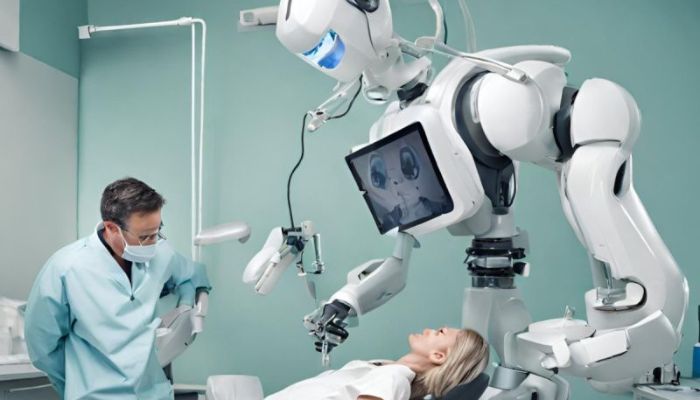
    As robots move from factory floors into our homes, hospitals, and city streets, the sophistication of their Sensor Fusion systems will directly determine their safety, usefulness, and ability to collaborate with humans. By giving machines a multi-faceted, human-like perception of the world, we are not just building better robots; we are building partners capable of navigating the beautiful complexity of our reality.DeepThinkSearch.

  • From Blueprint to Bot: The Engineering Journey of a Robot You Didn’t Know About

    From Blueprint to Bot: The Engineering Journey of a Robot You Didn’t Know About


    When you see a robot gracefully assembling a car, autonomously navigating a warehouse, or even vacuuming your living room, it’s easy to see only the final product. What remains invisible is the incredible robot engineering process that brought it to life. This process is a marathon of innovation, problem-solving, and meticulous refinement, far removed from the simple “idea to assembly” narrative many imagine.

    The path from a spark of an idea to a fully functional machine is a complex, multi-stage engineering journey filled with challenges and breakthroughs. This article pulls back the curtain on that journey, revealing the critical, often overlooked stages that define the creation of modern robotics.

    The Spark: Defining the Problem Before Designing the Solution

    Every successful robot engineering process begins not with a sketch, but with a question: “What problem needs to be solved?” This initial phase is about deep discovery and defining precise requirements.

    • The Core Function: What is the robot’s primary task? (e.g., pick and place, inspect, navigate).
    • The Operating Environment: Will it work in a sterile lab, a dusty construction site, or a dynamic home? This dictates everything from material choice to sensor robustness.
    • Performance Metrics: How fast, accurate, or strong does it need to be? What is its required battery life or duty cycle?

    This foundational stage sets the guardrails for the entire project. A well-defined problem is a half-solved problem, and in robotics, clarity here prevents costly mistakes down the line.

    The Digital Twin: CAD, Simulation, and Virtual Prototyping

    Long before any metal is cut or wire is soldered, the robot lives and breathes in a digital world. This stage is one of the most transformative in the modern robot engineering process.

    Read more about Adaptive Robotics: How AI is Forging a New Generation of Intelligent Machines

    The Critical Role of Simulation in the Robot Engineering Process

    Engineers use Computer-Aided Design (CAD) software to create detailed 3D models of every component. But they go a step further by placing this digital robot into a simulated environment.

    • Kinematics and Dynamics: Software tests how the robot’s joints will move, identifying its reach, dexterity, and potential collisions with itself or its surroundings.
    • Stress Analysis: Finite Element Analysis (FEA) simulates physical forces—like weight, impact, or vibration—to ensure parts won’t fail under pressure.
    • Virtual World Testing: Developers can write and debug control software against the digital model, training AI algorithms in thousands of virtual scenarios that would be too time-consuming, expensive, or dangerous to replicate in the real world. This iterative virtual prototyping saves months of development time and millions of dollars.

    The Hardware Heart: Mechatronics and Integration

    robot engineering process

    This is where the digital blueprint starts its physical engineering journey. Robotics is the ultimate exercise in mechatronics—the seamless integration of mechanics, electronics, and software.

    • Mechanical Fabrication: Components are manufactured through 3D printing, CNC machining, or casting. The choice of material—from lightweight aluminum to high-strength composites—is critical.
    • Electronics and Sensory System: The nervous system is built. This involves selecting and integrating motors (actuators), sensors (vision systems, LiDAR, torque sensors), and the central computing brain (often a powerful System-on-a-Chip or SOC).
    • Power Systems: Engineers must solve the energy puzzle, selecting batteries or power supplies that provide enough juice for the required performance without adding excessive weight or bulk.

    The Guiding Mind: The Software and Control Layer

    A robot without software is a statue. This stage involves creating the layers of intelligence that transform a collection of parts into an autonomous system. This is the most intensive part of the robot engineering process.

    • Low-Level Firmware: This code directly talks to the hardware, controlling motor speed, reading sensor data, and ensuring stability at the most basic level.
    • Middleware (e.g., ROS): The Robot Operating System (ROS) is a suite of software frameworks that provides standard services like hardware abstraction, device control, and message-passing between processes. It’s the plumbing that allows different software components to communicate.
    • High-Level AI and Perception: This is the cognitive layer. Computer vision algorithms interpret camera feeds, motion planners calculate collision-free paths, and machine learning models enable the robot to learn from its experiences and adapt to new situations.

    Iterate, Test, Break, Repeat: The Prototyping Loop

    The first physical prototype almost never works as intended. This phase is a rigorous cycle of testing, failure, and refinement—a humbling but essential part of the journey.

    • Bench Testing: Components and sub-systems are tested individually in a controlled lab environment.
    • Integration Testing: The fully assembled robot is tested as a whole to see how its systems interact.
    • Real-World Validation: The robot is placed in its intended environment. This is where unforeseen challenges emerge: lighting conditions that confuse a camera, floor textures that disrupt a navigation algorithm, or real-world physics that don’t perfectly match the simulation.

    This loop continues until the robot reliably and safely performs its core function. It’s a testament to the engineering adage: “Fail fast, succeed sooner.”

    Deployment and the Hidden Life of a Robot

    The engineering journey doesn’t end when the robot leaves the factory. Deployment is a stage in itself.

    robot engineering process
    • Field Calibration: The robot is fine-tuned for its specific installation site.
    • Monitoring and Data Collection: Once operational, robots stream back vast amounts of performance data. This data is gold for engineers, revealing usage patterns, component wear, and potential points of failure.
    • Continuous Improvement (CI): This feedback loop fuels the next generation. The lessons learned from robots in the field directly inform the design of future models, creating a virtuous cycle of innovation. This ongoing, hidden life of data collection and updates is a lesser-known but crucial final phase in the process.

    Conclusion: More Than the Sum of Its Parts

    The journey from a blueprint to a functioning bot is a remarkable feat of interdisciplinary collaboration. It’s a story of translating abstract ideas into digital models, physical hardware, and, finally, intelligent action. The next time you see a robot in action, you’ll see more than a machine; you’ll see the culmination of a long, complex, and fascinating robot engineering process—a true journey from concept to reality.

    This process, constantly evolving with new tools like AI and advanced simulation, continues to push the boundaries of what is possible, turning the science fiction of yesterday into the automated reality of today.