Tag: Industry 4.0

  • What is Edge Computing and Why It Matters More Than You Knew

    What is Edge Computing and Why It Matters More Than You Knew

    Imagine a self-driving car needing to make a split-second decision to avoid an accident. Sending data to a cloud server hundreds of miles away and waiting for a response is simply not an option. This critical need for speed and immediacy is at the heart of edge computing, a transformative shift in how we process data. But what exactly is it, and why should you care? Let’s break it down.

    In simple terms, edge computing is a distributed computing framework that brings computation and data storage closer to the location where it is needed—to the “edge” of the network. Instead of sending every bit of data from your devices to distant cloud data centers, processing happens locally, on the device itself or on a nearby server. This dramatically reduces delay (latency), saves bandwidth, and enables real-time applications that were previously impossible. It’s not a replacement for cloud computing, but a powerful complement that is quietly revolutionizing our digital world.

    How Edge Computing Works: The Core Concepts

    To understand how edge computing works, picture a traditional setup: Your smart security camera records footage → sends it all to the cloud → the cloud server analyzes it → sends an alert back to your phone. This round trip takes time and bandwidth.

    Now, let’s apply edge computing architecture. The camera itself, or a small local gateway in your home, has enough processing power to run the video analytics. It can immediately recognize a person versus a stray cat, and only send an alert—or a short clip—to the cloud. The raw, hours-long video stream stays local.

    Read more about The Insider’s Guide to Cheap Secure Hosting: Strategies Beyond the Basics

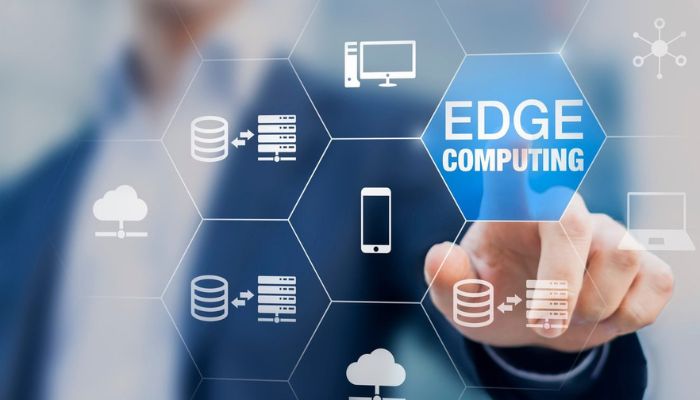
    The key components of this ecosystem include:

    • Edge Devices: These are the physical hardware where data is generated. Think IoT sensors, smartphones, industrial machines, or medical devices.
    • Edge Nodes/Gateways: These are local processing units that collect and analyze data from multiple edge devices. They act as an intermediate layer.
    • Edge Servers: More powerful micro-data centers located physically close to users, like at a cell tower base or a factory floor.
    • The Network Edge: This is the point where the device, or the local network, connects to the broader internet.

    The Unbeatable Benefits of Edge Computing

    Why is this shift so significant? The advantages of edge computing extend far beyond just speed.

    1. Blazing-Fast Speed and Ultra-Low Latency: This is the superstar benefit. By processing data locally, edge computing eliminates the long-distance network journey. This is crucial for applications like autonomous vehicles, real-time gaming (cloud gaming), and augmented reality (AR), where milliseconds matter.
    2. Massive Bandwidth Savings and Reduced Costs: Transmitting endless streams of raw data (e.g., from hundreds of factory cameras) is expensive. By processing and filtering data at the source, only valuable insights are sent to the cloud, slashing bandwidth needs and associated costs.
    3. Enhanced Reliability and Offline Operation: An edge device or local gateway can continue to operate and make critical decisions even if the connection to the central cloud is lost. This resilience is vital for remote locations (like oil rigs) or for continuous industrial processes.
    4. Improved Security and Data Privacy: Sensitive data can be processed locally without ever leaving the premises. For instance, a hospital can analyze patient data on-site to comply with strict privacy regulations like HIPAA, transmitting only anonymized insights to the cloud.

    Edge Computing in Action: Real-World Applications

    Edge computing technology isn’t a futuristic concept—it’s already here, powering innovations across industries.

    • Smart Factories & Industry 4.0: Machines equipped with sensors predict their own maintenance needs, and vision systems on assembly lines perform real-time quality control, drastically reducing downtime and waste.
    • Autonomous Vehicles: A self-driving car uses edge computing to instantly process LiDAR, camera, and radar data to navigate traffic. It cannot afford to wait for a cloud server’s response.
    • Smart Cities: Traffic lights adjust in real-time based on local flow, and smart grids balance energy distribution within neighborhoods using local data.
    • Retail: Stores use in-store cameras and sensors for inventory tracking, personalized promotions sent to your phone as you walk by, and frictionless checkout experiences.
    • Healthcare: Wearable health monitors analyze vital signs in real time, alerting patients and doctors to potential issues immediately. Surgical robots rely on edge processing for precise, instantaneous feedback.
    Navigating the Challenges and Looking to the Future

    Adopting an edge computing strategy is not without its hurdles. Managing thousands of distributed devices can be complex, requiring new tools for deployment, monitoring, and security. Securing these numerous “edges” becomes a larger surface area to protect compared to a few centralized data centers.

    However, the future is undoubtedly at the edge. The rollout of 5G networks, with their high speed and capacity, is a perfect partner for edge computing. We’re also moving towards a world of hybrid cloud-edge models, where intelligent workload placement decides what runs best where.

    Furthermore, the rise of AI at the edge means machine learning models will run directly on devices. Your smartphone camera will get smarter without uploading photos, and your smart speaker will understand you better without a constant internet connection.

    Conclusion: The Edge is Where the Action Is

    Edge computing is more than a technical buzzword; it’s a fundamental rethinking of our data infrastructure. It matters because it unlocks the true potential of technologies that demand instant response—from the factory floor to your living room. By bringing intelligence closer to the source, it creates a faster, more efficient, and more responsive digital world.

    As billions of new devices connect to the internet, the importance of edge computing will only grow. It represents the next logical step in our journey from centralized mainframes to the cloud, and now, to an intelligent, distributed edge. Understanding this shift is key to understanding the future of technology itself.

  • Adaptive Robotics: How AI is Forging a New Generation of Intelligent Machines

    Adaptive Robotics: How AI is Forging a New Generation of Intelligent Machines

    For decades, the word “robot” conjured images of powerful but mindless machines, bolted to factory floors, performing the same repetitive task with unerring precision but zero understanding. They operated in meticulously controlled environments, and any deviation—a misplaced part, an unexpected obstacle—would lead to failure. But a profound transformation is reshaping the very nature of automation. Welcome to the era of adaptive robotics, a field where machines perceive, learn, and dynamically respond to the unpredictable nature of the real world.

    This shift from programmed automation to intelligent adaptation is powered by breakthroughs in Artificial Intelligence. Adaptive robotics is not merely an incremental improvement; it’s a fundamental reimagining of what robots are and what they can do. This article will delve into how AI acts as the cognitive engine for these machines, explore their real-world applications, and illuminate the future they are building.

    What is Adaptive Robotics? Beyond Repetition and Rigidity

    At its core, adaptive robotics refers to robotic systems capable of modifying their behavior in real-time based on sensory feedback and changing conditions in their environment. Unlike their traditional counterparts, these robots do not rely solely on pre-programmed paths and actions.

    Think of the difference between a student who can only recite memorized facts and one who can critically analyze a new problem and devise a solution. Adaptive robotics gives machines a form of this critical thinking ability. They can handle variability, recover from errors autonomously, and perform complex tasks in unstructured settings—from a cluttered warehouse to a busy operating room.

    The AI Engine: Core Technologies Driving Adaptation

    The “intelligence” in adaptive robotics stems from a powerful combination of AI disciplines. It’s a symphony of technologies working in concert to create a responsive and learning system.

    Read more about Sustainable Tech: How Greener Hardware is Building a Better Future

    Perception and Computer Vision: The Art of Seeing and Understanding

    A robot cannot adapt to a world it cannot perceive. While cameras and sensors (LiDAR, torque sensors) act as its eyes and ears, AI-powered computer vision gives it a brain to interpret what it sees.

    • How it Works: Deep learning models, trained on millions of images, enable robots to identify objects, gauge distances, detect defects, and even interpret human gestures. For instance, an adaptive robotics system on a production line doesn’t just see a component; it identifies its type, orientation, and any potential flaws, then decides the correct action to take.
    • Real-World Example: In agricultural robotics, harvesting machines use computer vision to distinguish ripe fruit from unripe ones and leaves, adapting their grip and picking motion for each piece of produce.

    Machine Learning and Reinforcement Learning: The Power to Learn from Experience

    adaptive robotics

    This is the cornerstone of true adaptation. Machine Learning (ML) allows robots to improve their performance based on data and experience, moving beyond explicit programming.

    • How it Works: Through a technique called Reinforcement Learning (RL), a robot can learn complex tasks through trial and error in a simulated environment. It receives rewards for successful actions and penalties for failures, gradually discovering the optimal strategy to achieve a goal. This is how a robotic arm can learn the delicate touch needed to assemble a device or how a walking robot learns to regain its balance after a stumble.
    • Real-World Example: Google’s DeepMind has used RL to teach robotic limbs complex dexterity tasks, like manipulating blocks, without a single line of task-specific code.

    Real-Time Path Planning and Control: Making Smart Decisions Instantly

    Perception and learning are futile without the ability to make a timely decision. This layer of AI involves sophisticated algorithms that process sensory data and the robot’s internal model to calculate the best possible action in milliseconds.

    • How it Works: These algorithms continuously re-plan the robot’s path to avoid dynamic obstacles, compensate for slippage, or adjust grip force. It’s the executive function that answers the question, “Given what I know and see, what should I do right now?”
    • Real-World Example: Autonomous mobile robots (AMRs) in warehouses use this technology to navigate busy floors, rerouting themselves around human workers, other robots, and unexpected obstacles to deliver goods efficiently.

    The Transformative Impact: Applications of Adaptive Robotics Today

    The theoretical promise of adaptive robotics is already delivering tangible value across a wide range of industries.

    • Advanced Manufacturing: Robots can now perform complex assembly where parts are not perfectly aligned, using force feedback to “feel” their way, much like a human inserting a key into a lock.
    • Logistics and Supply Chain: Adaptive robotics systems are revolutionizing order fulfillment by picking and placing millions of different-sized items from bins, a task once considered far too variable for automation.
    • Healthcare and Assisted Surgery: Surgical robots are incorporating adaptive control to provide haptic feedback to surgeons and can even enforce “no-fly zones” to prevent accidental damage to critical tissues.
    • Disaster Response and Exploration: Search-and-rescue robots can traverse unstable rubble, while underwater robots can autonomously map and inspect pipelines, adapting to currents and changing terrain.

    The Future is Adaptive: Benefits and Emerging Potential

    The adoption of adaptive robotics offers a suite of compelling benefits that extend far beyond simple automation.

    • Unmatched Flexibility: Production lines can switch between different products with minimal downtime, enabling cost-effective, high-mix, low-volume manufacturing.
    • Enhanced Safety and Collaboration: By reliably perceiving humans, adaptive robotics enables true human-robot collaboration (HRC), where robots and people work side-by-side, each performing their strengths.
    • Resilience in Unstructured Environments: This technology opens up automation for industries like construction, forestry, and mining, where the environment is constantly changing and unpredictable.
    • The Path to General Intelligence: While today’s applications are specialized, the continued convergence of these AI technologies is the most credible path toward creating more general-purpose robots capable of performing a wide array of tasks in human-centric environments.

    Conclusion: Embracing an Intelligent Partnership

    The age of rigid, single-purpose automation is giving way to a new paradigm defined by intelligence and flexibility. Adaptive robotics, fueled by the symbiotic relationship of AI, machine learning, and advanced sensors, is not just replacing manual labor; it is augmenting human capability and solving problems once thought impossible to automate. These machines are evolving from isolated tools into collaborative partners, capable of understanding and navigating the complexity of our world. As the technology continues to mature, the potential for adaptive robotics to drive innovation, improve safety, and enhance our quality of life is truly boundless.

  • Can Digital Twins Make Manufacturing Truly Zero-Waste?

    Can Digital Twins Make Manufacturing Truly Zero-Waste?

    Imagine being able to test every aspect of a factory’s operation—every machine setting, every material flow, every energy draw—in a perfect virtual copy before anything is ever built or changed in the real world. This is the power of the digital twin, a technology poised to revolutionize industrial sustainability. At the same time, the urgent goal of zero-waste manufacturing pushes companies to eliminate not just landfill trash, but all systemic waste: wasted materials, energy, and time. This article explores the critical intersection of these two concepts, asking a pivotal question: Can the implementation of Digital Twins Zero-Waste strategies be the key to achieving truly circular and waste-free production?

    Understanding the Core Concepts: A Digital Replica for a Physical Goal

    To appreciate the synergy, we must first define the terms clearly.

    digital twin is far more than a static CAD model. It is a dynamic, virtual replica of a physical asset, process, or system that is continuously updated with data from sensors, controllers, and enterprise software. This creates a living digital simulation that mirrors the real world in real-time, allowing for deep analysis, experimentation, and prediction.

    Zero-waste manufacturing is a rigorous philosophy that aims to redesign resource life cycles so that all materials are reused, repurposed, or recovered. The ultimate goal is to completely eliminate the concept of “waste,” sending nothing to landfills, incinerators, or the environment. It’s about building a closed-loop system where every output becomes an input for another process.

    H2: The Mechanics of Waste Elimination: How Digital Twins Drive Efficiency

     Digital Twins Zero-Waste

    The pursuit of zero-waste manufacturing through digital twins is not a single action but a continuous process of optimization across the entire product lifecycle. Here’s how this technology systematically attacks waste.

    Read more about How to Start Learning Programming from Scratch in 2025 You Didn’t Know About

    H3: Virtual Prototyping and Design for Disassembly

    The most effective way to manage waste is to prevent it at the design stage. Digital twin technology enables engineers to create and test products and production processes in a risk-free digital sandbox.

    • Material Optimization: Engineers can simulate production to minimize scrap and off-cuts, using the exact amount of raw material required.
    • Sustainable Material Selection: The twin can analyze the long-term environmental impact of different materials, guiding choices towards more durable, recyclable, or biodegradable options.
    • Design for Circularity: Products can be virtually disassembled to ensure that at their end-of-life, components can be easily separated, repaired, or recycled, a core principle of the zero-waste vision.

    H3: Process Optimization and Real-Time Resource Management

    On the factory floor, digital twins act as a central nervous system, identifying and rectifying inefficiencies as they happen.

    • Energy Consumption: The twin can monitor and simulate the energy draw of entire production lines, identifying opportunities to reduce power usage during peak hours or machine idle times.
    • Yield Optimization: By analyzing data from sensors on mixing, cutting, or forming machines, the twin can recommend adjustments to maximize output from raw materials, directly reducing material waste.
    • Logistics and Flow: Simulating material handling and logistics within the factory can pinpoint bottlenecks that lead to product damage or spoilage, common sources of waste in industries like food and pharmaceuticals.

    H2: Overcoming Implementation Hurdles in Sustainable Manufacturing

    While the potential is vast, the path to a Digital Twins Zero-Waste system is not without its challenges.

    H3: The Data Integrity and Integration Challenge

     Digital Twins Zero-Waste

    A digital twin is only as good as the data it receives. Creating a high-fidelity twin requires:

    • A Robust Sensor Network: Significant upfront investment in IoT sensors and data infrastructure is necessary.
    • System Interoperability: Data must flow seamlessly from machines, ERP systems, and supply chain partners into the twin, which can be a complex technical task.
    • Data Cleansing: Inaccurate or “dirty” data will lead to flawed simulations and poor decision-making, potentially increasing waste instead of reducing it.

    H3: Cultural and Skillset Shifts

    Adopting a digital twin model requires a cultural shift from reactive, experience-based decision-making to a proactive, data-driven approach.

    • Workforce Training: Employees at all levels need to understand how to interpret and act on the insights provided by the twin.
    • Cross-Departmental Collaboration: Success depends on breaking down silos between design, production, maintenance, and sustainability teams.

    H3: Predictive Maintenance: A Direct Path to Waste Reduction

    One of the most immediate and impactful applications of digital twin technology is in predictive maintenance. Instead of following a fixed schedule or waiting for a machine to break (which causes scrap and downtime), the twin uses AI to analyze machine data and predict failures before they occur.

    • Reduced Defects: By maintaining equipment in optimal condition, the number of defective products—a direct form of material and resource waste—is drastically cut.
    • Extended Asset Life: Preventing catastrophic failure and enabling targeted repairs extends the lifespan of machinery itself, reducing the waste associated with manufacturing and disposing of replacement parts.

    H2: The Future is Circular: The Evolving Role of Digital Twins

    Looking ahead, the role of digital twins in zero-waste manufacturing will expand beyond the factory walls to create a truly circular economy.

    • Supply Chain Transparency: Twins can simulate and monitor the entire supply chain, tracking the environmental footprint of raw materials from source to factory, enabling more sustainable sourcing decisions.
    • Product Lifecycle Management: A twin can follow a product throughout its entire life, providing data on its usage, health, and eventual disassembly. This information is invaluable for designing better, longer-lasting products and creating efficient take-back and recycling programs.

    Conclusion: A Powerful Tool, But Not a Magic Bullet

    So, can digital twins make manufacturing truly zero-waste? The evidence points to them being the most powerful enabler we have. Digital Twins Zero-Waste strategies provide the unprecedented visibility, predictive power, and holistic control needed to systematically design waste out of existence.

     Digital Twins Zero-Waste

    However, the technology is a tool, not a magic wand. Its success hinges on a company’s genuine commitment to sustainability, significant investment in data infrastructure, and a willingness to transform its operational culture. For those who embrace it, the digital twin offers a clear and data-driven pathway to not only dramatically reduce waste and costs but also to build a resilient, sustainable, and truly circular manufacturing enterprise for the future. The virtual blueprint for a waste-free world is now within our reach.