Tag: FaaS

  • Guide to Serverless Computing You Didn’t Know About

    Guide to Serverless Computing You Didn’t Know About

    Forget everything you think you know about servers for a moment. Serverless computing isn’t about a world without servers—they’re still there, humming in distant data centers. Instead, it’s about a fundamental shift in focus: from infrastructure management to pure code execution. Imagine writing an application where you never once have to provision a virtual machine, scale a cluster, or patch an operating system. You simply upload your code, and it runs—scaling seamlessly from zero to millions of requests and back to zero, while you pay only for the exact milliseconds of compute time consumed. This is the transformative promise of the serverless model, and its implications run deeper than most introductory guides reveal.

    Deconstructing the Serverless Illusion

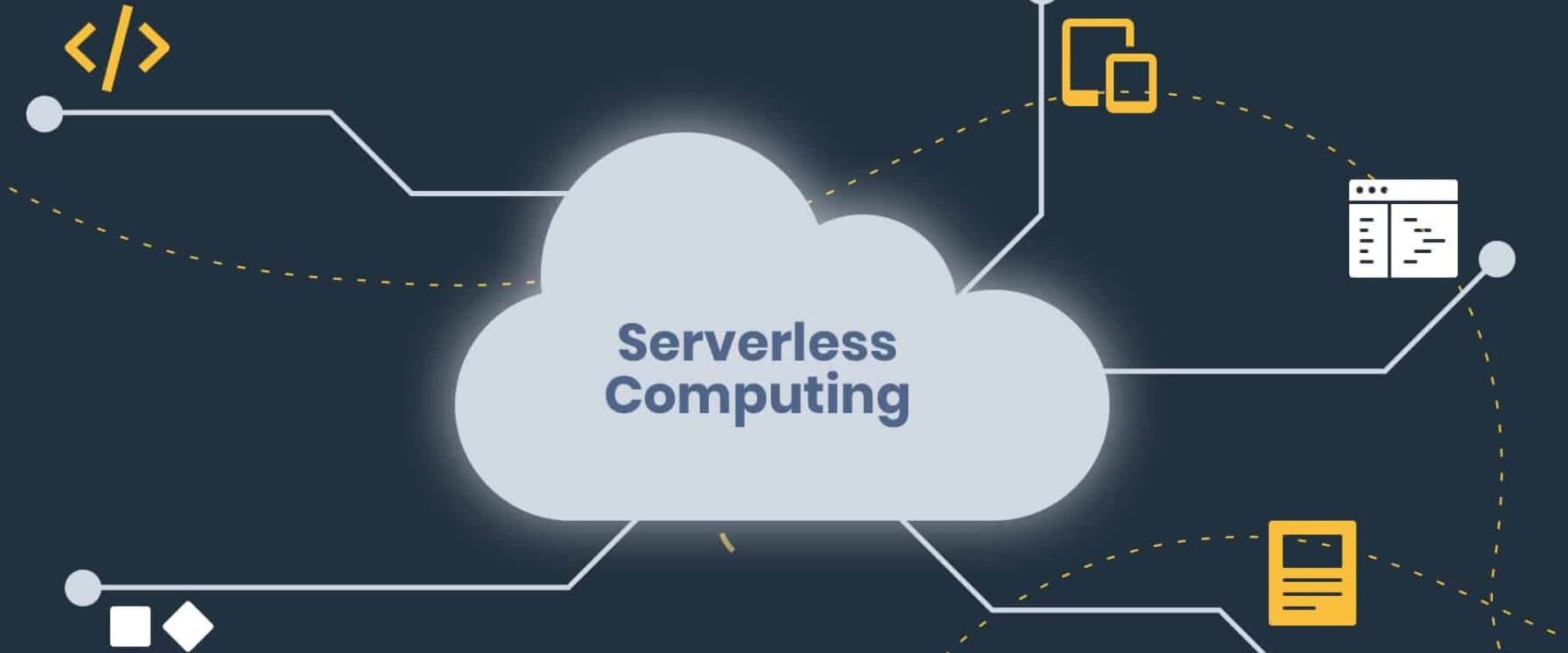
    The term “serverless” is a brilliant piece of marketing, but it can be misleading. A more accurate technical description is Function-as-a-Service (FaaS). Here, your application is broken down into individual, stateless functions—discrete units of logic triggered by specific events.

    Read more about The Freelancer Tech Stack You Need

    The Core Architecture: Events and Triggers

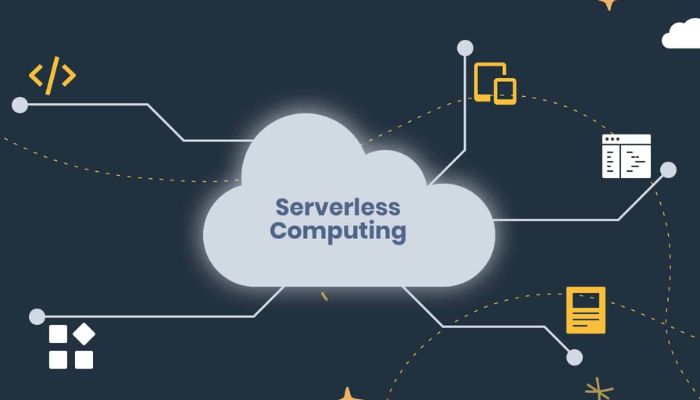
    In a traditional server-based setup, your code sits waiting on a constantly running server. In a serverless architecture, your functions lie dormant until a predefined event awakens them. This event could be:

    • An HTTP request (via an API Gateway)
    • A new file uploaded to cloud storage
    • A scheduled cron-like timer
    • A message arriving in a queue
    • A database update

    This event-driven paradigm is the true engine of serverless systems. It enables a powerful, decoupled way of building applications where services react to changes in real-time.

    The Hidden Landscape: Benefits Beyond Cost
    The pay-per-execution model of serverless platforms like AWS Lambda, Azure Functions, and Google Cloud Functions is often the headline benefit. But the true strategic advantages are more profound:

    • Blazing-Fast Innovation Cycles: Developers deploy features, not infrastructure. This can shrink development cycles from weeks to days, as the operational overhead evaporates.
    • Intrinsic, Granular Scalability: Each function scales independently and automatically. A user upload function can handle a sudden spike without impacting your background data-processing function. This granularity is nearly impossible to achieve cost-effectively with traditional servers.
    • Built-in High Availability and Fault Tolerance: Leading serverless providers bake redundancy and distribution across availability zones into their service. Your function runs in a managed environment designed for resilience without your direct intervention.

    The Unspoken Challenges and Strategic Considerations

    No architecture is a silver bullet. To wield serverless computing effectively, you must understand its nuanced constraints.

    The Cold Start Conundrum

    When a function hasn’t been invoked recently, the serverless platform needs to spin up a new execution environment (a “container”). This initialization, from a few hundred milliseconds to several seconds, is a “cold start.” For user-facing APIs requiring ultra-low latency, this can be problematic. Strategies like provisioned concurrency or scheduling periodic warm-up invocations are advanced tactics to mitigate this.

    State Management in a Stateless World

    Serverless functions are designed to be stateless. They cannot retain information in memory between invocations. Any required state—user sessions, application data—must be externalized to fully managed services like databases, caching layers (Redis), or object storage. This forces a clean architectural separation of concerns but requires careful planning.

    The Observability Gap

    Debugging a distributed system of ephemeral functions is different from tracing a monolithic app on a known server. You need robust logging, distributed tracing (using tools like AWS X-Ray), and monitoring tailored to short-lived executions. The visibility is there, but you must instrument for it.

    Advanced Patterns and Unique Use Cases
    serverless computing

    Beyond simple API backends, serverless architecture excels in specific scenarios often overlooked:

    1. Real-Time File Processing Pipelines: Automatically trigger functions to resize images, transcode videos, or validate data the moment a file lands in storage. This creates powerful, event-driven workflows.
    2. Chatbots and Async APIs: Handle intermittent, conversational traffic perfectly without maintaining a 24/7 server pool.
    3. IoT Data Ingestion and Filtering: Process millions of small data packets from devices, filtering and aggregating before sending to a database, paying only for the microsecond bursts of activity.
    4. Scheduled Automation and Maintenance: Run database cleanups, send batch notifications, or generate reports on a cron schedule without managing a scheduler host.

    Navigating Vendor Ecosystem and Lock-In

    A significant, often under-discussed, aspect of serverless computing is vendor lock-in. Your functions are tightly integrated with the provider’s ecosystem of event sources, APIs, and tooling. Porting an application from AWS Lambda to Azure Functions is non-trivial. Mitigation lies in:

    • Using infrastructure-as-code (IaC) tools like Terraform or the Serverless Framework for deployment.
    • Adopting a serverless framework that abstracts some provider-specific details.
    • Designing your business logic to be as portable as possible within the confines of the event-driven model.

    Conclusion: Is Serverless Right for Your Workload?

    Serverless computing is not about replacing all servers. It’s a powerful, specialized tool for event-driven, asynchronous, and bursty workloads. It shines when you value developer velocity, need extreme scalability from zero, and have a workload pattern that is intermittent. For long-running, consistent, high-throughput, or stateful applications, traditional container or VM-based architectures may remain more suitable and cost-effective.
    serverless computing

    The future of cloud computing is polyglot—a blend of VMs, containers, and serverless functions. The most sophisticated teams will learn to architect systems that leverage the best of each model, placing stateless, event-driven components into a serverless environment while using other compute forms where they excel. Mastering this nuanced understanding is the true key to unlocking the next level of cloud efficiency and innovation.

  • Serverless Architectures Explained (With Examples) You Didn’t Know About

    Serverless Architectures Explained (With Examples) You Didn’t Know About

    When you hear the term “serverless architectures,” you might think it means applications running without servers. In reality, serverless architectures are a cloud computing execution model where the cloud provider dynamically manages the allocation and provisioning of servers. The core principle is simple: developers focus solely on writing code for individual functions, while the cloud platform handles all the underlying infrastructure. This shift represents a fundamental change in how we build and deploy modern applications, offering unprecedented scalability and cost-efficiency.

    What Are Serverless Architectures, Really?

    At its heart, serverless computing is about abstraction. Traditional cloud models require you to manage virtual machines, containers, or operating systems—you’re always aware of the server. With a serverless approach, that responsibility vanishes. You upload your code, and the cloud provider executes it on your behalf, scaling it up or down perfectly with demand. The term “Function as a Service” (FaaS) is often used interchangeably, with AWS Lambda, Azure Functions, and Google Cloud Functions being the most prominent platforms.

    The true genius of serverless architectures lies in their event-driven nature. Your code isn’t running 24/7; it lies dormant until a specific trigger wakes it up. This trigger could be an HTTP request, a new file uploaded to cloud storage, a scheduled time, or a message arriving in a queue.

    Core Benefits of Adopting Serverless Architectures

    serverless architectures

    The move to a serverless model isn’t just a technical curiosity; it delivers tangible business and operational advantages that are redefining development workflows.

    Unmatched Cost Efficiency

    Unlike traditional servers that you pay for continuously, serverless computing follows a true pay-per-use model. You are billed only for the milliseconds your code is executing and the number of times it runs. When your function finishes its task, the billing stops. This can lead to massive cost savings, especially for applications with sporadic or unpredictable traffic.

    Built-in, Effortless Scalability

    This is a cornerstone benefit of serverless architectures. The cloud provider automatically scales your application from zero to thousands of concurrent executions and back down to zero seamlessly. There is no need to pre-provision capacity or worry about traffic spikes overwhelming your infrastructure. The scaling is granular and instantaneous.

    Enhanced Developer Productivity

    By eliminating server management, patching, and capacity planning, developers can focus entirely on writing business logic. This accelerates development cycles and allows small teams to build and maintain powerful applications. Serverless architectures encourage a microservices-style approach, leading to more modular and maintainable codebases.

    Advanced Serverless Architecture Patterns with Examples

    While image resizing and simple APIs are common examples, let’s explore some more sophisticated and lesser-known applications of serverless computing.

    Real-Time Data Enrichment Pipelines

    Imagine you have a stream of user activity data from a mobile app. Each event is minimal—just a user ID and an action. A serverless architecture can enrich this data in real-time before storing it.

    Example: An e-commerce site triggers a function every time a user clicks “add to cart.” The function:

    1. Receives the click event with a user_id and product_id.
    2. Queries a database to fetch the user’s profile (e.g., loyalty tier, location).
    3. Queries the product catalog to get product details (e.g., category, price).
    4. Combines all this information into a single, enriched data object.
    5. Streams the enriched object to a data warehouse like Amazon Redshift or Google BigQuery for analytics.

    This pattern transforms raw, low-value data into rich, immediately analyzable information without managing any stream-processing clusters.

    Dynamic Security Automation and Bot Mitigation

    serverless architectures

    Serverless architectures are perfect for implementing security measures that are both highly responsive and cost-effective.

    Example: A CloudFront distribution (CDN) can trigger a Lambda function every time a request returns a 404 (Not Found) status code. The function can then:

    1. Analyze the request: Is it for a common WordPress admin path that doesn’t exist on your site?
    2. Check the IP address against a threat intelligence feed.
    3. If the request is deemed malicious, the function can automatically update a Web Application Firewall (WAF) rule to block the offending IP address for a period of time.

    This creates a self-healing, adaptive security layer that proactively defends your application.

    Choreographed Microservices Workflows

    For complex business processes, you can use a serverless workflow engine (like AWS Step Functions or Azure Durable Functions) to orchestrate multiple serverless functions.

    Example: An Order Fulfillment System

    1. A function is triggered when a new order is placed in a database.
    2. A workflow engine takes over and executes a series of steps:
      • Process Payment: Calls a function to charge the customer’s card.
      • Reserve Inventory: If payment succeeds, calls a function to reserve the item in the warehouse system.
      • Send Notifications: In parallel, it triggers functions to send a “Order Confirmed” email and an internal Slack message to the shipping team.
      • Handle Failures: If any step fails (e.g., payment declines), the workflow automatically triggers a compensating function to release inventory and send a “Payment Failed” email.

    This pattern provides incredible visibility into complex processes and makes them resilient to failure, all without a single long-running server.

    Navigating the Challenges of Serverless Computing

    No architecture is a silver bullet. It’s crucial to understand the trade-offs involved with serverless architectures.

    • Cold Starts: A brief latency when a function is invoked after being idle, as the platform initializes a runtime environment.
    • Vendor Lock-in: Your business logic becomes tightly coupled with the provider’s specific FaaS API and event formats.
    • Debugging and Monitoring: Traditional debugging tools are less effective, requiring a shift towards distributed tracing and specialized monitoring services.
    • Complexity in State Management: By design, functions are stateless. Managing user sessions or application state requires external services like databases or Redis.

    Conclusion: Embracing the Serverless Mindset

    serverless architectures

    Serverless architectures are more than just a technology; they represent a paradigm shift toward building efficient, resilient, and highly scalable applications. The examples discussed—from real-time data enrichment to choreographed workflows—demonstrate that serverless is moving far beyond simple webhooks.

    While challenges exist, the benefits of reduced operational overhead, granular scaling, and cost optimization are too significant to ignore. The future of cloud development is increasingly event-driven and serverless. By starting with a single function to handle a specific task, you can begin to leverage the power of serverless computing and architect your applications for the modern world.

    Read more about The Future of Frontend Frameworks: React vs Svelte vs Solid You Didn’t Know About