Tag: computer vision

  • How Robots Use Sensor Fusion to Understand the World You Didn’t Know About

    How Robots Use Sensor Fusion to Understand the World You Didn’t Know About

    Look at a coffee cup on your desk. In an instant, your brain seamlessly combines a flood of sensory information: you see its position and color, you feel its solidity and temperature when you grab it, and you hear the subtle clink as you set it down. You don’t perceive these as separate data streams; you experience a unified, rich understanding of the “coffee cup.” For robots to operate in our complex, dynamic world, they need this same capability. This is where the transformative technology of Sensor Fusion comes into play.

    Sensor Fusion is the engineering discipline of intelligently combining data from multiple sensors to produce a more accurate, reliable, and complete understanding of the environment than could be achieved by any single sensor alone. It is the silent, powerful brain behind the perception of every advanced robot, autonomous vehicle, and smart device, enabling them to move from being blind, deaf machines to context-aware partners.

    What is Sensor Fusion? Beyond the Sum of Its Parts

    At its core, Sensor Fusion is about overcoming the inherent limitations of individual sensors. No single sensor is perfect. Cameras can be fooled by lighting and lack depth. LiDAR struggles with fog and rain. GPS can be inaccurate by several meters. Inertial Measurement Units (IMUs) drift over time.

    Sensor Fusion solves this by creating a synergistic system. It’s the robotic equivalent of a sports team, where each player has a specialized role, but it’s their coordinated play that wins the game. By fusing complementary data streams, the system compensates for the weaknesses of one sensor with the strengths of another, creating a robust and resilient perception model. This process is foundational for any robot that must operate safely and effectively outside of a perfectly controlled cage.

    Read more about From Blueprint to Bot: The Engineering Journey of a Robot You Didn’t Know About

    The Technical Magic: How Sensor Fusion Algorithms Work

    The “fusion” in Sensor Fusion isn’t a simple averaging of data. It’s a sophisticated mathematical process, often powered by probabilistic models and AI. The goal is to create a central, evolving model of the world—often called the “state estimate”—that is continuously updated with fresh sensor readings.

    The Kalman Filter: The Workhorse of Sensor Fusion

    One of the most fundamental algorithms in Sensor Fusion is the Kalman Filter. Think of it as a sophisticated “predict-and-correct” engine.

    1. Prediction: The filter predicts the robot’s next state (e.g., its position and velocity) based on its previous state and known control inputs (e.g., wheel rotation).
    2. Update: Then, it takes the actual sensor measurements (e.g., from a GPS or camera).
    3. Fusion: The algorithm fuses the prediction and the measurement, weighting each based on their calculated uncertainties. If the GPS signal is temporarily noisy, the filter trusts its internal prediction more. When the GPS is clear again, it corrects the model.

    This continuous loop results in a smooth, accurate, and real-time estimate of the robot’s position and movement, far surpassing what any single sensor could provide. This is a cornerstone of the sensor fusion process in navigation.

    AI-Powered Fusion: The Next Generation

    Sensor Fusion

    While classical filters like the Kalman are powerful, modern Sensor Fusion is increasingly leveraging Artificial Intelligence, particularly Deep Learning.

    • Deep Sensor Fusion: AI models, such as convolutional neural networks (CNNs), can be trained to take raw, unprocessed data from multiple sensors (e.g., camera images and LiDAR point clouds) and learn to extract and combine features on its own. The AI discovers the most effective way to correlate visual patterns with spatial data, leading to incredibly robust object classification and scene understanding.
    • Cross-Modal Learning: This allows a robot to learn from one sensor to improve another. For example, by fusing camera and microphone data, a robot could learn to associate the sound of a specific machine with its visual appearance, enabling it to identify a faulty motor both by its sound and its visual vibration.

    Real-World Applications: Sensor Fusion in Action

    The theoretical power of Sensor Fusion becomes clear when we see it operating in the wild.

    • Self-Driving Cars: This is the ultimate showcase for Sensor Fusion. A car’s system fuses data from cameras, radar, LiDAR, and GPS. The camera identifies a “stop sign.” Radar confirms it’s a solid, stationary object. LiDAR provides its precise distance. GPS and wheel odometry place it on the map. This redundant, multi-layered perception is the only way to achieve the safety required for full autonomy.
    • Autonomous Drones: A drone uses Sensor Fusion to maintain stable flight. Its IMU measures acceleration and rotation, but this data drifts quickly. A downward-facing camera and an ultrasonic sensor provide visual odometry and altitude data, which are fused with the IMU data to correct for drift and allow the drone to hover perfectly in place, even indoors without GPS.
    • Advanced Robotics in Logistics: A warehouse picking robot uses a combination of 2D and 3D cameras. The 2D camera quickly identifies an object in a bin, while the 3D camera determines its precise orientation and depth. Sensor Fusion combines this information to guide the robotic arm to a successful and efficient grasp, even amongst clutter.
    • Smartphones: The simple act of switching your phone screen from portrait to landscape is a result of Sensor Fusion. The device fuses data from an accelerometer (which senses gravity) and a gyroscope (which senses rotation) to instantly and smoothly know the phone’s orientation.

    The Unseen Benefits: Why Sensor Fusion is Non-Negotiable

    The value of implementing a robust Sensor Fusion pipeline extends far beyond basic functionality.

    • Increased Reliability and Redundancy: If one sensor fails or provides spurious data, the fused system can rely on the others to maintain a degree of operational awareness and safety.
    • Resolution Enhancement: Fusing a low-resolution depth sensor with a high-resolution camera can create a high-resolution depth map, giving a robot detailed spatial understanding.
    • Unprecedented Robustness: By combining sensors that are susceptible to different environmental conditions (e.g., a camera that fails in the dark and a LiDAR that struggles with fog), the robot can operate reliably across a much wider range of scenarios.

    Conclusion: The Path to Truly Perceptive Machines

    Sensor Fusion is not merely a technical add-on; it is the fundamental cognitive layer that allows machines to transition from executing pre-programmed scripts to interacting intelligently with an unpredictable world. It is the technology that builds a bridge from raw, noisy data to coherent, actionable understanding.
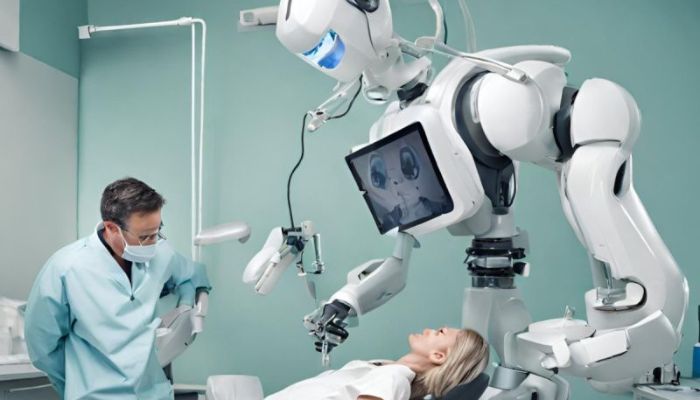
    As robots move from factory floors into our homes, hospitals, and city streets, the sophistication of their Sensor Fusion systems will directly determine their safety, usefulness, and ability to collaborate with humans. By giving machines a multi-faceted, human-like perception of the world, we are not just building better robots; we are building partners capable of navigating the beautiful complexity of our reality.DeepThinkSearch.

  • Adaptive Robotics: How AI is Forging a New Generation of Intelligent Machines

    Adaptive Robotics: How AI is Forging a New Generation of Intelligent Machines

    For decades, the word “robot” conjured images of powerful but mindless machines, bolted to factory floors, performing the same repetitive task with unerring precision but zero understanding. They operated in meticulously controlled environments, and any deviation—a misplaced part, an unexpected obstacle—would lead to failure. But a profound transformation is reshaping the very nature of automation. Welcome to the era of adaptive robotics, a field where machines perceive, learn, and dynamically respond to the unpredictable nature of the real world.

    This shift from programmed automation to intelligent adaptation is powered by breakthroughs in Artificial Intelligence. Adaptive robotics is not merely an incremental improvement; it’s a fundamental reimagining of what robots are and what they can do. This article will delve into how AI acts as the cognitive engine for these machines, explore their real-world applications, and illuminate the future they are building.

    What is Adaptive Robotics? Beyond Repetition and Rigidity

    At its core, adaptive robotics refers to robotic systems capable of modifying their behavior in real-time based on sensory feedback and changing conditions in their environment. Unlike their traditional counterparts, these robots do not rely solely on pre-programmed paths and actions.

    Think of the difference between a student who can only recite memorized facts and one who can critically analyze a new problem and devise a solution. Adaptive robotics gives machines a form of this critical thinking ability. They can handle variability, recover from errors autonomously, and perform complex tasks in unstructured settings—from a cluttered warehouse to a busy operating room.

    The AI Engine: Core Technologies Driving Adaptation

    The “intelligence” in adaptive robotics stems from a powerful combination of AI disciplines. It’s a symphony of technologies working in concert to create a responsive and learning system.

    Read more about Sustainable Tech: How Greener Hardware is Building a Better Future

    Perception and Computer Vision: The Art of Seeing and Understanding

    A robot cannot adapt to a world it cannot perceive. While cameras and sensors (LiDAR, torque sensors) act as its eyes and ears, AI-powered computer vision gives it a brain to interpret what it sees.

    • How it Works: Deep learning models, trained on millions of images, enable robots to identify objects, gauge distances, detect defects, and even interpret human gestures. For instance, an adaptive robotics system on a production line doesn’t just see a component; it identifies its type, orientation, and any potential flaws, then decides the correct action to take.
    • Real-World Example: In agricultural robotics, harvesting machines use computer vision to distinguish ripe fruit from unripe ones and leaves, adapting their grip and picking motion for each piece of produce.

    Machine Learning and Reinforcement Learning: The Power to Learn from Experience

    adaptive robotics

    This is the cornerstone of true adaptation. Machine Learning (ML) allows robots to improve their performance based on data and experience, moving beyond explicit programming.

    • How it Works: Through a technique called Reinforcement Learning (RL), a robot can learn complex tasks through trial and error in a simulated environment. It receives rewards for successful actions and penalties for failures, gradually discovering the optimal strategy to achieve a goal. This is how a robotic arm can learn the delicate touch needed to assemble a device or how a walking robot learns to regain its balance after a stumble.
    • Real-World Example: Google’s DeepMind has used RL to teach robotic limbs complex dexterity tasks, like manipulating blocks, without a single line of task-specific code.

    Real-Time Path Planning and Control: Making Smart Decisions Instantly

    Perception and learning are futile without the ability to make a timely decision. This layer of AI involves sophisticated algorithms that process sensory data and the robot’s internal model to calculate the best possible action in milliseconds.

    • How it Works: These algorithms continuously re-plan the robot’s path to avoid dynamic obstacles, compensate for slippage, or adjust grip force. It’s the executive function that answers the question, “Given what I know and see, what should I do right now?”
    • Real-World Example: Autonomous mobile robots (AMRs) in warehouses use this technology to navigate busy floors, rerouting themselves around human workers, other robots, and unexpected obstacles to deliver goods efficiently.

    The Transformative Impact: Applications of Adaptive Robotics Today

    The theoretical promise of adaptive robotics is already delivering tangible value across a wide range of industries.

    • Advanced Manufacturing: Robots can now perform complex assembly where parts are not perfectly aligned, using force feedback to “feel” their way, much like a human inserting a key into a lock.
    • Logistics and Supply Chain: Adaptive robotics systems are revolutionizing order fulfillment by picking and placing millions of different-sized items from bins, a task once considered far too variable for automation.
    • Healthcare and Assisted Surgery: Surgical robots are incorporating adaptive control to provide haptic feedback to surgeons and can even enforce “no-fly zones” to prevent accidental damage to critical tissues.
    • Disaster Response and Exploration: Search-and-rescue robots can traverse unstable rubble, while underwater robots can autonomously map and inspect pipelines, adapting to currents and changing terrain.

    The Future is Adaptive: Benefits and Emerging Potential

    The adoption of adaptive robotics offers a suite of compelling benefits that extend far beyond simple automation.

    • Unmatched Flexibility: Production lines can switch between different products with minimal downtime, enabling cost-effective, high-mix, low-volume manufacturing.
    • Enhanced Safety and Collaboration: By reliably perceiving humans, adaptive robotics enables true human-robot collaboration (HRC), where robots and people work side-by-side, each performing their strengths.
    • Resilience in Unstructured Environments: This technology opens up automation for industries like construction, forestry, and mining, where the environment is constantly changing and unpredictable.
    • The Path to General Intelligence: While today’s applications are specialized, the continued convergence of these AI technologies is the most credible path toward creating more general-purpose robots capable of performing a wide array of tasks in human-centric environments.

    Conclusion: Embracing an Intelligent Partnership

    The age of rigid, single-purpose automation is giving way to a new paradigm defined by intelligence and flexibility. Adaptive robotics, fueled by the symbiotic relationship of AI, machine learning, and advanced sensors, is not just replacing manual labor; it is augmenting human capability and solving problems once thought impossible to automate. These machines are evolving from isolated tools into collaborative partners, capable of understanding and navigating the complexity of our world. As the technology continues to mature, the potential for adaptive robotics to drive innovation, improve safety, and enhance our quality of life is truly boundless.