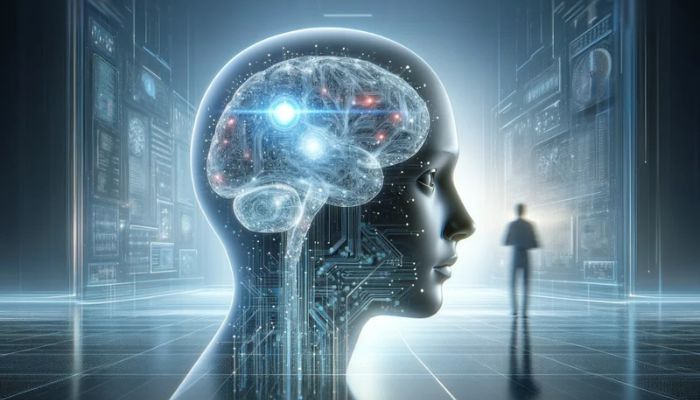
Imagine teaching a child to ride a bicycle. You can’t program them with exact instructions for every possible situation. Instead, they learn through trial and error—balancing, falling, and adjusting until they master the skill. This intuitive learning process is exactly what reinforcement learning (RL) brings to robotics. It represents a fundamental shift from traditional programming to creating robots that learn from interaction and experience.
In this comprehensive guide, we’ll explore how reinforcement learning is transforming robotics. We’ll break down the complex concepts behind this powerful machine learning approach and showcase its real-world applications, from manufacturing floors to surgical suites.
What is Reinforcement Learning? The Basics Explained Simply
At its core, reinforcement learning is a type of machine learning where an agent (in this case, a robot) learns to make decisions by performing actions in an environment and receiving feedback in the form of rewards or penalties.
Think of it like training a dog:
- The robot performs an action
- It observes the outcome and receives a “reward” (positive or negative)
- It updates its strategy to maximize future rewards
- Over time, it discovers the optimal sequence of actions to achieve its goal
This trial-and-error process allows robots to develop sophisticated behaviors without being explicitly programmed for every scenario they might encounter.
The Fundamental Framework of Reinforcement Learning
The entire reinforcement learning framework rests on four key components:
- The Agent: The robot or software program making decisions
- The Environment: The world the agent interacts with
- The State: The current situation of the agent within the environment
- The Reward Signal: Feedback that tells the agent how good its action was
This framework creates a continuous loop where the agent observes the state, takes an action, receives a reward, and updates its understanding—gradually improving its performance through thousands or millions of iterations.
Why Reinforcement Learning is Revolutionizing Robotics
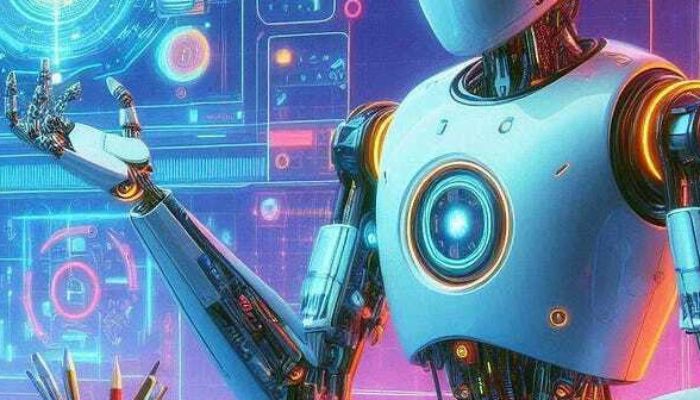
Traditional robotics relies heavily on precise programming for specific tasks in controlled environments. While effective for repetitive assembly line work, this approach struggles with unpredictability and variation. Reinforcement learning enables robots to adapt to dynamic, real-world conditions where not all variables can be anticipated in advance.
Beyond Pre-Programmed Instructions
The power of reinforcement learning in robotics lies in its ability to handle complexity that would be impractical to code manually. Consider a robot designed to stack irregularly shaped boxes. Writing explicit instructions for every possible box size, weight, and orientation would be nearly impossible. Through reinforcement learning, the robot can discover effective stacking strategies on its own, developing a generalized understanding of physics and manipulation.
This learning-based approach is particularly valuable for tasks that:
- Involve complex physical interactions
- Operate in partially observable environments
- Require long-term planning and strategy
- Need to adapt to changing conditions
How Reinforcement Learning Actually Works in Robots
Understanding the mechanics of reinforcement learning helps demystify how robots transform from clumsy beginners to skilled performers.
The Training Process: Simulation to Reality
Modern reinforcement learning typically begins in simulated environments before transferring to physical robots. This “sim-to-real” approach addresses one of the biggest challenges in robotics training: the time and potential damage from real-world trial and error.
In simulation, robots can accumulate years of experience in hours or days, exploring different strategies without physical constraints. Advanced reinforcement learning techniques then help bridge the gap between the simulated and real worlds, allowing policies learned in simulation to function effectively on actual hardware.
H3: Key Algorithms Powering Robotic Reinforcement Learning
Several specialized algorithms have proven particularly effective for robotic reinforcement learning:
- Deep Q-Networks (DQN): Combine Q-learning with deep neural networks to handle high-dimensional state spaces
- Proximal Policy Optimization (PPO): Provides stable learning while ensuring the robot doesn’t make drastic, potentially dangerous policy changes
- Soft Actor-Critic (SAC): An off-policy algorithm that balances exploration with efficiency, particularly well-suited for continuous control tasks
- Hierarchical Reinforcement Learning: Breaks complex tasks into smaller, more manageable sub-tasks
Real-World Applications: Reinforcement Learning in Action
The theoretical promise of reinforcement learning is now yielding practical results across numerous domains. These applications demonstrate how robots are moving beyond repetitive factory work to more adaptive, intelligent behaviors.
Robotic Manipulation and Grasping
One of the most successful applications of reinforcement learning in robotics involves manipulation tasks. Traditional grasping systems struggle with unfamiliar objects, but RL-enabled robots can learn generalizable grasping strategies.
Companies like Google and Amazon have deployed reinforcement learning systems in their warehouses where robots learn to pick and place thousands of different products with minimal human intervention. These systems continuously improve their success rates as they encounter new objects and scenarios.
Autonomous Navigation and Mobility
Reinforcement learning has dramatically advanced robotic navigation, particularly in unstructured environments. While traditional navigation relies on detailed maps and precise localization, RL allows robots to develop more robust movement strategies.
Boston Dynamics, for instance, uses reinforcement learning to train its robots to recover from slips, navigate obstacles, and maintain balance on challenging terrain. The robots learn through millions of simulated falls and recoveries, developing an intuitive understanding of physics that would be extraordinarily difficult to program manually.
Surgical Robotics and Healthcare
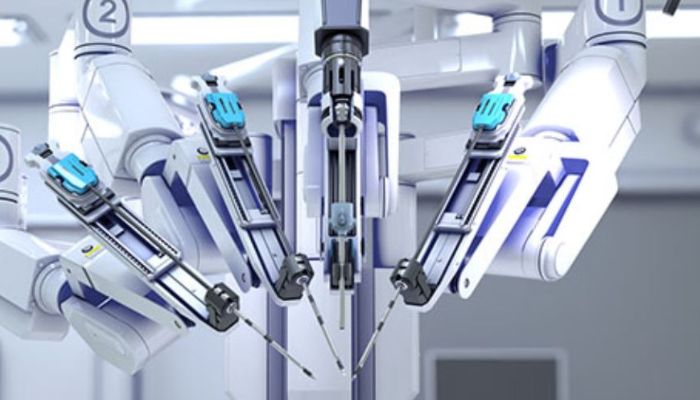
In healthcare, reinforcement learning is helping surgical robots perform with greater precision and autonomy. Training in simulation allows these systems to develop delicate manipulation skills without risking patient safety.
Researchers have demonstrated RL systems that can:
- Perform suturing with superhuman precision
- Adapt to tissue variability and movement
- Optimize surgical motions for speed and accuracy
- Learn from expert demonstrations through imitation learning
Overcoming Challenges: The Path to Widespread Adoption
Despite its promise, implementing reinforcement learning in real-world robotics faces significant hurdles that researchers are actively addressing.
Read more about AI Hallucinations: When Artificial Intelligence Creates Its Own Reality
The Sample Efficiency Problem
One major challenge with reinforcement learning is its typically high sample requirements. Robots may need thousands or millions of trials to master simple tasks, making real-world training impractical for many applications.
Recent advances in reinforcement learning are tackling this through:
- Transfer Learning: Applying knowledge from previously learned tasks to new ones
- Meta-Learning: Developing systems that learn how to learn, adapting quickly to new challenges
- Imitation Learning: Starting from human demonstrations rather than random exploration
Safety and Reliability Concerns
As robots move into human environments, ensuring safe operation becomes critical. Reinforcement learning systems must be constrained to prevent dangerous behaviors during training and deployment.
Modern approaches to safe reinforcement learning include:
- Constrained Optimization: Defining safety boundaries the robot cannot violate
- Risk-Aware Policies: Prioritizing actions with predictable outcomes
- Human-in-the-Loop Training: Incorporating human feedback to guide learning
The Future of Reinforcement Learning in Robotics
The trajectory of reinforcement learning points toward increasingly capable and autonomous robotic systems. Several emerging trends suggest where the field is heading.
Multi-Robot Systems and Swarm Intelligence
Future applications of reinforcement learning will likely involve coordinating multiple robots working together. Multi-agent reinforcement learning enables robots to develop collaborative strategies, from simple coordination to complex emergent behaviors.
This approach could enable swarms of robots to perform tasks like:
- Collaborative construction in hazardous environments
- Coordinated search and rescue operations
- Distributed environmental monitoring
Lifelong Learning and Adaptation
Current reinforcement learning systems typically learn specific tasks in isolation. The next frontier involves creating robots that learn continuously throughout their operational lifetime, adapting to new environments and taking on novel tasks without complete retraining.
This capability for lifelong learning would represent a fundamental shift from robots as specialized tools to general-purpose assistants capable of handling the unpredictability of real-world environments.
Conclusion: The Transformative Potential of Learning Robots
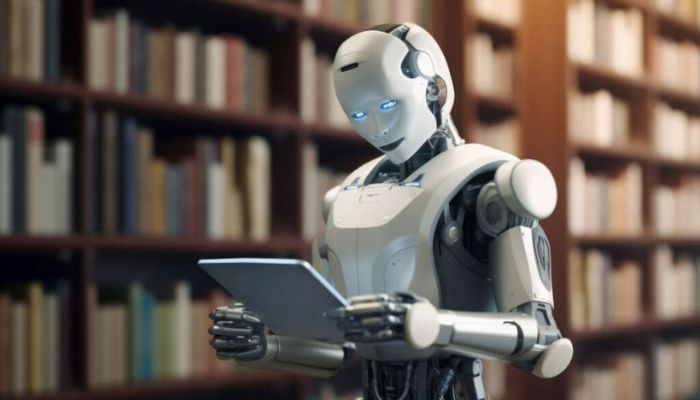
Reinforcement learning represents more than just a technical advancement in robotics—it fundamentally changes our relationship with machines. Instead of painstakingly programming robots for every eventuality, we’re creating systems that can discover solutions on their own, often in ways we wouldn’t have considered.
As reinforcement learning techniques continue to mature, we can expect robots to become increasingly capable partners in our homes, workplaces, and communities. They’ll handle tasks too dangerous, tedious, or complex for humans, all while adapting to our individual needs and preferences.
The journey from programmed machines to learning partners is well underway, and reinforcement learning is the engine driving this transformation. While challenges remain, the progress to date suggests a future where robots aren’t just tools we use, but collaborators that grow and adapt alongside us.