Tag: AI at the Edge

  • What is Edge Computing and Why It Matters More Than You Knew

    What is Edge Computing and Why It Matters More Than You Knew

    Imagine a self-driving car needing to make a split-second decision to avoid an accident. Sending data to a cloud server hundreds of miles away and waiting for a response is simply not an option. This critical need for speed and immediacy is at the heart of edge computing, a transformative shift in how we process data. But what exactly is it, and why should you care? Let’s break it down.

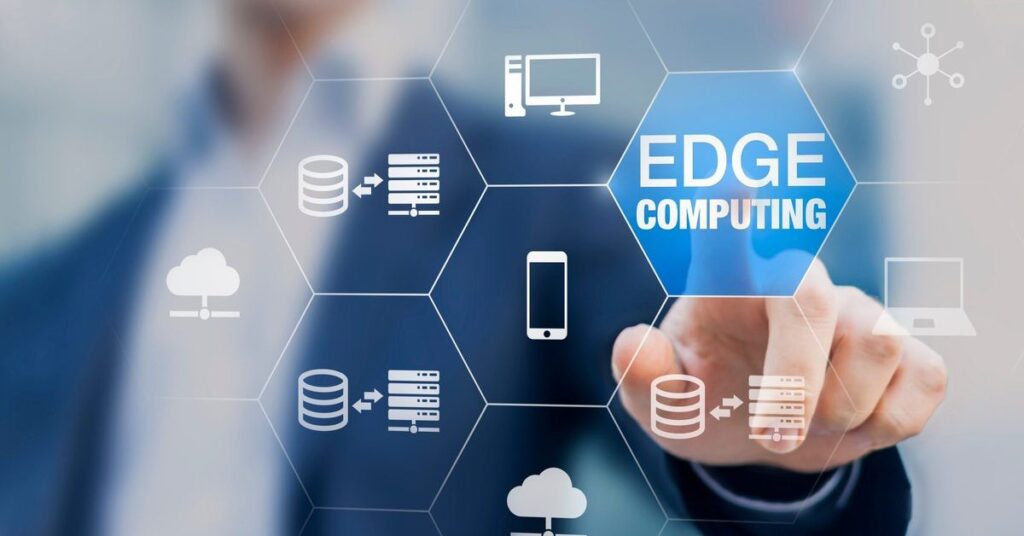
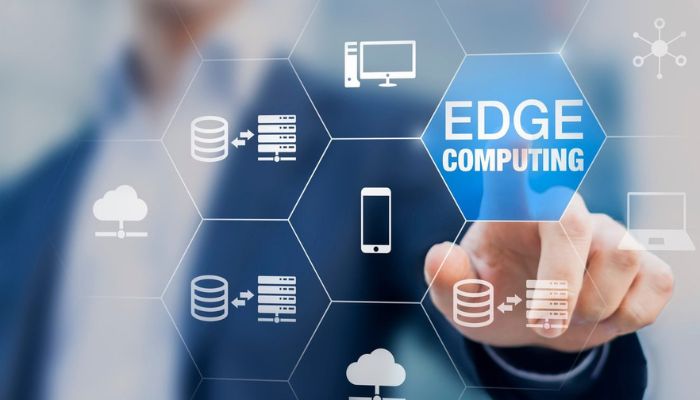
    In simple terms, edge computing is a distributed computing framework that brings computation and data storage closer to the location where it is needed—to the “edge” of the network. Instead of sending every bit of data from your devices to distant cloud data centers, processing happens locally, on the device itself or on a nearby server. This dramatically reduces delay (latency), saves bandwidth, and enables real-time applications that were previously impossible. It’s not a replacement for cloud computing, but a powerful complement that is quietly revolutionizing our digital world.

    How Edge Computing Works: The Core Concepts

    To understand how edge computing works, picture a traditional setup: Your smart security camera records footage → sends it all to the cloud → the cloud server analyzes it → sends an alert back to your phone. This round trip takes time and bandwidth.

    Now, let’s apply edge computing architecture. The camera itself, or a small local gateway in your home, has enough processing power to run the video analytics. It can immediately recognize a person versus a stray cat, and only send an alert—or a short clip—to the cloud. The raw, hours-long video stream stays local.

    Read more about The Insider’s Guide to Cheap Secure Hosting: Strategies Beyond the Basics

    The key components of this ecosystem include:

    • Edge Devices: These are the physical hardware where data is generated. Think IoT sensors, smartphones, industrial machines, or medical devices.
    • Edge Nodes/Gateways: These are local processing units that collect and analyze data from multiple edge devices. They act as an intermediate layer.
    • Edge Servers: More powerful micro-data centers located physically close to users, like at a cell tower base or a factory floor.
    • The Network Edge: This is the point where the device, or the local network, connects to the broader internet.

    The Unbeatable Benefits of Edge Computing

    Why is this shift so significant? The advantages of edge computing extend far beyond just speed.

    1. Blazing-Fast Speed and Ultra-Low Latency: This is the superstar benefit. By processing data locally, edge computing eliminates the long-distance network journey. This is crucial for applications like autonomous vehicles, real-time gaming (cloud gaming), and augmented reality (AR), where milliseconds matter.
    2. Massive Bandwidth Savings and Reduced Costs: Transmitting endless streams of raw data (e.g., from hundreds of factory cameras) is expensive. By processing and filtering data at the source, only valuable insights are sent to the cloud, slashing bandwidth needs and associated costs.
    3. Enhanced Reliability and Offline Operation: An edge device or local gateway can continue to operate and make critical decisions even if the connection to the central cloud is lost. This resilience is vital for remote locations (like oil rigs) or for continuous industrial processes.
    4. Improved Security and Data Privacy: Sensitive data can be processed locally without ever leaving the premises. For instance, a hospital can analyze patient data on-site to comply with strict privacy regulations like HIPAA, transmitting only anonymized insights to the cloud.

    Edge Computing in Action: Real-World Applications

    Edge computing technology isn’t a futuristic concept—it’s already here, powering innovations across industries.

    • Smart Factories & Industry 4.0: Machines equipped with sensors predict their own maintenance needs, and vision systems on assembly lines perform real-time quality control, drastically reducing downtime and waste.
    • Autonomous Vehicles: A self-driving car uses edge computing to instantly process LiDAR, camera, and radar data to navigate traffic. It cannot afford to wait for a cloud server’s response.
    • Smart Cities: Traffic lights adjust in real-time based on local flow, and smart grids balance energy distribution within neighborhoods using local data.
    • Retail: Stores use in-store cameras and sensors for inventory tracking, personalized promotions sent to your phone as you walk by, and frictionless checkout experiences.
    • Healthcare: Wearable health monitors analyze vital signs in real time, alerting patients and doctors to potential issues immediately. Surgical robots rely on edge processing for precise, instantaneous feedback.
    Navigating the Challenges and Looking to the Future

    Adopting an edge computing strategy is not without its hurdles. Managing thousands of distributed devices can be complex, requiring new tools for deployment, monitoring, and security. Securing these numerous “edges” becomes a larger surface area to protect compared to a few centralized data centers.

    However, the future is undoubtedly at the edge. The rollout of 5G networks, with their high speed and capacity, is a perfect partner for edge computing. We’re also moving towards a world of hybrid cloud-edge models, where intelligent workload placement decides what runs best where.

    Furthermore, the rise of AI at the edge means machine learning models will run directly on devices. Your smartphone camera will get smarter without uploading photos, and your smart speaker will understand you better without a constant internet connection.

    Conclusion: The Edge is Where the Action Is

    Edge computing is more than a technical buzzword; it’s a fundamental rethinking of our data infrastructure. It matters because it unlocks the true potential of technologies that demand instant response—from the factory floor to your living room. By bringing intelligence closer to the source, it creates a faster, more efficient, and more responsive digital world.
    As billions of new devices connect to the internet, the importance of edge computing will only grow. It represents the next logical step in our journey from centralized mainframes to the cloud, and now, to an intelligent, distributed edge. Understanding this shift is key to understanding the future of technology itself.

  • How Edge Computing Is Powering the Next Generation of Smart Devices

    How Edge Computing Is Powering the Next Generation of Smart Devices

    A quiet revolution in Edge Computing is transforming the smart devices in your life, making them faster, more private, and more intelligent than ever before. While we’re familiar with gadgets that rely on the cloud, a new model is taking over: one where data is processed locally, right at the source. This shift to decentralized processing is the invisible engine behind a new wave of smart devices you didn’t even know were getting smarter, and it’s changing everything.

    Edge Computing Explained: The Fundamentals

    Let’s break down this technical term into a simple, human concept.

    Imagine this technology as a shift from a centralized brain to a distributed nervous system. In the traditional cloud model, all thinking happens in a single, distant data center—the “central brain.” Your device is just a pair of hands and eyes, constantly asking the brain what to do.

    Edge Computing flips this script. It processes data much closer to the source—literally at the “edge” of the network, on or near the device itself. Instead of sending every byte of data on a long round-trip to the cloud, the device can analyze and act on it instantly, locally.

    In essence, this approach gives smart devices a “local brain.”

    The Core Difference: Cloud vs. Edge

    • Cloud Computing: Data → Internet → Distant Data Center → Processing → Instructions → Internet → Device. (This takes time and bandwidth).
    • Edge Computing: Data → Local Device/Gateway → Processing → Instant Action. (This is fast and efficient).
    • This fundamental shift from a centralized to a decentralized model is what makes the next leap in smart device innovation possible.

    This fundamental shift from a centralized to a decentralized model is what makes the next leap in smart device innovation possible.

    How Edge Computing Supercharges Smart Device Capabilities

     Edge Computing

    You might be wondering why this local processing is such a big deal. The benefits of integrating Edge Computing directly into smart devices are transformative, solving some of the biggest limitations of the cloud-only approach.

    H3: The Speed of Edge: Blazing-Fast Response and Low Latency

    Latency is the delay between a command and a response. For many applications, even a half-second delay is unacceptable. Edge Computing slashes latency by processing data locally.

    • Real-World Impact: An autonomous forklift in a warehouse can’t afford to wait for a cloud server to tell it to stop when a worker steps in its path. With Edge Computing, its onboard systems can perceive the obstacle and brake instantly, preventing accidents.

    H3: Edge Computing Security: Enhanced Privacy and Data Integrity

    When a smart device processes sensitive data locally, that information never has to leave your home or office. This is a massive win for privacy.

    • Real-World Impact: A smart security camera with Edge Computing can analyze video footage locally to detect a person. Instead of streaming all your video to the cloud, it only sends a tiny, encrypted alert—”motion detected, human”—when necessary. Your private life stays private.

    H3: Reliability at the Edge: Uninterrupted Operation Offline

    Cloud-dependent devices become useless when the internet goes down. Edge computing-enabled devices maintain their core intelligence because their processing power is built-in.

    • Real-World Impact: A smart agricultural system monitoring soil moisture can continue to control irrigation valves on a schedule based on local data, even during a internet outage in a remote field.

    H3 Efficiency by Design: Drastic Reduction in Bandwidth

     Edge Computing

    Constantly streaming high-volume data like video and sensor readings to the cloud consumes enormous bandwidth. By processing data locally, Edge Computing devices only send crucial, summarized insights.

    • Real-World Impact: A factory with thousands of sensors can use Edge Computing to monitor machine health locally, only alerting managers when a potential failure is predicted, instead of clogging the network with endless normal readings.

    The Hidden World of Next-Gen Edge-Powered Devices

    The most exciting applications of Edge Computing are often in devices you don’t typically think of as “smart.” Here are some lesser-known examples that are actively being deployed.

    H3: Edge Computing in Life-Saving Medical Wearables

    Beyond fitness trackers, advanced medical devices are leveraging Edge Computing for real-time health monitoring. Imagine a compact, wearable ECG monitor that doesn’t just record data. Using its local processing power, it can analyze your heart rhythm in real-time to detect signs of atrial fibrillation. The moment an anomaly is found, it can send a critical alert to your doctor and even your phone, potentially preventing a stroke without waiting for a cloud server to process the data.

    H3:Intelligent Retail and the Edge Computing Advantage

    The future of retail isn’t just online; it’s in smart physical stores. Edge Computing enables cameras and sensors to track inventory in real-time, alerting staff the moment a shelf is empty. It can also power frictionless checkout systems (like Amazon Go) where hundreds of cameras work in concert to identify the items you take, processing this complex visual data locally to ensure a seamless shopping experience.

    H3: Autonomous Farming Powered by Local Processing

    Modern farms are becoming data centers in the field. Tractors and harvesters equipped with Edge Computing can analyze soil conditions, identify weeds versus crops using on-device computer vision, and precisely apply fertilizer or pesticide only where needed—all without a constant, strong internet connection in the middle of a cornfield.

    H3:Building Smarter Grids with Edge Technology

    Our energy grids are getting smarter. Edge Computing devices installed on transformers and power lines can monitor electrical flow, predict potential failures by analyzing local load patterns, and even automatically reroute power to avoid blackouts, creating a more resilient and efficient energy infrastructure.

    Read more about The Rise of Bio-Inspired AI: When Nature Teaches Machines

    Navigating the Challenges and The Future of Edge Computing

    The path forward for Edge Computing isn’t without its hurdles. As an industry, we must address:

    • Hardware Limitations: Packing enough processing power into small, power-constrained devices remains a challenge.
    • Management Complexity: Managing and updating thousands or millions of distributed Edge devices is more complex than maintaining a centralized cloud.
    • Security Standards: While it enhances privacy, each Edge device becomes a potential new target for attackers, requiring robust, built-in security protocols.

    Despite these challenges, the future is incredibly bright. We are moving towards a hybrid model where the cloud acts as a centralized “orchestrator” for long-term learning and updates, while the Edge devices handle real-time, mission-critical tasks. With the rise of 5G and specialized AI chips, the capabilities of Edge Computing will only grow, leading to devices that are more responsive, private, and intelligent than we ever thought possible.

    Conclusion: An Intelligent Future, Built on the Edge

     Edge Computing

    Edge Computing is far more than a buzzword; it’s the foundational technology enabling a new class of smart devices that are truly intelligent. By bringing processing power closer to the action, we are building a world where technology responds instantly, protects our privacy, and works reliably anywhere. The next time your device seems surprisingly quick or clever, remember—it might just be thinking for itself, thanks to the power of Edge Computing.